Curtiss JN-4 Jenny: The World War I Trainer That Introduced America to Flight
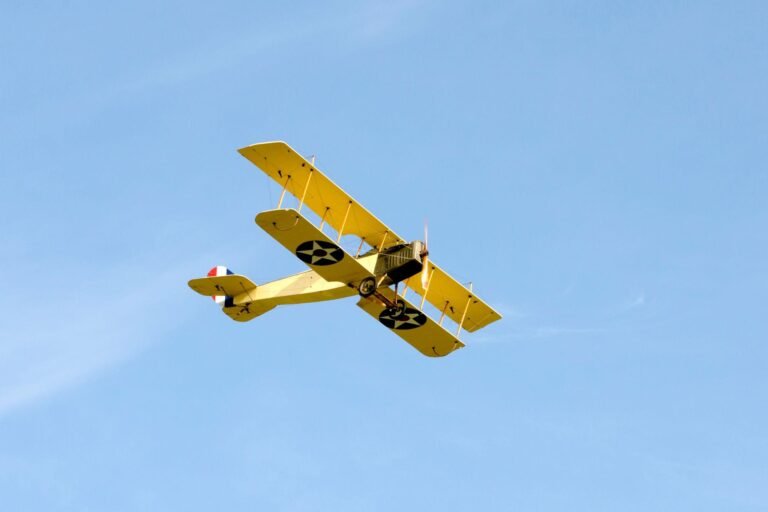
Few aircraft have had a greater impact on American aviation than the Curtiss JN-4 “Jenny.” Although it never fought in combat, the Jenny trained thousands of military pilots during World War I and later became the airplane that introduced the American public to aviation. Its influence helped shape the future of both military and civilian flight in the United States.
Introduction
When people think of World War I aircraft, they often picture fast fighter planes dueling over the trenches of Europe. Yet one of the era’s most important aircraft rarely saw combat. The Curtiss JN-4 Jenny was a humble two-seat trainer that became the backbone of American military flight training during World War I.
After the war, surplus Jennies flooded the civilian market, spurring barnstorming, aerial exhibitions, and the first generation of American commercial pilots. For many Americans, their first glimpse of an airplane—or their first flight—came aboard a Jenny.
More than a century later, the Curtiss JN-4 remains one of the most iconic aircraft in aviation history.
Origins of the Curtiss JN Series
The Curtiss JN series was developed by the Curtiss Aeroplane and Motor Company, founded by aviation pioneer Glenn Curtiss. Curtiss was one of the leading figures in early American aviation and a major competitor of the Wright brothers.
The JN designation originated from a merger of two earlier Curtiss designs:
- The Curtiss “J” trainer
- The Curtiss “N” trainer
Combining the best features of both aircraft produced the JN series. Early models appeared in 1915, but continual improvements eventually led to the most famous version—the JN-4.
By the time the United States entered World War I in April 1917, the Jenny had become the preferred primary trainer for the U.S. Army.
Design and Construction
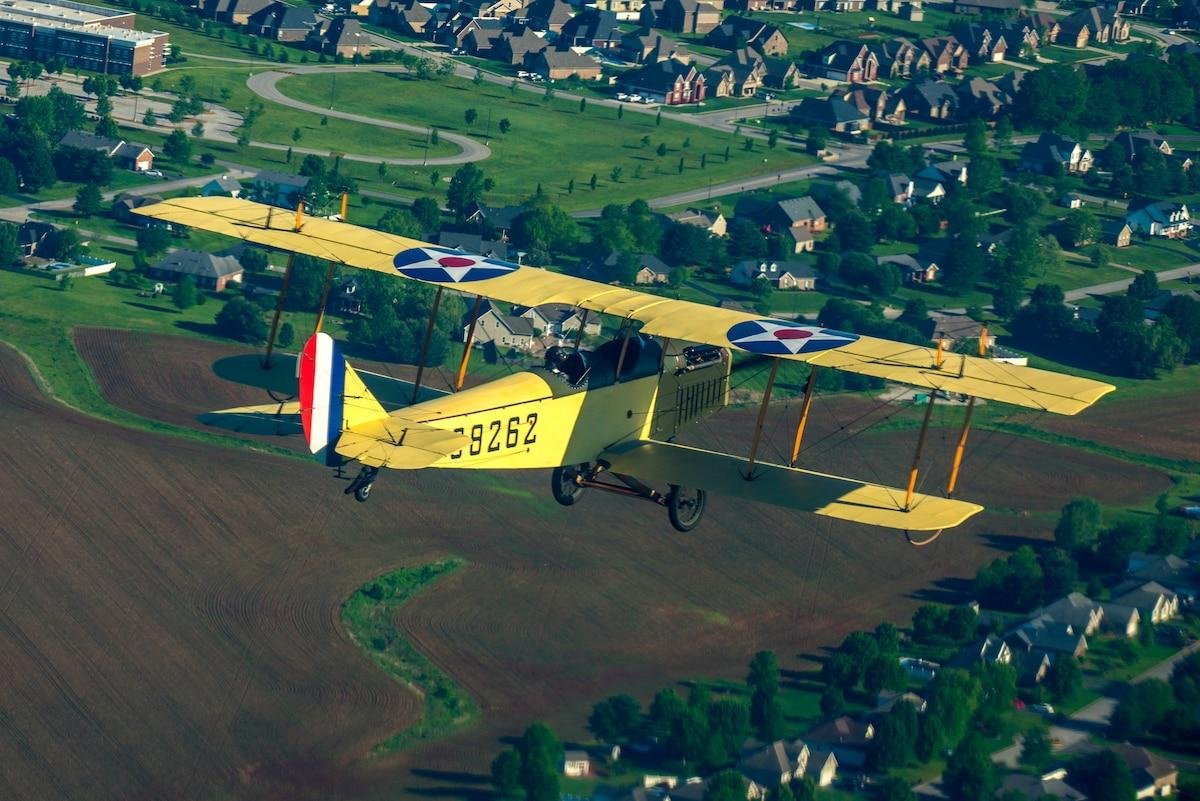
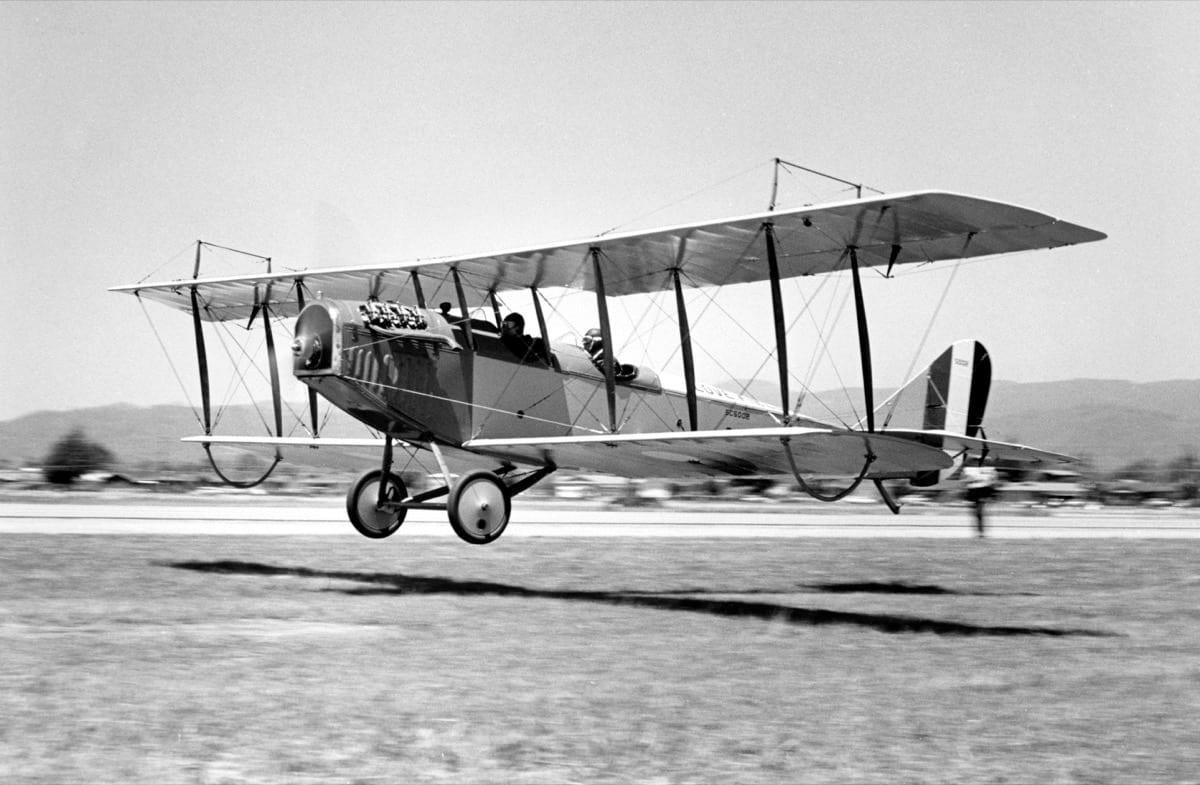
The Curtiss JN-4 was a conventional biplane typical of the World War I era.
Basic Characteristics
- Crew: Two (student and instructor)
- Wingspan: Approximately 43 feet 7 inches
- Length: 27 feet 4 inches
- Height: 9 feet 10 inches
- Empty Weight: Around 1,430 pounds
- Maximum Speed: Approximately 75 mph
- Range: About 155 miles
- Service Ceiling: Around 6,500 feet
The aircraft featured:
- A wooden frame
- Fabric-covered wings and fuselage
- Fixed landing gear
- Open cockpits
- Dual flight controls
The instructor usually occupied the rear cockpit while the student sat in the front cockpit.
Although simple by modern standards, the Jenny was considered stable and forgiving, making it ideal for pilot training.
The Inverte Jenny Postage Stamp
The Inverted Jenny is a highly sought-after and iconic postage stamp from the United States. Issued in 1918, the stamp features a biplane known as a “Jenny” that was accidentally printed upside down, resulting in a striking and valuable error. Due to its rarity and unique design, the Inverted Jenny has become a prized collectible among stamp enthusiasts and is considered one of the most famous errors in philatelic history.
A single inverted Jenny stamp in mint condition can be worth millions of dollars, while used versions or those with minor defects may still be worth hundreds of thousands of dollars. The exact value of an inverted Jenny stamp depends on factors such as its condition, rarity, and provenance.
A single, pristine condition “Inverted Jenny” stamp (the famous 1918 24-cent airmail error with an upside-down airplane) set an auction record when it sold for $2,006,000 (including buyer’s premium) at the Robert A. Siegel Auction Galleries.
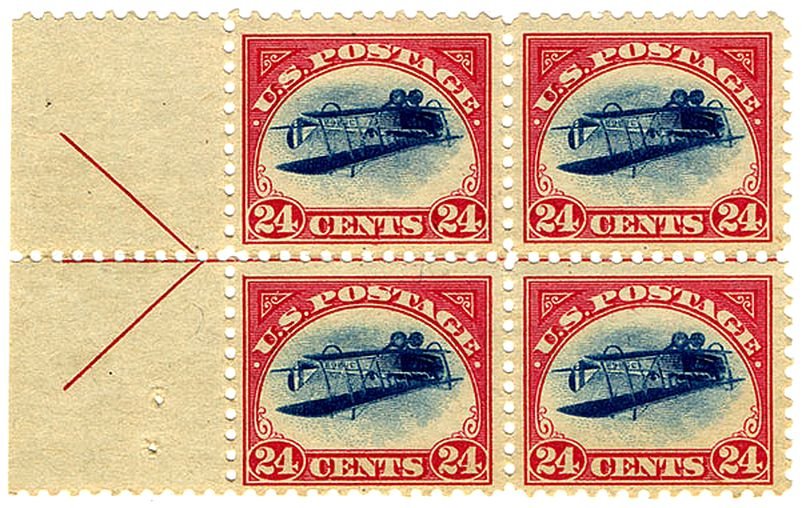
A pristine block featuring the blue plate number “8493” (positions 87, 88, 97, and 98). This coveted showpiece, previously owned by shoe designer Stuart Weitzman, sold at a Sotheby’s Auction in 2021 for $4.9 million.
The OX-5 Engine
One of Jenny’s defining features was its Curtiss OX-5 engine.
Engine Specifications
- Type: Water-cooled V-8
- Horsepower: 90 hp
- Weight: Approximately 390 pounds
The OX-5 was not particularly powerful, but it was reliable enough for training purposes. The engine’s distinctive sound became familiar across America during the 1920s as thousands of former military Jennies took to the skies.
Pilots often joked that the OX-5 taught patience as much as it taught them to fly.
The Jenny During World War I
When America entered World War I, the United States possessed only a tiny military aviation force.
The U.S. Army rapidly expanded its aviation training program and needed large numbers of training aircraft. Jenny became the primary solution.
Training America’s Pilots
More than 95 percent of American military pilots received at least part of their flight instruction in a Jenny.
Training included:
- Basic aircraft familiarization
- Takeoffs and landings
- Navigation
- Aerobatics
- Emergency procedures
Thousands of future military aviators learned the fundamentals of flight in the Jenny before advancing to more advanced aircraft.
Production Numbers
The Curtiss JN-4 became one of the most-produced American aircraft of the war.
Approximately 6,800 examples were built between 1916 and 1918.
Manufacturers included:
- Curtiss Aeroplane and Motor Company
- Various subcontractors
- Government-operated facilities
At the time, it was one of the largest aircraft production efforts in U.S. history.
Why Jenny Never Became a Combat Aircraft
Although the Jenny was essential for training, it was not suited for combat operations.
Several factors limited its military usefulness:
Low Speed
At roughly 75 mph, the Jenny was slower than many European fighters and reconnaissance aircraft.
Limited Climb Performance
The OX-5 engine lacked the power needed for combat maneuvering and high-altitude operations.
Light Construction
Its training-oriented design made it vulnerable to enemy fire.
Outdated by European Standards
By 1918, aircraft technology was advancing rapidly. Fighters such as the SPAD XIII and Sopwith Camel significantly outperformed the Jenny.
As a result, the aircraft remained primarily a trainer throughout its military career.
The Canadian Connection
A notable version of the aircraft was the JN-4(Can).
Built in Canada, this variant incorporated several improvements and became widely used by the British Commonwealth training system.
Canadian-built Jennies differed from American models in:
- Control systems
- Wing design
- Cockpit arrangements
Many historians consider the Canadian version one of the best-developed members of the JN family.
Surplus Aircraft and a New Opportunity
When World War I ended in November 1918, the United States suddenly had thousands of surplus aircraft.
The government sold many Jennies at extremely low prices.
Some aircraft that had cost several thousand dollars to build could be purchased for only a few hundred dollars.
This unexpected availability transformed aviation in America.
Former military pilots bought surplus Jennies and began traveling from town to town offering:
- Air shows
- Passenger rides
- Aerobatic demonstrations
- Wing-walking exhibitions
The era of barnstorming had begun.
The Golden Age of Barnstorming
The Curtiss JN-4 became the signature aircraft of America’s barnstorming era.
What Was Barnstorming?
Barnstormers were itinerant pilots who traveled throughout rural America performing aerial exhibitions.
Typical events featured:
- Loops
- Spins
- Dives
- Wing walking
- Parachute jumps
Crowds often gathered in open fields to watch these exciting demonstrations.
America’s First Air Rides
Many Americans experienced flight for the first time in a Jenny.
For a small fee, passengers could climb into the front cockpit and enjoy a short flight over their hometown.
These rides helped transform aviation from a curiosity into a practical means of transportation.
The Jenny and Air Mail
The Curtiss JN-4 also played a role in America’s first air mail operations.
In 1918, the U.S. Post Office began experimenting with scheduled air mail service.
Modified Jennies were among the first aircraft used to carry mail between cities.
While later aircraft proved more efficient, the Jenny helped demonstrate that air mail could be a practical service.
This development laid the groundwork for future airlines and commercial aviation.
Flying Characteristics
Pilots generally considered the Jenny pleasant to fly.
Strengths
- Stable handling
- Predictable flight behavior
- Excellent trainer
- Forgiving controls
Weaknesses
- Limited power
- Slow climb rate
- Poor performance in strong winds
- Limited payload capacity
Because cockpits were open, pilots faced wind, rain, cold temperatures, and engine oil spray during flight.
Despite these inconveniences, many aviators remembered the Jenny fondly.
Famous Pilots Associated with the Jenny
Numerous pilots who later became aviation legends began their careers flying Jennies.
The aircraft helped launch the careers of:
- Eddie Rickenbacker trainees and successors
- Future military aviators
- Early airline pilots
- Barnstorming performers
The Jenny essentially served as the classroom where America’s aviation workforce learned to fly.
The Jenny in Popular Culture
The Curtiss JN-4 became a symbol of early aviation.
Its image appeared on:
- Postcards
- Posters
- Magazine covers
- Aviation advertisements
The aircraft’s distinctive profile—with its long wings, exposed engine, and open cockpits—came to represent the romance and adventure of flight.
Even today, the term “Jenny” evokes images of daring pilots, rural airfields, and the excitement of aviation’s pioneering years.
Surviving Jennies Today
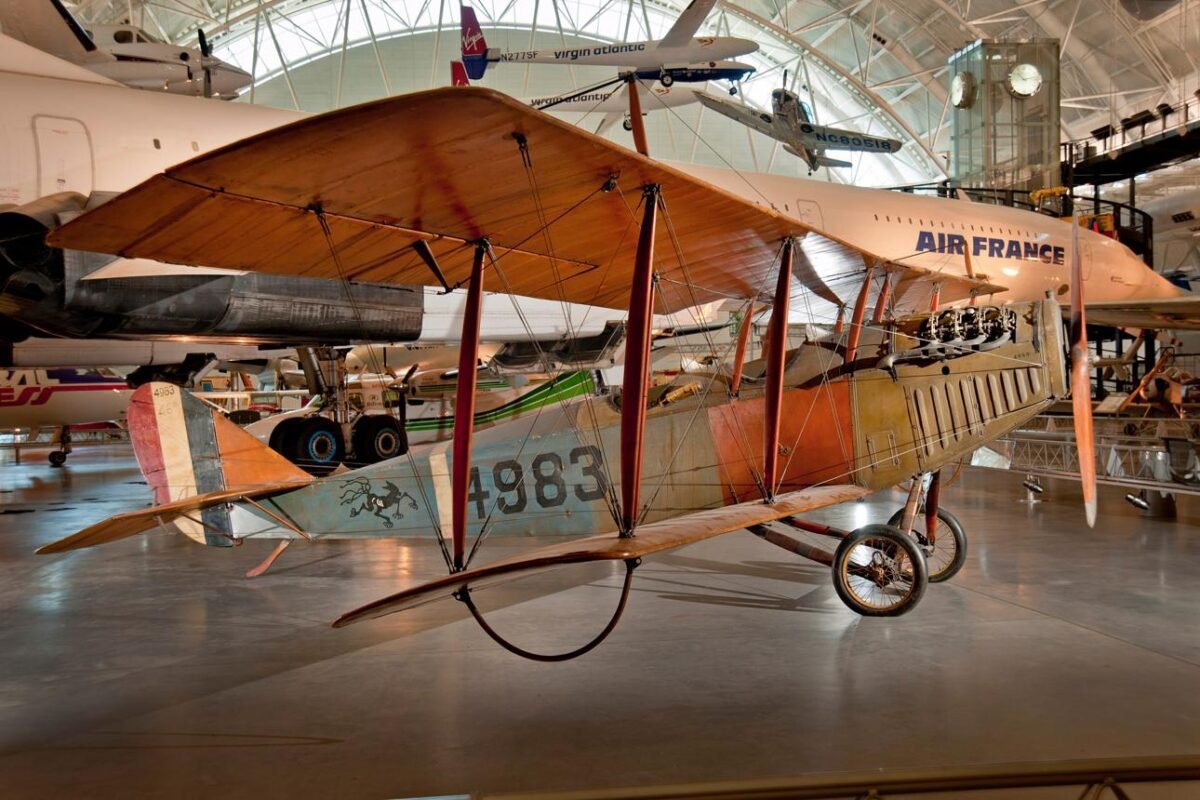
Only a small number of original Curtiss JN-4 aircraft survive.
Several examples can be found in aviation museums across North America.
7
Notable locations displaying Jennies include:
- Smithsonian National Air and Space Museum
- National Museum of the United States Air Force
- Various private collections and restoration projects
Several flying replicas have also been constructed, allowing modern audiences to experience the sights and sounds of the famous trainer.
Legacy of the Curtiss JN-4 Jenny
Few aircraft can claim a legacy as significant as the Curtiss JN-4 Jenny.
Its achievements include:
- Training most American military pilots during World War I
- Creating a generation of civilian aviators
- Launching the barnstorming era
- Supporting early air mail service
- Popularizing aviation across the United States
Without Jenny, the growth of American aviation during the 1920s and 1930s would likely have been much slower.
The aircraft served as a bridge between the fragile experimental airplanes of the early 1900s and the sophisticated military and commercial aircraft that followed.
Conclusion
The Curtiss JN-4 Jenny was more than just a trainer. It was the airplane that taught America how to fly.
From military training fields during World War I to dusty barnstorming tours across rural America, the Jenny inspired countless pilots and introduced millions of people to aviation. Its simple design, dependable handling, and widespread availability made it one of the most influential aircraft in American history.
While faster and more advanced aircraft eventually replaced it, the Jenny’s impact endures. Every modern American pilot, airline, and aviation institution owes a small debt to the humble biplane that helped turn flight from a novelty into a national passion.