P-36 Hawk: A Classic Fighter of Its Time
Introduction
The P-36 Hawk was an iconic and versatile fighter aircraft that played a significant role during the early years of World War II. Designed and manufactured by the American aviation company Curtiss-Wright Corporation, this single-seat, all-metal monoplane was vital to the United States Army Air Corps (USAAC) and other air forces worldwide. Boasting impressive performance characteristics and a distinctive design, it contributed to the evolution of aviation technology and played a crucial role in shaping the history of aerial warfare.

Origins and Design
The origins of the P-36 Hawk can be traced back to the early 1930s when Curtiss-Wright aimed to develop a high-performance fighter aircraft to replace the aging P-6 Hawk, one of their previous successful designs. The company’s design team, led by Donovan Berlin and Raymond G. Protzmann, incorporated several innovative features and improvements to create an advanced fighter aircraft. Initially designated Model 75, it marked a departure from the biplane configuration and introduced a sleek monoplane design that enhanced both speed and maneuverability.
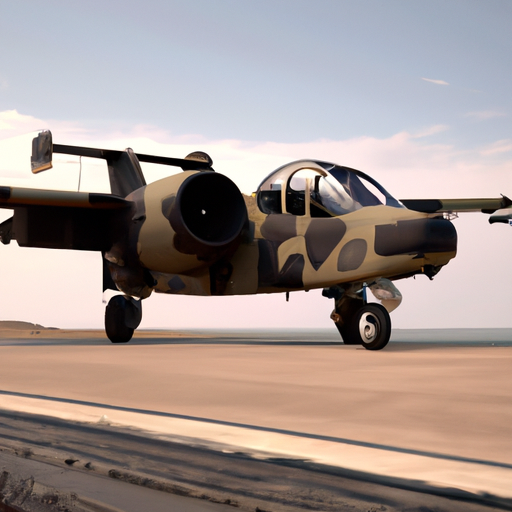
The P-36 Hawk featured a closed cockpit, retractable landing gear, and an enclosed wing structure, allowing reduced drag and increased speed. Another distinctive feature was its cooling system, consisting of a radiator positioned under the fuselage, allowing for efficient cooling at high altitudes. Initially powered by a Pratt & Whitney R-1830 Twin Wasp radial engine, this aircraft could produce up to 1,100 horsepower.
Operational History
The P-36 Hawk entered service with the USAAC in 1938, just before the outbreak of World War II. It quickly proved a worthy adversary, earning a reputation for its exceptional maneuverability and solid performance. The aircraft’s operational record was further enhanced during the early stages of the war, particularly with the Royal Air Force (RAF) in the defense of Singapore and Burma against the Japanese advance.
However, with the ever-evolving advancements in aviation technology, the P-36 Hawk faced some limitations. More advanced designs, such as the Curtiss P-40 Warhawk and the Republic P-47 Thunderbolt, gradually replaced it in combat units. Nevertheless, the aircraft continued to serve with various air forces worldwide, including those of Finland, China, France, and Turkey, throughout World War II and into the post-war era.
Significance and Impact
The P-36 Hawk was vital in bridging the technological gap between early biplane fighters and the advanced monoplanes that dominated the skies during World War II. Its innovative design, speed, and maneuverability set new standards for fighter aircraft of its time. The lessons learned from its operational use paved the way for subsequent developments, such as the Curtiss P-40 and its famous successor, the P-51 Mustang.
Performance Characteristics
The P-36 Hawk’s performance made it stand out among contemporary fighter aircraft. With a maximum speed of approximately 300 mph (483 km/h) and a range of up to 1,200 miles (1,930 km), it offered speed and endurance. The aircraft had a service ceiling of around 32,000 feet (9,753 meters), which allowed for potential engagements at high altitudes. Additionally, it was armed with various combinations of .50-caliber and .30-caliber machine guns, giving pilots a significant firepower advantage.
Frequently Asked Questions
How many P-36 Hawks were produced?
Did other countries besides the United States use the P-36 Hawk?
How does the P-36 Hawk compare to its successor, the P-40 Warhawk?
How effective was the P-36 Hawk in combat?
What is the surviving status of the P-36 Hawk today?
Conclusion
The P-36 Hawk was a pioneering fighter aircraft that helped shape the transition from the biplane era to the faster, more modern monoplanes that would dominate the skies during World War II. Developed by Curtiss-Wright in the 1930s, the aircraft represented a major step forward in fighter design, combining an all-metal structure, retractable landing gear, and improved aerodynamics at a time when military aviation was advancing rapidly. These features allowed the P-36 to deliver better speed, maneuverability, and overall performance than many earlier fighters, making it an important milestone in the evolution of combat aircraft.
Although the P-36 Hawk was soon overshadowed by newer and more powerful fighters, its influence was far from minor. Its design laid the groundwork for the famous Curtiss P-40 Warhawk, one of the best-known American fighters of the war. In this way, the P-36 directly contributed to subsequent technological advancements in aviation, helping engineers refine ideas on airframe strength, engine performance, pilot visibility, and combat durability. The aircraft’s development showed how quickly fighter technology was changing in the years leading up to the conflict.
The P-36 also had a notable operational history. It served not only with the United States Army Air Corps but also with several foreign air forces, including those of France, Finland, the Netherlands, and other nations. In French service, the Hawk saw combat during the early stages of World War II, where it proved capable against contemporary enemy aircraft despite being outnumbered and facing difficult conditions. Finnish pilots also used the type effectively, demonstrating that the aircraft could remain valuable in the hands of skilled aviators.
While it eventually gave way to more advanced, faster, and more heavily armed fighters, the P-36 Hawk remains an important chapter in the extensive annals of aviation history. It bridged an important technological gap, influenced later aircraft designs, and served in combat at a critical moment in world history. Its legacy endures as a reminder of the rapid innovation, experimentation, and determination that defined military aviation in the years before and during World War II.