O-1 Bird Dog: The Unsung Hero of Air Support
Introduction
When people think of aircraft that served during the Vietnam War, powerful fighters such as the F-100 Super Sabre, F-4 Phantom II, rugged attack aircraft like the A-1 Skyraider, and iconic helicopters such as the UH-1 Huey often come to mind. Yet one of the most important aircraft in the conflict was neither fast nor heavily armed. It was a small, single-engine observation aircraft known as the O-1 Bird Dog.
Flying low and slow over some of the most dangerous battlefields in Southeast Asia, the O-1 Bird Dog became the eyes and ears of American and allied forces. Its pilots directed air strikes, adjusted artillery fire, searched for enemy troops, coordinated rescues, and provided critical battlefield intelligence. Despite its modest appearance, the Bird Dog played a vital role in countless combat operations.
This is the story of what the O-1 Bird Dog did in Vietnam and why it became one of the most valuable aircraft of the war.
Origins of the O-1 Bird Dog
The O-1 Bird Dog originated shortly after World War II, when the U.S. Army sought a dedicated observation aircraft to replace the aging Piper Cub and Stinson liaison aircraft.
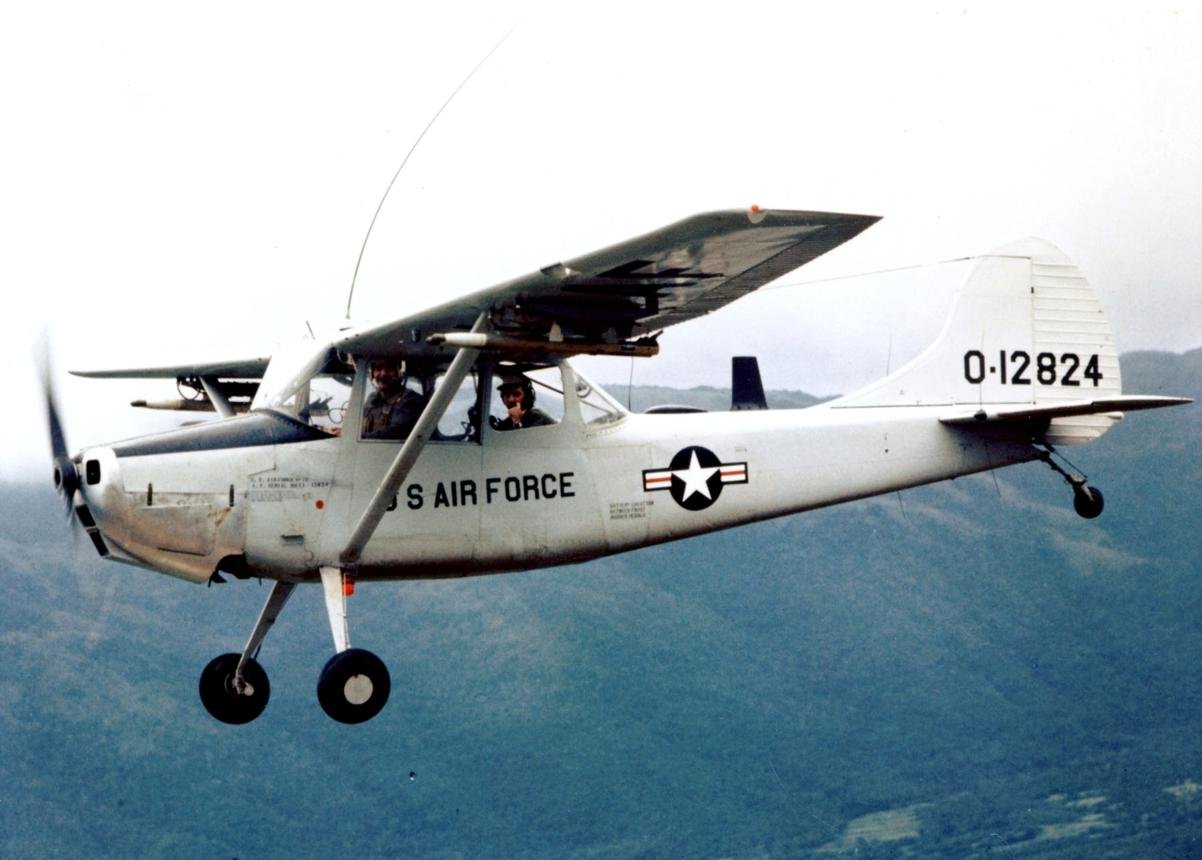
Designed by Cessna and based on the Model 305, the aircraft first flew in 1949. It was rugged, reliable, and capable of operating from short, unimproved airstrips. The Army designated it the L-19 Bird Dog, while the Air Force later redesignated it as the O-1 under the 1962 unified aircraft designation system.
The Bird Dog featured:
- A single Continental O-470 engine producing approximately 213 horsepower
- Seating for pilot and observer
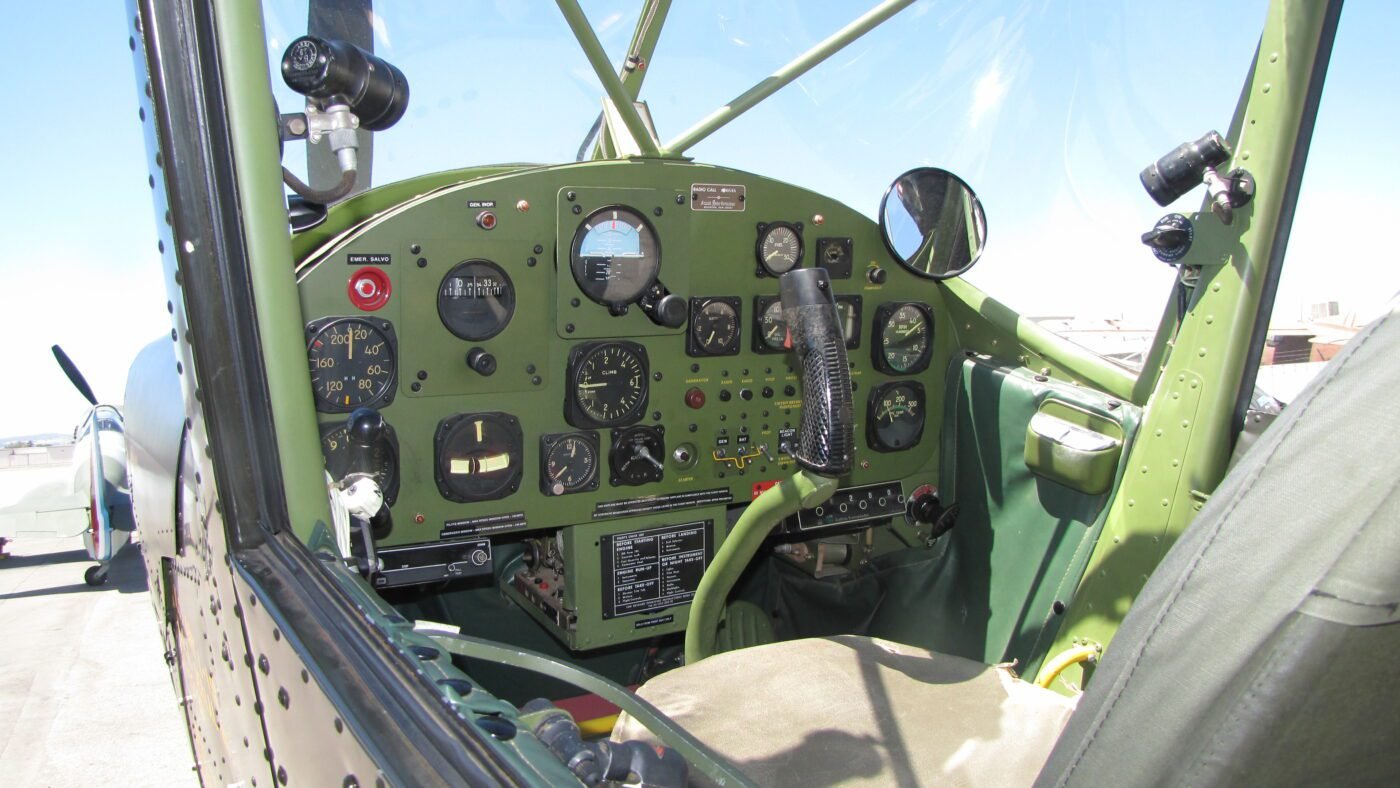
- Large greenhouse-style windows for exceptional visibility
- Short takeoff and landing (STOL) capability
- Simple maintenance requirements
- Excellent low-speed handling
These characteristics made it ideally suited for observation and forward air control duties.
Entering the Vietnam War
As American involvement in Vietnam increased during the early 1960s, military planners quickly recognized the need for aircraft capable of locating enemy forces hidden in dense jungle terrain.
High-performance jets could deliver devastating firepower, but they often struggled to identify targets concealed beneath thick vegetation. Ground commanders needed aircraft that could fly slowly enough to spot enemy activity and communicate directly with troops on the ground.
The O-1 Bird Dog was the perfect solution.
Initially operated by both the U.S. Army and U.S. Air Force, the Bird Dog soon became the primary forward air control aircraft throughout South Vietnam.
The Forward Air Control Mission
The O-1 Bird Dog’s most important role was that of Forward Air Controller (FAC).
A forward air controller acted as the link between ground forces and attack aircraft. The FAC’s mission was to identify targets, assess battlefield conditions, and guide strike aircraft onto enemy positions.
This task required exceptional flying skills and courage.
O-1 Bird Dog pilots routinely flew at altitudes between 500 and 2,000 feet while searching for enemy troops, bunkers, supply routes, and artillery positions. Flying low increased the risk of being hit by enemy fire but allowed the pilot to observe the battlefield in remarkable detail.
Once a target was located, the FAC would:
- Confirm the target’s identity.
- Coordinate with friendly ground forces.
- Mark the target with smoke rockets.
- Direct attacking aircraft onto the target.
- Assess the effectiveness of the strike.
Without the FAC, many air strikes would have been ineffective or impossible.
Marking Targets for Air Strikes
One of the O-1 Bird Dog’s most recognizable duties involved marking enemy positions.
The aircraft carried rocket launchers loaded with smoke rockets, often containing white phosphorus. These rockets produced highly visible smoke plumes that could be seen by incoming strike aircraft.
After locating enemy troops or installations, the FAC pilot would dive toward the target and fire a smoke rocket nearby.
The pilot would then radio instructions to approaching fighters:
“Hit 50 meters north of the smoke.”
This process allowed attack aircraft to deliver ordnance accurately while minimizing the risk of friendly-fire incidents.
The Bird Dog often worked alongside:
- F-100 Super Sabres
- F-4 Phantom IIs
- A-1 Skyraiders
- B-57 Canberras
- Marine Corps attack aircraft
Many successful air strikes began with an O-1 pilot finding and marking the target.
Hunting the Enemy
Finding enemy forces in Vietnam was extremely difficult.
North Vietnamese Army (NVA) and Viet Cong units frequently operated from concealed jungle positions. They moved primarily at night and utilized camouflage, tunnels, and hidden supply routes.

O-1 Bird Dog pilots became experts at spotting subtle clues, including:
- Fresh tire tracks
- Disturbed vegetation
- Campfire smoke
- River crossings
- Footpaths
- Movement beneath jungle canopies
FAC pilots often described their work as detective work conducted from the air.
Hours of monotonous searching could suddenly reveal an enemy battalion, truck convoy, or weapons cache.
Once discovered, air strikes or artillery missions could be coordinated quickly.
Supporting Ground Troops
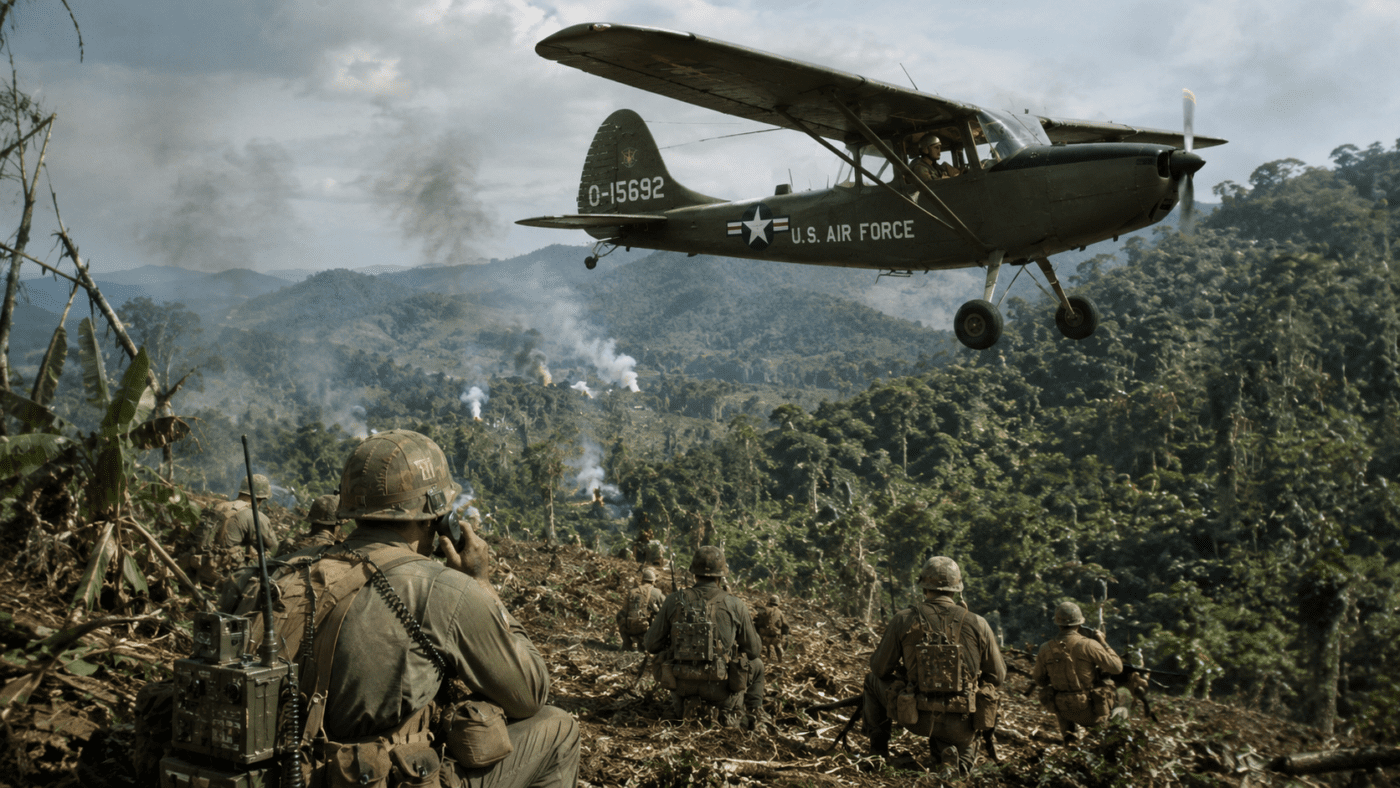
American and South Vietnamese troops frequently relied upon Bird Dogs for immediate battlefield support.
When infantry units encountered enemy resistance, an O-1 could often arrive overhead before fighter aircraft became available.
The FAC would establish communication with troops on the ground and determine:
- Enemy locations
- Friendly positions
- Available supporting aircraft
- Terrain considerations
The Bird Dog pilot then coordinated all supporting fires.
Many soldiers credited FAC pilots with saving lives by quickly bringing airpower to bear during intense engagements.
The sight of a Bird Dog circling overhead often reassured troops that help was on the way.
Artillery Spotting
Another crucial Bird Dog mission involved artillery adjustment.
Artillery units frequently fired at targets beyond visual range. Even with accurate maps and calculations, shells could land hundreds of meters from their intended target.
The O-1 Bird Dog allowed artillery observers to correct fire in real time.
A FAC pilot could observe shell impacts and radio corrections such as:
- “Left 100 meters.”
- “Add 200.”
- “Fire for effect.”
This process dramatically improved artillery accuracy and effectiveness.
The O-1 Bird Dog essentially became a flying observation post for artillery commanders.
Search and Rescue Operations
Vietnam’s air war resulted in many downed aircrew members.
Whenever a pilot ejected over hostile territory, a complex rescue operation often followed.
The O-1 frequently participated in combat search and rescue missions by:
- Locating survivors
- Establishing radio contact
- Identifying threats
- Directing rescue helicopters
- Coordinating protective air strikes
FAC pilots often remained overhead for hours while rescue efforts unfolded below.
Their ability to maintain visual contact with survivors frequently meant the difference between rescue and capture.
Operating from Primitive Airfields
One of the Bird Dog’s greatest strengths was its ability to operate from short and unimproved runways.
Throughout Vietnam, O-1s operated from:
- Dirt strips
- Remote outposts
- Small air bases
- Forward operating locations
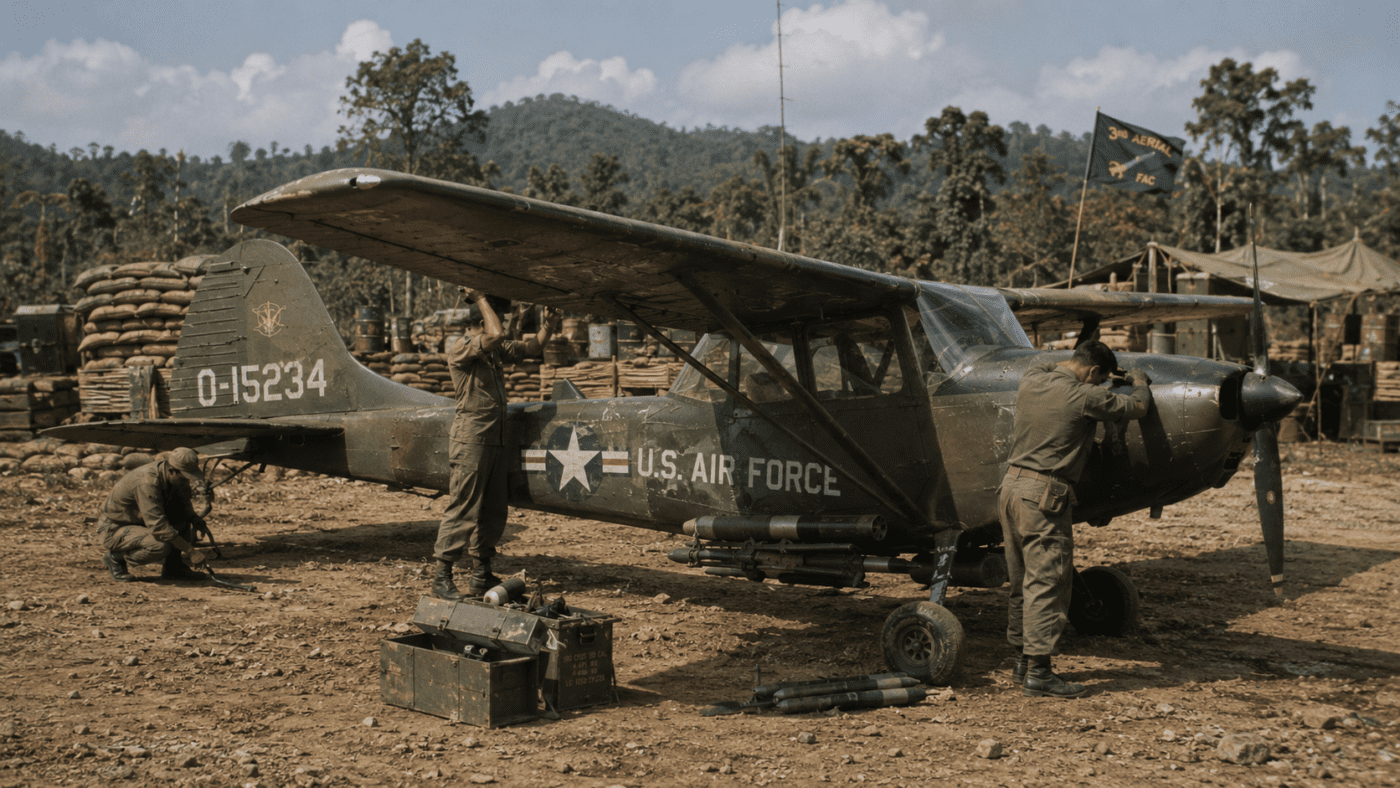
Unlike jets that required long paved runways, the O-1 Bird Dog could launch from areas close to combat operations.
This flexibility enabled rapid response times and increased operational effectiveness.
Ground crews appreciated the aircraft’s simplicity and ease of maintenance under harsh conditions.
Danger in the Skies
Although it was not a fighter aircraft, the Bird Dog flew some of the war’s most dangerous missions.
The O-1 Bird Dog’s low altitude and slow speed made it highly vulnerable to:
- Small-arms fire
- Machine guns
- Heavy machine guns
- Anti-aircraft artillery
Unlike jet pilots flying at high speed, FAC pilots often remained within enemy firing range for extended periods.
Bird Dogs routinely returned to base riddled with bullet holes.
Many did not return at all.
Despite these dangers, FAC pilots continued flying daily missions because their work was indispensable to battlefield success.
The Human Side of the Mission
FAC pilots developed a unique relationship with both ground troops and strike aircraft crews.
Unlike many pilots who flew brief combat sorties, Bird Dog crews often spent hours observing the battlefield.

They became intimately familiar with terrain, villages, roads, and military units operating in their assigned areas.
Many pilots viewed themselves as airborne guardians for the soldiers below.
Their mission was not simply to find targets; it was to ensure friendly troops received the support they needed when they needed it most.
This responsibility weighed heavily on many FAC pilots but also gave them a profound sense of purpose.
The Arrival of the O-2 Skymaster
By the late 1960s, military leaders sought a more capable FAC aircraft.
The result was the O-2 Skymaster, a twin-engine aircraft offering:
- Greater payload capacity
- Improved reliability
- Enhanced communications equipment
- Better survivability
The O-2 gradually assumed many FAC duties previously performed by the Bird Dog.
However, the O-1 continued serving throughout much of the war because of its excellent visibility and handling characteristics.
Many pilots preferred the Bird Dog for certain missions, believing its simplicity made it uniquely effective.
Legacy of the Bird Dog in Vietnam
The O-1 Bird Dog never achieved the fame of jet fighters or helicopters, but its impact on the Vietnam War was enormous.
The aircraft:
- Directed thousands of air strikes
- Protected ground forces
- Improved artillery accuracy
- Supported rescue operations
- Gathered battlefield intelligence
- Helped save countless lives
The FAC techniques pioneered in the Bird Dog became the foundation of modern close-air-support coordination.
Lessons learned by O-1 crews influenced later FAC aircraft, including the O-2 Skymaster and OV-10 Bronco.
Even today, military aviation professionals recognize the Bird Dog as one of the most effective observation aircraft ever built.
- Forward air control (FAC)
- Target acquisition
- Artillery spotting and adjustment
- Convoy escort
- Radio relay missions
- Combat search-and-rescue support
FAC pilots would fly low over the battlefield looking for enemy troops, trucks, bunkers, or gun positions. Once a target was identified, the pilot typically marked it with smoke rockets (often white phosphorus “Willie Pete” rockets) and directed fighter-bombers such as the F-100 Super Sabre, F-4 Phantom II, or A-1 Skyraider onto the target.
Why It Was Effective
Although the O-1 was slow and vulnerable, it had several advantages:
- Excellent visibility from the cockpit
- Very slow flight speed, allowing pilots to spot enemy activity
- Short takeoff and landing (STOL) capability
- Ability to operate from rough airstrips near combat areas
- Quiet engine compared to larger aircraft
Ground troops often loved having a Bird Dog overhead because it could quickly coordinate air strikes and artillery support.
Losses in Vietnam
The mission was extremely dangerous. O-1 pilots routinely flew at low altitude over hostile territory, making them easy targets for small-arms fire. During the war, hundreds of Bird Dogs were lost, including aircraft operated by the U.S. Army, USAF, Marines, South Vietnamese Air Force, and covert FAC units in Laos and Cambodia.
USAF Connection
If you were a USAF fighter pilot, you may find it interesting that the O-1 became the aircraft that established the FAC mission in Southeast Asia. Many USAF FAC pilots flying O-1s used the radio call signs “Misty,” “Nail,” “Covey,” or others, depending on their unit and operating area. The famous covert Raven FACs in Laos also flew O-1s.
The O-1’s success in Vietnam directly influenced the development and adoption of the O-2 Skymaster and OV-10 Bronco, which carried the FAC mission into the war’s later years.
What the O-1 Did in Vietnam
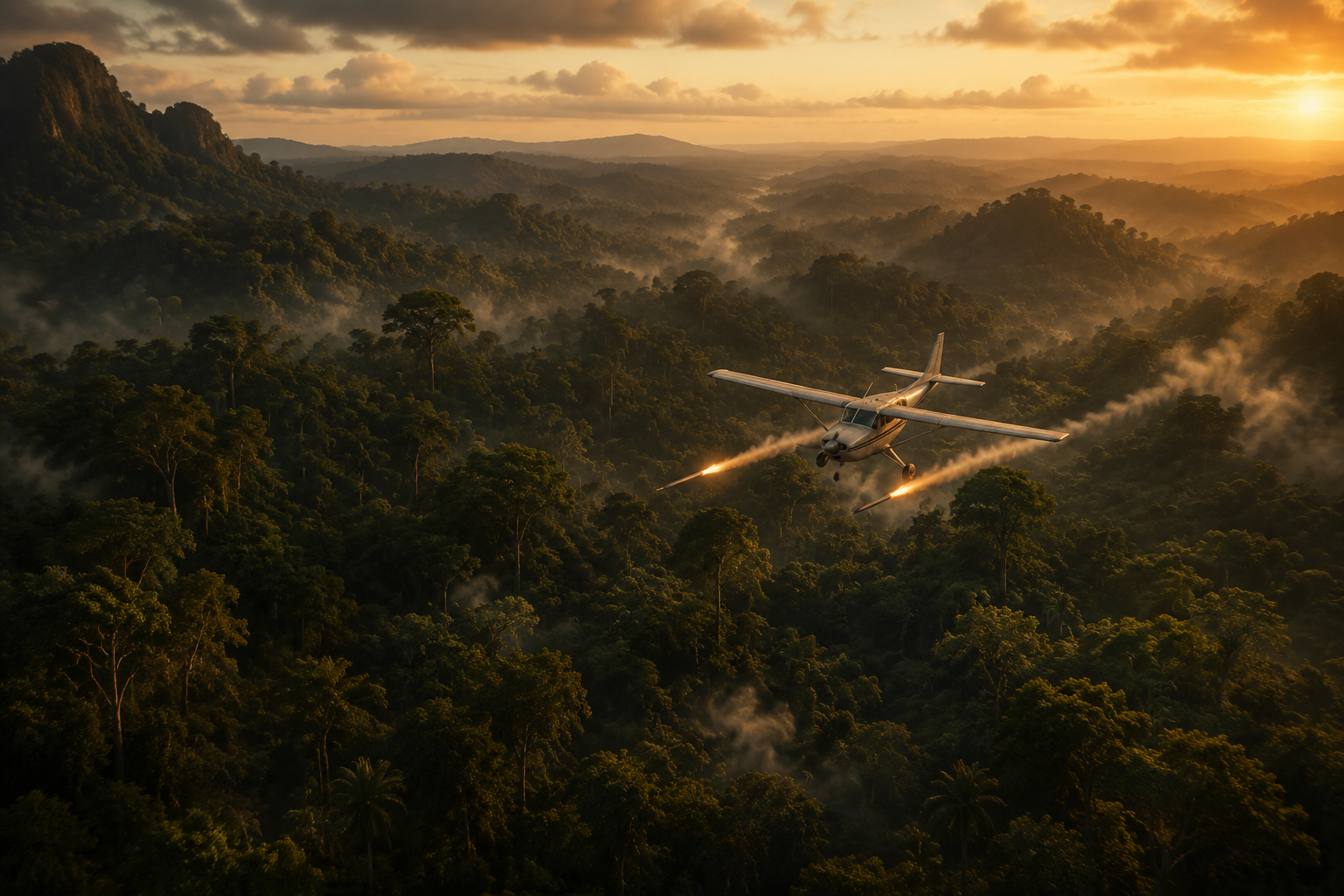
Picture a tiny, single-engine Cessna puttering along at low altitude over the Vietnamese jungle. No armor. No ejection seat. Just a pilot, a backseat observer, and a few smoke rockets strapped to the wings. Enemy troops on the ground knew exactly what that little plane meant. When the O-1 Bird Dog showed up overhead, the bombs weren’t far behind.
The O-1 was never built to be a war hero. It started life in 1950 as a simple observation plane for the U.S. Army. But in Vietnam, it became one of the most important aircraft in the entire war effort. It found the enemy, directed the firepower, relayed communications, and sometimes flew missions so dangerous that one unit calculated a 30% pilot fatality rate. One pilot even resorted to firing his M16 rifle out the cockpit window after his rockets ran dry. He received the Medal of Honor posthumously.
This post covers the full story of the O-1 Bird Dog in Vietnam. You’ll learn about its origins, the many roles it filled during the war, the secret pilots who flew it into Laos, and why nearly 500 of them never came home.
The Birth of a Legend: Design and Early Service of the O-1 Bird Dog
Origins and Design Innovations
The story of the O-1 Bird Dog begins in the late 1940s, when the newly independent U.S. Army found itself in need of a modern observation aircraft. The Army Air Forces had just become a separate branch in 1947, and the Army needed its own eyes in the sky. Cessna answered the call with their Model 305A, an aircraft that would prove far more capable than anyone initially imagined.
On December 14, 1949, the prototype took to the skies for the first time. By 1950, the aircraft entered service as the L-19. This was a big deal. The L-19 became the first all-metal, fixed-wing aircraft ordered specifically for and by the U.S. Army after the Air Force split. No more fabric-covered planes that couldn’t handle rough weather or hard use.
Cessna’s engineers designed the O-1 Bird Dog with observation in mind from the ground up. The two-seat tandem configuration put the pilot and observer one behind the other, maximizing visibility for both crew members.
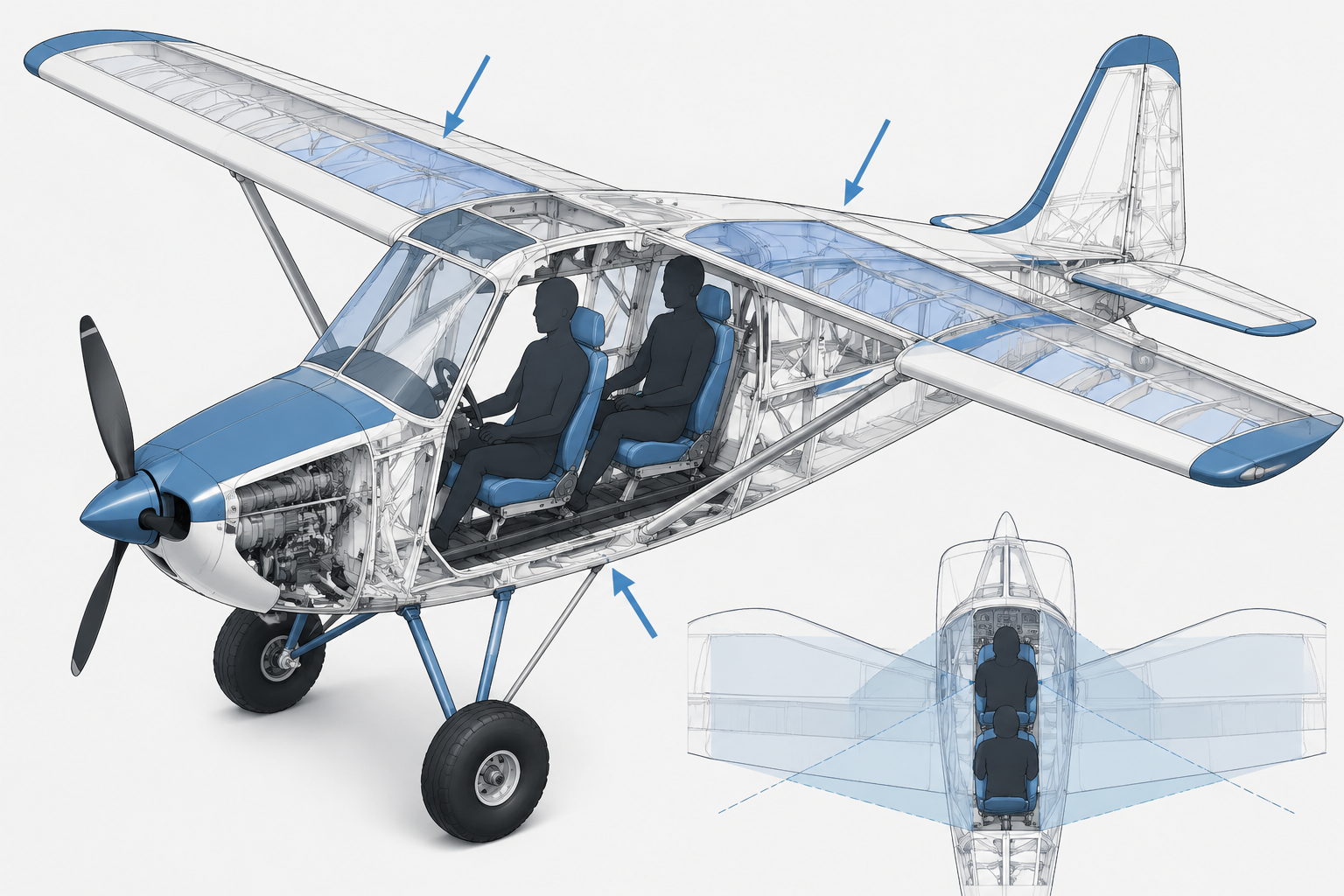 Large, angled side windows gave pilots exceptional views of the ground below, something critical when you’re trying to spot enemy positions or adjust artillery fire. The designers didn’t stop there. They added transparent panels in the wing’s center section, allowing the crew to see directly overhead. This feature proved invaluable when circling targets or checking for enemy aircraft.
The aircraft’s humanitarian side showed in another design choice. Cessna widened the door specifically to accommodate a stretcher, recognizing that these aircraft would often serve double duty as medevac platforms. In remote battlefields, a Bird Dog could be the difference between life and death for a wounded soldier.
The name itself came from a contest among Cessna employees. Someone pointed out that the aircraft’s mission mirrored a bird dog’s behavior during a hunt. It would find targets, mark them, and orbit overhead while artillery or attack aircraft did the heavy work. The name stuck perfectly.
From Korea to Vietnam: Initial Military Roles
The O-1 Bird Dog didn’t wait long to prove its worth in combat. When the Korean War erupted in 1950, the L-19A deployed almost immediately. It replaced the aging Piper L-4 Grasshoppers and Stinson L-5 Sentinels, aircraft that had served well in World War II but were now showing their age. Those older birds used fabric covering that deteriorated in harsh conditions and offered less protection.
Troops quickly gave the L-19 an affectionate nickname: “the jeep with wings.” Like the rugged ground vehicle, the Bird Dog seemed able to operate anywhere, landing on rough strips that would ground other aircraft. It carried out reconnaissance missions, adjusted artillery fire, and evacuated wounded soldiers from forward positions.
The aircraft performed so well in Korea that it remained in service through the 1950s and into the next decade. In 1962, the military adopted the United States Tri-Service aircraft designation system. The L-19 became the O-1 Bird Dog. The timing was perfect. Just as it received its new designation, the aircraft was about to face its greatest test in the jungles and rice paddies of Vietnam.
The O-1 Bird Dog’s Multifaceted Role in the Vietnam War
Eyes in the Sky: Reconnaissance and Observation
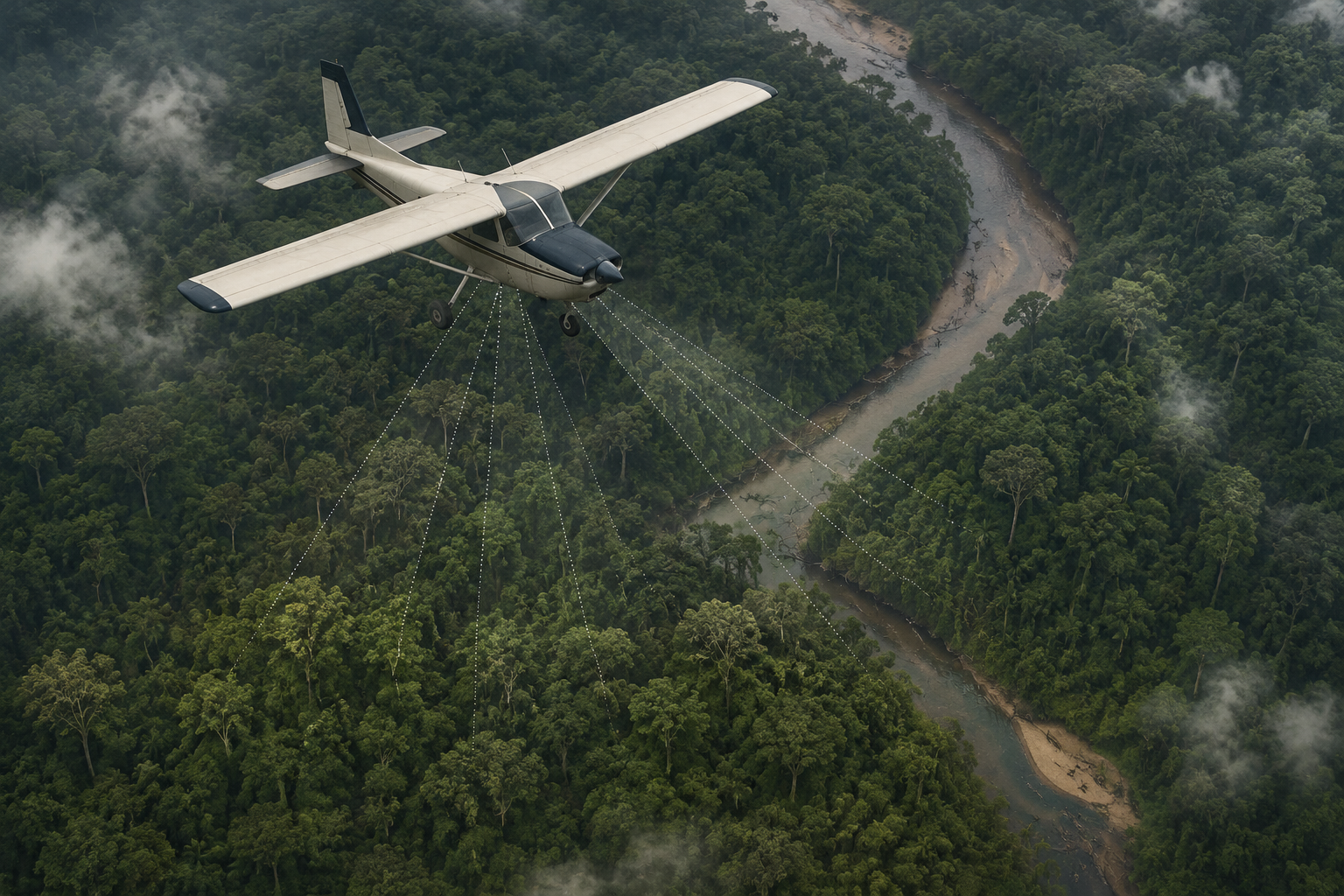
The O-1 Bird Dog became the eyes of American and allied forces in Vietnam, flying missions that put pilots right on top of enemy positions. Pilots took their aircraft low and slow over hostile territory, sometimes cruising just a few hundred feet above the jungle canopy. This approach was dangerous. But it was effective.
What made the O-1 Bird Dog perfect for this job was its design. Those angled side windows weren’t just a nice touch from Cessna. They gave pilots an unobstructed view of the ground below, letting them scan enemy movements, identify fortifications, and spot troop concentrations that would be invisible from higher altitudes. The transparent panels in the wing’s center section took things even further. Looking straight up through the wing might sound odd, but it gave observers crucial visibility during tight banking turns and helped them keep track of their position relative to ground forces.
Multiple branches operated these reconnaissance workhorses throughout Southeast Asia. The Republic of Vietnam Air Force flew them extensively over South Vietnam. The U.S. Army deployed them across the theater. Marines put them to work in contested areas. Later, the U.S. Air Force adopted them for operations that ranged from South Vietnam into Laos and Cambodia. Each service discovered the same truth: when you needed to know what was happening on the ground, the Bird Dog delivered.
Intelligence gathered during these flights shaped entire operations. Pilots would return from missions with detailed reports about enemy movements, supply routes, and defensive positions. Ground commanders relied on this information to plan ambushes, call in artillery strikes, and avoid well-defended areas.
Guiding the Fire: Forward Air Control and Artillery Adjustment
The O-1 Bird Dog didn’t just find targets. It destroyed them.
As a Forward Air Controller aircraft, the Bird Dog became the critical link between ground forces and the devastating firepower of jets and artillery. Pilots would locate enemy positions, then guide faster attack aircraft to exactly the right spot. This coordination turned the Bird Dog into a force multiplier that enemy troops learned to fear.
Target marking became an art form for O-1 pilots. They carried white phosphorus rockets, which they’d fire directly at enemy positions to create brilliant smoke markers. Fighter-bombers screaming in at hundreds of miles per hour could spot these markers from miles away. The Bird Dog pilot would stay on station throughout the attack, circling overhead while calling corrections: “Hit fifty meters north of the smoke” or “Perfect, walk it east along that tree line.”
Artillery adjustment required similar precision and nerves of steel. Army pilots would observe where artillery shells landed, then radio adjustments back to gun crews miles away. “Add two hundred, fire for effect.” They’d watch the next salvo hit, make more corrections, and repeat the process until the rounds landed right on target.
Enemy forces developed a healthy respect, or more accurately, genuine fear of the little high-winged observation plane. They understood what it meant when a Bird Dog appeared overhead. Artillery or air strikes were coming. The Viet Cong and North Vietnamese Army troops would often break contact and scatter when they spotted one, knowing they had minutes at best before hell rained down on their position.
Beyond Combat: Support and Liaison Missions
Combat wasn’t the only place the O-1 Bird Dog proved invaluable. Radio relay became essential in Vietnam’s difficult terrain, where mountains and jungle could block communications between units just a few miles apart. Bird Dog pilots would orbit at altitude, acting as airborne relay stations that connected ground forces with headquarters, artillery batteries, and each other.
Convoy escort missions put the O-1 overhead during supply runs along vulnerable roads. Pilots would scout ahead for ambushes, watch for suspicious activity along the route, and coordinate responses if convoys came under fire. This aerial guardian angel saved countless truck drivers and cargo shipments from destruction.
When aircraft went down, Bird Dog pilots launched into combat search-and-rescue missions. They’d search crash sites, locate downed aircrews, and coordinate rescue helicopters. Flying low over hostile territory while looking for survivors required courage and skill. Many pilots owe their lives to a Bird Dog crew that refused to give up the search.
The aircraft’s ability to operate from short, rough airstrips made it perfect for front-line communications. Small forward bases that couldn’t handle larger aircraft could still receive visits from a Bird Dog. Pilots delivered urgent messages, evacuated wounded soldiers when configured for medevac, and maintained vital connections between isolated units and the main force.
The “Ravens” and High-Risk Operations
Some of the most dangerous flying in Vietnam happened in O-1s flown by a secretive group called the Ravens. These clandestine forward air controllers operated in Laos and Cambodia, running missions that officially didn’t exist. The Ravens were volunteers, elite FAC pilots who knew they were signing up for the most hazardous duty imaginable.
They flew in civilian clothes. No rank insignia, no military identification. If they were captured, the U.S. government would likely disavow any knowledge of their operations. This was warfare in the shadows, and the Bird Dog was their mount of choice.
The casualty rates were staggering. One Raven member did the math and came up with horrifying statistics: ninety percent of their aircraft took ground fire. Sixty percent were shot down. Thirty percent of pilots died.
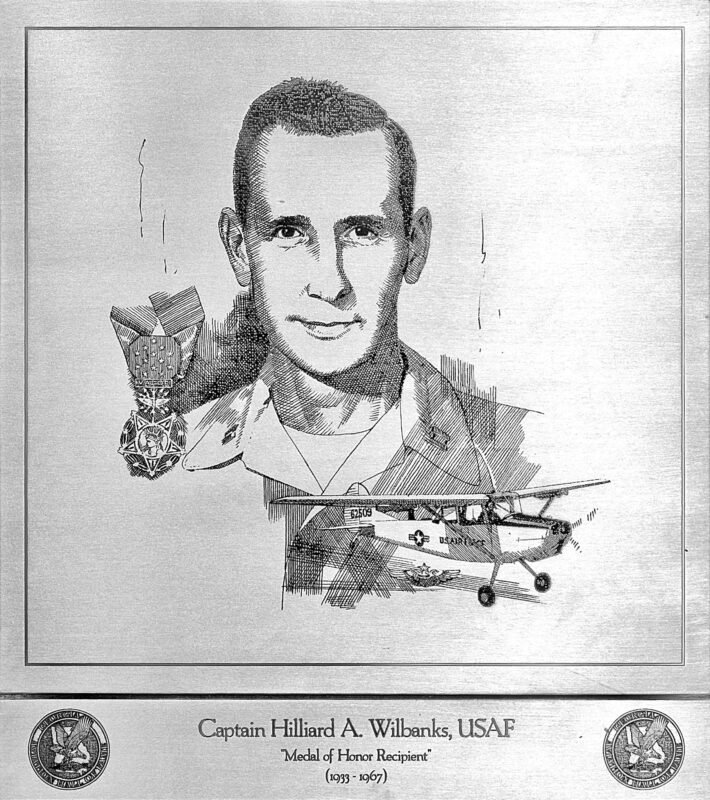
Captain Hilliard A. Wilbanks embodied Raven courage in 1967. During a mission, he spotted a large enemy force preparing to ambush a South Vietnamese Army unit. Wilbanks attacked repeatedly with his marking rockets, trying to disrupt the assault and protect the friendly troops. When his rockets ran out, he didn’t leave. He pulled out his M16 rifle and made strafing runs, firing from the cockpit of his O-1 at enemy soldiers. He was hit by ground fire and killed, but his actions gave the South Vietnamese unit time to prepare their defense. The Medal of Honor he received posthumously recognized a sacrifice that went far beyond the call of duty.
Facing the Enemy: Vulnerabilities and Losses
The O-1 Bird Dog was a phenomenal asset in Vietnam, but it came with serious risks. Flying low and slow was exactly what made the aircraft so effective for observation and target marking. It was also what made it a sitting duck.
Enemy ground fire posed a constant threat. The Bird Dog typically operated at altitudes where small-arms fire and anti-aircraft guns could easily reach it. Pilots couldn’t rely on speed or altitude to escape danger. Every mission meant exposing yourself to hostile fire while circling over enemy positions, adjusting artillery, or marking targets. The aircraft had no armor protection and no defensive weapons beyond what the crew brought along personally.
The losses tell the story. A total of 469 O-1 Bird Dogs were lost during the Vietnam War. That’s a staggering number for a single aircraft type. The breakdown shows just how widespread the Bird Dog’s use was: 178 belonged to the USAF, 7 to the USMC, and 284 came from the U.S. Army, RVNAF, and clandestine operations. These losses were due to all causes, including combat, accidents, and mechanical failures, but the majority resulted from ground fire during missions.
Three Bird Dogs were brought down by enemy hand-held surface-to-air missiles. This might seem like a small number compared to the total losses, but it marked a troubling escalation. The introduction of portable SAMs into the conflict changed the calculus for slow-moving observation aircraft.
Phasing Out and Post-War Service
By 1967-68, the USAF decided the O-1’s time was up. They began replacing Bird Dogs with faster, more capable aircraft like the Cessna O-2 Skymaster and the North American OV-10 Bronco. Both offered twin engines for redundancy, higher speeds to reduce vulnerability, and better performance overall.
The U.S. Army saw things differently. They kept flying the Bird Dog throughout the entire war. Why? The older aircraft had advantages the newer ones couldn’t match. Its quieter engine meant better tactical surprise. Lower speed actually helped during close observation work. Tighter maneuverability in confined spaces was invaluable. The STOL capability meant operations from short, rough airstrips that bigger aircraft couldn’t handle. And that visibility design, with those angled windows and overhead panels, remained unbeatable for spotting ground targets.
The last U.S. Army O-1 Bird Dog was officially retired in 1974. But retirement from military service didn’t mean the end.
Many O-1 Bird Dogs found new lives after Vietnam. The Civil Air Patrol used them for a while but eventually replaced them with tailwheel aircraft due to safety concerns. Private owners snapped up surplus Bird Dogs, preserving them as warbirds. The aircraft’s forgiving flight characteristics made it popular for glider towing operations. Today, dozens remain airworthy in civilian hands.
Notable Moments and Lasting Recognition
Some Bird Dog stories became legendary. Major Bung-Ly of the Republic of Vietnam Air Force pulled off one of the most remarkable feats during Operation Frequent Wind in 1975. As Saigon fell, he loaded his wife and five children into his O-1 and flew out to sea. Finding the USS Midway, he dropped a note asking the carrier to clear its deck. The crew pushed helicopters overboard to make room.
Australian ingenuity added another chapter to the O-1 Bird Dog story. The Australian Army’s 161 Reconnaissance Flight built an entire O-1 from salvaged parts while deployed in Vietnam. When the war ended, they smuggled their hand-built Bird Dog back to Australia in pieces. That aircraft now sits in a museum, a tribute to both the plane and the resourcefulness of its maintainers.
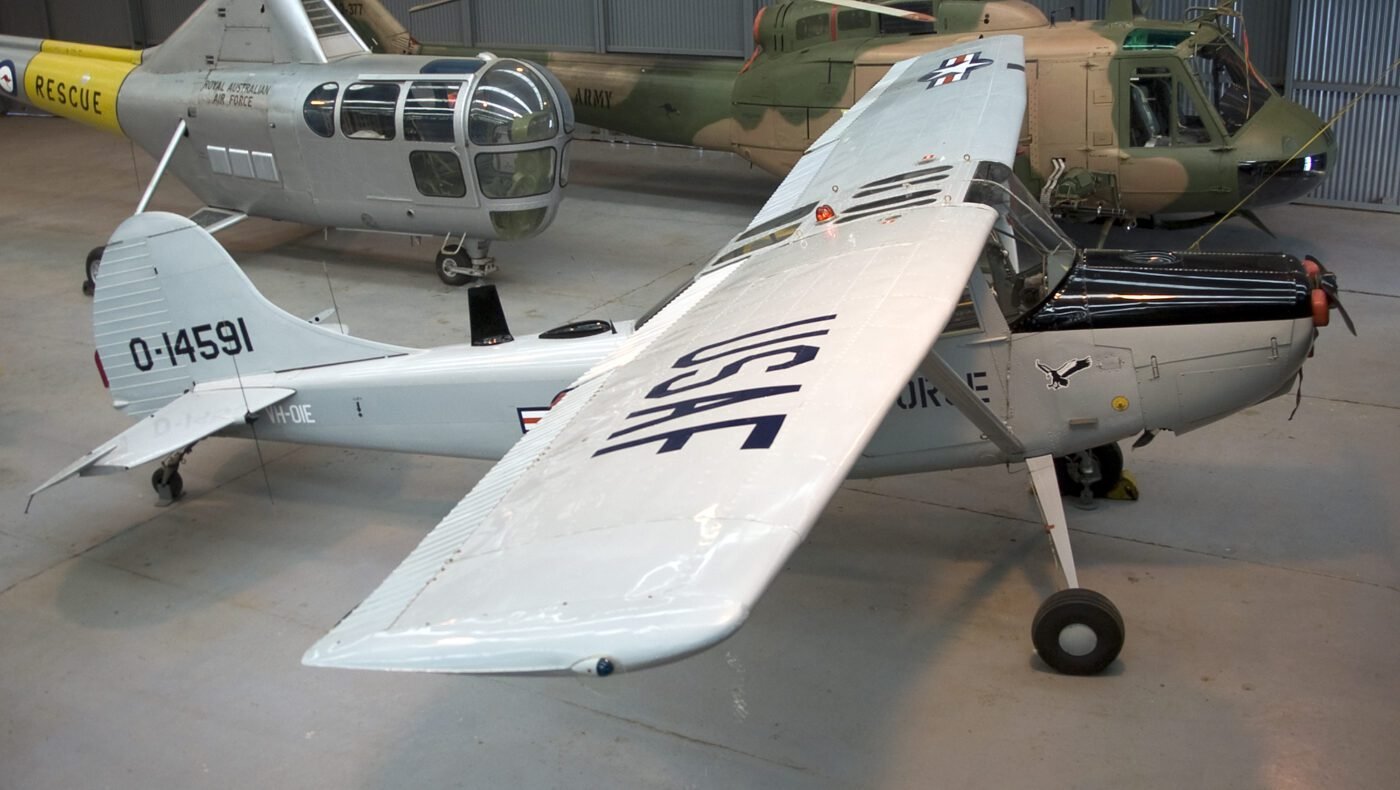
Walk into aviation museums around the world today, and you’ll find O-1 Bird Dogs on display. The aircraft remains beloved among warbird enthusiasts and historians alike. Its significance goes beyond statistics. The Bird Dog represents an entire era of military aviation, when simple, rugged aircraft flown by brave pilots made all the difference in complex, dangerous conflicts.
Conclusion
The O-1 Bird Dog proved that success in warfare is not always determined by speed, size, or firepower. Armed primarily with radios, smoke rockets, and the skill of its pilots, the Bird Dog became one of the most valuable aircraft of the Vietnam War.
Flying low over hostile territory, FAC pilots risked their lives daily to locate enemy forces, coordinate air strikes, direct artillery fire, and protect troops on the ground. Their efforts multiplied the effectiveness of American airpower and provided a crucial link between the battlefield and the skies above.
Though overshadowed by more glamorous aircraft, the O-1 Bird Dog earned a permanent place in aviation history. Its contribution to the Vietnam War serves as a reminder that sometimes the most important aircraft in a conflict is not the one carrying the biggest bombs—but the one guiding them to the target.