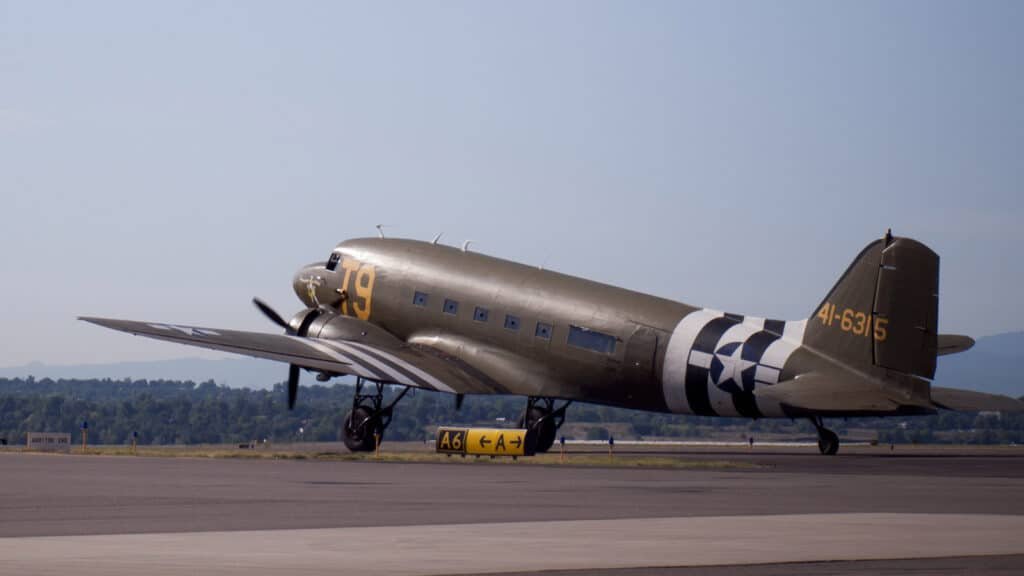
C-47 Skytrain “Gooney Bird”

C-47 Skytrain

“The legendary reliability and versatility of the Douglas C-47D Skytrain.”

Introduction

The Douglas C-47D Skytrain, also known as the Dakota in British military service, is a military transport aircraft widely used during World War II and in the following decades. It was developed from the civilian Douglas DC-3 airliner and was crucial in various military operations, including the D-Day invasion and the Berlin Airlift. Its versatility, reliability, and durability made it a popular choice for both military and civilian use, and it remains an iconic aircraft in aviation history.

Modern Uses and Variants of the Douglas C-47D Skytrain

The Douglas C-47D Skytrain, also known as the Dakota, is a military transport aircraft first introduced in the 1940s. It played a crucial role in World War II, serving as a reliable and versatile aircraft for the Allied forces. However, even after the war ended, the C-47D continued to be used in various capacities and has undergone several modifications to adapt to modern needs.

One of the most notable modern uses of the C-47D is in firefighting operations. The aircraft has been modified to carry large amounts of water or fire retardant and can be used to combat wildfires. This modification, known as the Fire Bomber, has been used in several countries, including the United States, Canada, and Australia. The C-47D’s ability to take off and land on short, unpaved runways makes it an ideal choice for firefighting in remote areas.

In addition to firefighting, the C-47D has been used for humanitarian aid and disaster relief missions. Its large cargo capacity and ability to operate in rugged terrain have made it a valuable asset in delivering supplies and aid to areas affected by natural disasters. The aircraft has been used in relief efforts for hurricanes, earthquakes, and other disasters worldwide.

The C-47D has also found a new role in the entertainment industry. Several aircraft have been modified to serve as aerial camera platforms for film and television productions. The large cargo door on the side of the aircraft allows for easy camera equipment installation, and the aircraft’s stability makes it an ideal choice for capturing aerial shots. The C-47D has been used in popular films such as “Saving Private Ryan” and “Band of Brothers.”

Another modern variant of the C-47D is the Basler BT-67. This aircraft is a remanufactured version of the C-47D with upgraded engines and avionics. The BT-67 has a longer range and can carry heavier payloads, making it suitable for aerial surveying, cargo transport, and research flights. Various government agencies, including NASA and the National Science Foundation, for scientific research in remote areas have used it.

The C-47D has also been adapted for use in skydiving operations. The aircraft’s large size and sturdy structure make it an ideal platform for skydiving, and it can accommodate many jumpers at once. The C-47D has been used in skydiving events and competitions, and some companies offer skydiving experiences from a C-47D for thrill-seekers.

In recent years, the C-47D has also been used for historical purposes. Several aircraft have been restored to their original World War II configuration and are used for airshows and commemorative events. These aircraft serve as a reminder of the C-47D’s significant role in history and pay tribute to the brave men and women who flew and maintained them during the war.

Despite its age, the C-47D remains a reliable and versatile aircraft with many modern uses and variants. Its enduring legacy is a testament to its durability and adaptability, and it remains a beloved aircraft among aviation enthusiasts. From firefighting to skydiving, the C-47D has proven its worth in various roles and continues to serve in different capacities, showcasing its timeless design and enduring capabilities.

C-47 Skytrain

Role and Significance of the C-47D Skytrain in World War II

The Douglas C-47D Skytrain, also known as the Dakota, was a military transport aircraft that played a crucial role in World War II. The Allied forces widely used it for various missions, including transporting troops, supplies, equipment, and medical evacuations. The C-47D Skytrain was a versatile and reliable aircraft game-changer in the war effort.

One of the main roles of the C-47D Skytrain was to transport troops and supplies to the front lines. This was a vital task as it ensured the soldiers had the necessary resources to carry out their missions. The C-47D could carry up to 28 fully equipped soldiers or 6,000 pounds of cargo. Its large cargo hold and sturdy design made it ideal for transporting troops and supplies to remote and rugged locations.

In addition to transporting troops and supplies, the C-47D Skytrain also played a significant role in airborne operations. It was used to drop paratroopers behind enemy lines, providing a strategic advantage to the Allied forces. The C-47D was equipped with a rear cargo door that could be opened in flight, allowing paratroopers to jump out with their equipment. This feature made it a crucial aircraft in the success of major operations such as D-Day and Operation Market Garden.

The C-47D Skytrain also played a crucial role in medical evacuations during the war. It was equipped with stretchers and could be easily converted into a flying hospital. This allowed for quickly and efficiently evacuating wounded soldiers from the front lines to medical facilities. The C-47D’s ability to land on short and rough airstrips made reaching injured soldiers in remote areas possible, saving countless lives.

Another significant role of the C-47D Skytrain was its use in supply drops to support resistance movements in occupied territories. The aircraft was used to drop weapons, ammunition, and other supplies to resistance fighters, providing them with the necessary resources to continue their fight against the enemy. This played a crucial role in weakening the Axis powers and ultimately contributed to their defeat.

The C-47D Skytrain was also used for reconnaissance missions during the war. Its ability to fly at low altitudes and slow speeds made it ideal for gathering intelligence and taking aerial photographs. This information was crucial in planning and executing military operations.

The C-47D Skytrain’s significance in World War II goes beyond its role in military operations. It also played a crucial role in the morale of soldiers. The aircraft was often referred to as the “Gooney Bird” or “Dakota,” and its distinctive silhouette and sound were a familiar and comforting sight for soldiers on the ground. The C-47D was also used to transport soldiers on leave, providing them with a much-needed break from the harsh realities of war.

In conclusion, the Douglas C-47D Skytrain was a versatile and reliable aircraft that played a crucial role in World War II. Its ability to transport troops, supplies, and equipment, as well as its use in airborne operations, medical evacuations, supply drops, and reconnaissance missions, made it an essential asset for the Allied forces. The C-47D Skytrain’s contribution to the war effort, both on and off the battlefield, cannot be overstated, and its legacy continues to be celebrated today.

History and Development of the Douglas C-47D Skytrain

The Douglas C-47D Skytrain, also known as the Dakota, is a military transport aircraft that played a crucial role in World War II and beyond. Developed by the Douglas Aircraft Company, the C-47D was a modified version of the civilian DC-3 airliner with enhanced capabilities for military use. Its versatility, reliability, and durability made it a popular choice for various military operations, earning it the nickname “Gooney Bird.”

The history of the C-47D dates back to the 1930s when the Douglas Aircraft Company designed the DC-3 as a commercial airliner. However, with the onset of World War II, the United States Army Air Corps recognized the potential of the DC-3 as a military transport aircraft. In 1941, the Army ordered the first batch of C-47s designated as the C-47A. These initial models were equipped with powerful Pratt & Whitney R-1830 Twin Wasp engines and had a cargo capacity of 6,000 pounds.

As the war progressed, the C-47D was developed with several improvements, including a strengthened airframe, larger cargo doors, and a more powerful engine. The C-47D also had a longer range and could carry a heavier payload of up to 10,000 pounds. These enhancements made the C-47D a vital asset for the Allies, as it could transport troops, supplies, and equipment to various theaters of war.

One of the most significant contributions of the C-47D was during the D-Day invasion of Normandy in 1944. The aircraft was crucial in dropping paratroopers behind enemy lines and delivering supplies to the front lines. The C-47D’s ability to operate from unprepared airstrips and its sturdy construction allowed it to withstand enemy fire, making it a reliable transport for the troops.

After the war, the C-47D continued to serve in various military operations, including the Berlin Airlift and the Korean War. It also saw action in the Vietnam War, where it was used for troop and supply transport, medical evacuation, and even as a gunship. The C-47D’s versatility and adaptability made it a valuable asset for the military, and it remained in service for several decades.

In addition to its military use, the C-47D also had a significant impact on commercial aviation. Many surplus C-47Ds were sold to civilian operators, who used them for cargo and passenger transport. The aircraft’s reliability and cost-effectiveness made it a popular choice for airlines and played a crucial role in developing the global air transportation industry.

Today, the C-47D is still in use in various parts of the world, primarily for cargo and humanitarian missions. Many have been converted into civilian aircraft, while others remain in military service. The aircraft’s iconic design and historical significance have also made it famous for airshows and aviation museums.

In conclusion, the Douglas C-47D Skytrain has a rich history and played a vital role in shaping the world we live in today. From its humble beginnings as a commercial airliner to its crucial role in military operations, the C-47D has left an indelible mark on aviation history. Its legacy continues to live on, and it will always be remembered as a symbol of strength, reliability, and resilience.

Conclusion

In conclusion, the Douglas C-47D Skytrain was a highly versatile and reliable military transport aircraft that played a crucial role in various operations during World War II and beyond. Its sturdy design, impressive performance, and ability to adapt to different roles made it a valuable asset for the Allied forces. Its legacy continues to live on, with some C-47s still in service today, showcasing the enduring impact of this iconic aircraft.
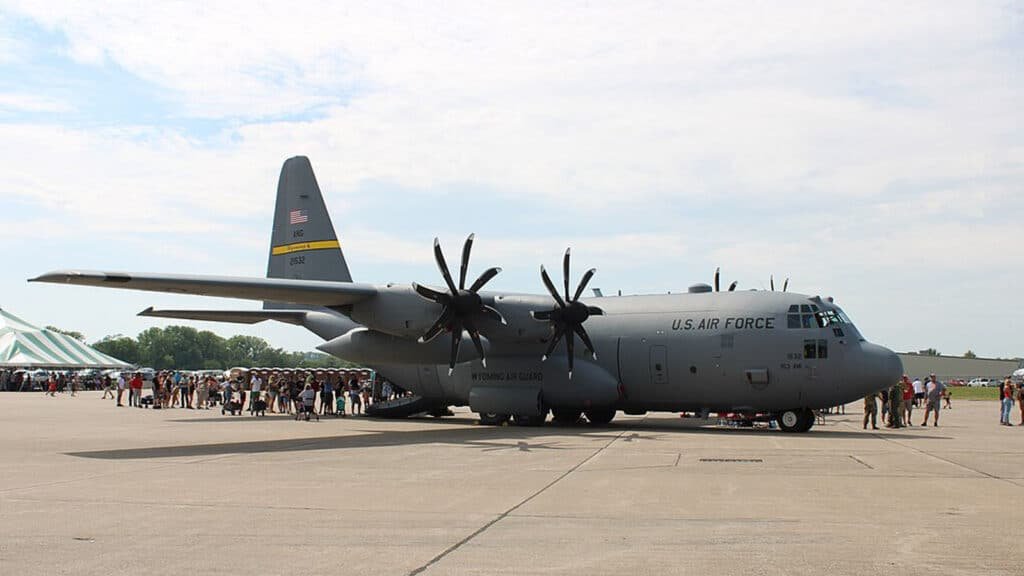
C-130E Hercules

Lockheed_C-130H

“Unstoppable strength and versatility in the skies – the Lockheed C-130E Hercules.”

Introduction

The Lockheed C-130E Hercules is a versatile and iconic military transport aircraft in service for over 60 years. It was first introduced in the 1950s and has since become a staple in the air forces of many countries worldwide. With its impressive capabilities and reliability, the C-130E Hercules has played a crucial role in various military operations, humanitarian missions, and civilian operations.

Lockheed C-130E Hercules in Military Operations

One of the notable uses of the C-130E Hercules is its role in humanitarian aid and disaster relief missions. The aircraft’s ability to operate in rugged and austere environments makes it ideal for delivering supplies and equipment to areas affected by natural disasters or conflicts. In 2017, during the aftermath of Hurricane Maria in Puerto Rico, the C-130E Hercules was vital in delivering food, water, and medical supplies to remote and inaccessible areas. Its short takeoff and landing capabilities allowed it to operate from small and damaged runways, making it a crucial lifeline for those in need.

The C-130E Hercules has also been a key player in military operations, supporting ground troops and conducting a wide range of missions. Its ability to carry heavy loads and operate in various weather conditions has made it a preferred choice for airlifting troops, equipment, and supplies. During the Vietnam War, the C-130E Hercules was used extensively for troop and cargo transport, as well as for aerial refueling and close air support missions. Its versatility and reliability in combat have made it a staple in military operations.

In addition to its transport capabilities, the C-130E Hercules has also been modified for specialized missions. One such modification is the AC-130 gunship, equipped with powerful weapons and sensors for close air support and ground attack missions. The AC-130 has been used in various conflicts, including the Gulf War, Afghanistan, and Iraq, providing crucial support to ground forces and conducting precision strikes on enemy targets. Its ability to loiter over a target for extended periods and deliver accurate firepower has made it a formidable asset in modern warfare.

The C-130E Hercules has also played a significant role in aerial firefighting operations. Its ability to carry large amounts of water or fire retardant and operate in rugged terrain has made it an essential tool in fighting wildfires. In 2019, during the devastating wildfires in Australia, the Royal Australian Air Force deployed their C-130E Hercules aircraft to drop water and retardant on the fires, helping to contain and extinguish them. The aircraft’s speed and agility allowed it to make multiple drops in a short amount of time, making a significant impact on the firefighting efforts.

Furthermore, the C-130E Hercules has been crucial in special operations missions. Its ability to operate at low altitudes and in hostile environments has made it a preferred choice for inserting and extracting special forces teams. The aircraft’s ability to fly at night and use advanced navigation systems has also made it a valuable asset for covert operations. The C-130E Hercules has been used in various special operations missions, including the raid on Osama bin Laden’s compound in 2011.

In conclusion, the Lockheed C-130E Hercules has significantly impacted military operations since its introduction in 1954. Its versatility, reliability, and adaptability have made it a crucial asset in various missions, from humanitarian aid to combat operations. The aircraft’s continued use and modifications demonstrate its enduring value and importance in modern warfare. As technology advances and new aircraft are developed, the C-130E Hercules remains a staple in military operations, proving its worth repeatedly.

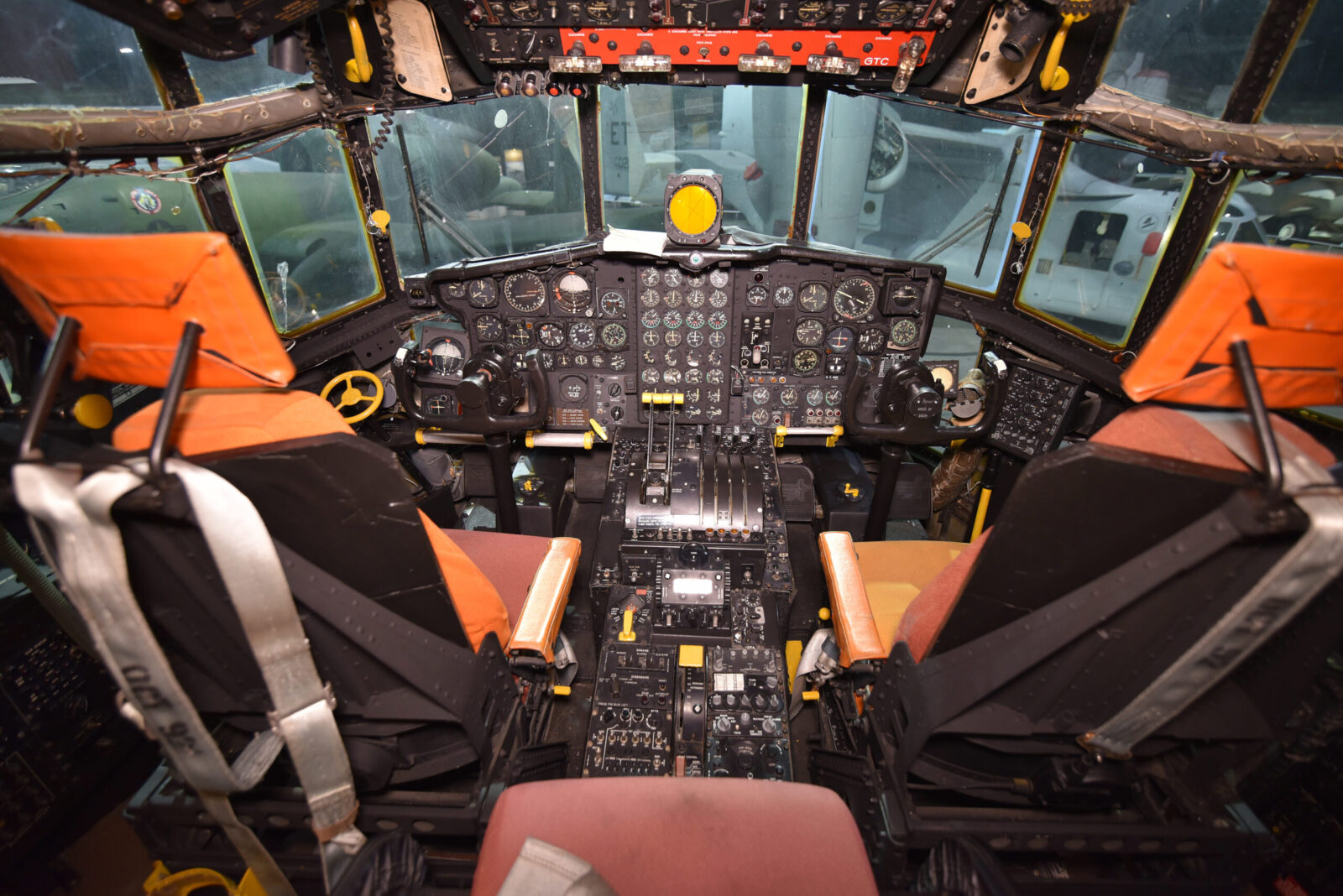
C-130 cockpit

Capabilities of the Lockheed C-130E Hercules

The Lockheed C-130E Hercules is a versatile and reliable military transport aircraft that has been in service for over 60 years. It has been used by various countries worldwide for various missions, from troop and cargo transport to aerial refueling and search and rescue operations.

One of the most notable features of the C-130E Hercules is its four turboprop engines, which allow it to take off and land on short and unprepared runways. This makes it ideal for remote and austere environments where traditional jet-powered aircraft may be unable to operate. The engines also provide the aircraft with high maneuverability, allowing it to perform tactical missions such as low-level flying and airdrops.

The C-130E Hercules has a maximum payload capacity of 45,000 pounds and can carry up to 92 fully equipped troops or 64 paratroopers. It can also transport a wide range of cargo, including vehicles, artillery, and supplies. The aircraft’s cargo compartment is 41 feet long, 9 feet high, and 10 feet wide, providing ample space for various types of cargo. Additionally, the C-130E Hercules has a rear loading ramp and door, which allows for quick and efficient loading and unloading of cargo and personnel.

In addition to its transport capabilities, the C-130E Hercules is also equipped with various defensive systems, making it a formidable aircraft in combat situations. It has a radar warning receiver, chaff and flare dispensers, and infrared countermeasures to protect against enemy threats. The aircraft also has a self-defense system that can be operated by the crew or automatically in response to incoming threats.

The C-130E Hercules is a transport and combat aircraft and can perform aerial refueling missions. It is equipped with a retractable refueling probe to refuel other aircraft in mid-air. This capability greatly extends the range and endurance of the C-130E Hercules, making it an essential asset for long-range missions.

Another key feature of the C-130E Hercules is its ability to operate in various weather conditions. It is equipped with a weather radar and de-icing system, allowing it to fly in adverse weather conditions such as rain, snow, and icing. This makes it a reliable aircraft for peacetime and combat operations, as it can operate in various environments.

The C-130E Hercules is known for its short takeoff and landing (STOL) capabilities. It can take off and land on runways as short as 2,000 feet, making it suitable for operations in remote and austere locations. This feature has been crucial in humanitarian and disaster relief missions, where the aircraft can quickly deliver aid and supplies to areas with limited infrastructure.

In addition to its impressive features, the C-130E Hercules has a long service life and has undergone several upgrades and modernizations. This has allowed it to remain a relevant and practical aircraft in modern military operations. The aircraft has also been exported to various countries, further showcasing its versatility and reliability.

In conclusion, the Lockheed C-130E Hercules is a highly capable and versatile military transport aircraft. Its four turboprop engines, cargo capacity, defensive systems, aerial refueling capabilities, and ability to operate in various weather conditions make it an essential asset for various missions. With its long service life and continuous upgrades, the C-130E Hercules will play a vital role in military operations for years.

History and Evolution of the Lockheed C-130E Hercules

The Lockheed C-130E Hercules is a military transport aircraft in service for over six decades. It has played a crucial role in various military operations and has been continuously upgraded to meet the changing needs of the armed forces. In this article, we will take a closer look at the history and evolution of this iconic aircraft.

The C-130E Hercules was first introduced in 1956 by the American aerospace company Lockheed. It was designed as a tactical transport aircraft to replace the aging C-119 Flying Boxcar. The initial design was based on the C-130A model but with a longer fuselage and increased cargo capacity. The first flight of the C-130E took place in August 1954, and it was officially introduced into service in April 1956.

One of the key features of the C-130E was its ability to operate from unprepared runways, making it a versatile aircraft for military operations. It could also carry a significant amount of cargo, up to 42,000 pounds, and had a range of over 2,000 nautical miles. These capabilities made it an essential asset for the US Air Force during the Cold War.

In the 1960s, the C-130E underwent several upgrades to improve its performance and capabilities. The most significant upgrade was the addition of the Allison T56-A-7 turboprop engines, which increased the aircraft’s power and range. This upgrade also led to the aircraft’s designation as C-130H, with the “H” standing for “Hercules II.”

The C-130E also played a crucial role in the Vietnam War, where it was used for various missions, including troop and cargo transport, medical evacuation, and aerial refueling. Its ability to operate from short and unprepared runways made it an ideal aircraft for delivering supplies to remote areas and supporting ground troops.

In the 1970s, the C-130E underwent another major upgrade, known as the C-130E (Hercules III) Improvement Program. This upgrade included the installation of more powerful engines, improved avionics, and a redesigned wing. These upgrades significantly improved the aircraft’s performance and extended its service life.

The C-130E continued to serve in various military operations, including the Gulf War, which was crucial in transporting troops and supplies. It also saw action in humanitarian missions, such as delivering aid to disaster-stricken areas and supporting peacekeeping operations.

In the 1990s, the C-130E underwent another significant upgrade, known as the Avionics Modernization Program (AMP). This upgrade included installing a digital flight control system, a new radar, and improved navigation and communication systems. These upgrades improved the aircraft’s reliability and reduced the workload for the crew.

The C-130E also saw action in the War in Afghanistan and the Iraq War, where it was used for various missions, including troop transport, cargo delivery, and aerial refueling. Its versatility and reliability made it a vital asset for the US military in these conflicts.

In 2013, the US Air Force retired the last of its C-130E models, marking the end of an era for this iconic aircraft. However, many countries worldwide still operate the C-130E, which is crucial in military operations and humanitarian missions.

In conclusion, the Lockheed C-130E Hercules has a rich history and has evolved over the years to meet the changing needs of the military. Its versatility, reliability, and ability to operate from unprepared runways have made it a vital asset for various missions. Although it has been retired from service in the US Air Force, its legacy continues to live on through its upgraded versions and its continued service in other countries. The C-130E will always be remembered as a legendary aircraft crucial in shaping military aviation history.

OV-10A Bronco: History, Design, and Missions

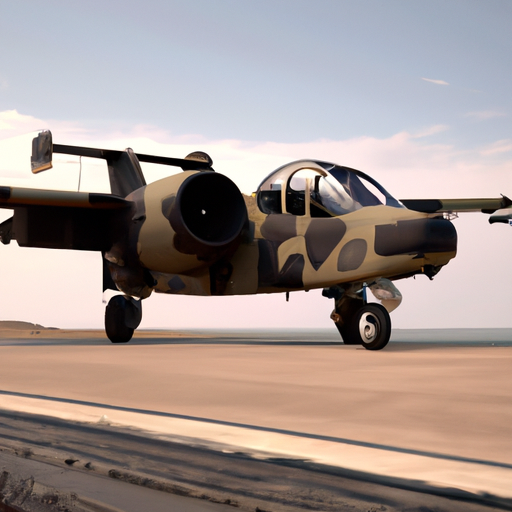
OV-10A Bronco

OV-10A Bronco

With its rugged design and impressive capabilities, the OV-10A Bronco has been a force to be reckoned with in various missions throughout its operational history. From its unique features to its lasting influence, this aircraft has left an indelible mark on military aviation.

Development and Design

This versatile aircraft was initially developed in the 1960s for counter-insurgency missions in Vietnam. Its design focused on providing excellent observation capabilities and the ability to carry a wide range of weapons.

The OV-10A Bronco was designed with a twin-boom configuration, which allowed for better stability and increased payload capacity. Its high-wing design provided excellent visibility for the crew, making it ideal for reconnaissance missions. The aircraft was also equipped with a unique feature called the ‘Canadair CL-89 drone launcher,’ which allowed it to deploy drones for additional surveillance.

The OV-10A Bronco was powered by two turboprop engines, providing sufficient power to operate in various environments. Its sturdy construction and rugged landing gear enabled it to operate from unprepared and rough airstrips.

Overall, the development and design of the OV-10A Bronco focused on creating a reliable and versatile aircraft that could effectively support ground forces in combat situations.

OV-10

Missions and Capabilities

The OV-10A Bronco was a versatile aircraft primarily used for forward air control (FAC) missions. As a FAC aircraft, its primary purpose was to coordinate and direct airstrikes by communicating with ground forces and fighter aircraft. The Bronco was equipped with a wide range of sensors and communication systems, allowing it to gather real-time intelligence and provide accurate target location information to other aircraft.

In addition to its FAC role, the OV-10A Bronco could perform other missions such as reconnaissance, artillery spotting, and aerial interdiction. Its ability to operate from short, unimproved runways made it an ideal aircraft for operating in remote and austere environments. The Bronco’s 360-degree observation windows and side-mounted machine guns provided excellent visibility and self-defense capabilities. Its twin-engine configuration and rugged design allowed it to withstand enemy fire and continue operating even if one engine was damaged.

Overall, the OV-10A Bronco was a highly effective aircraft that proved its worth during the Vietnam War. Its missions and capabilities made it invaluable in supporting ground forces and conducting counter-insurgency operations.

OV-10 Cockpit

Operational History

During its operational history, the OV-10A Bronco flew over 80,000 combat sorties in Vietnam. As you delve into the aircraft’s past, you’ll discover its significant role during the Vietnam War.

The OV-10A Bronco was primarily used for close air support, interdiction, and reconnaissance missions. Its versatility made it a valuable asset on the battlefield.

With its twin engines and maneuverability, the Bronco navigated challenging terrains, making it ideal for operations in Vietnam. It provided crucial support to ground troops, delivering firepower precisely where needed and conducting visual reconnaissance to gather vital intelligence.

The OV-10A Bronco became known for its ability to operate in austere environments, including short runways and unprepared landing zones. Its ability to carry a wide range of ordnance, including rockets, bombs, and machine guns, gave it the firepower to engage enemy targets effectively.

Beyond its combat missions, the Bronco also served as a forward air control aircraft, directing other aircraft to their targets and coordinating airstrikes. This allowed for efficient and accurate strikes, reducing the risk of friendly fire incidents.

Overall, the operational history of the OV-10A Bronco in Vietnam showcases its importance and effectiveness in supporting ground forces. Its contribution to the war effort can’t be overstated, and its legacy as a reliable and versatile aircraft lives on.

Features and Specifications

This versatile aircraft, developed in the 1960s, was primarily used for forward air control missions. Equipped with a twin-turboprop engine, the Bronco can reach speeds of up to 288 mph, allowing for quick response times on the battlefield. Its range of approximately 960 miles ensures extended operational endurance, enabling it to cover large areas without refueling.

With a maximum payload capacity of 3,200 lbs, the Bronco can carry various weapon systems, such as bombs, rockets, and machine guns, providing effective air-to-ground support. Its four hard points under the wings offer flexibility for different mission requirements.

Additionally, the OV-10A Bronco is equipped with advanced avionics, including a radar and a laser target designator, enhancing its ability to identify and engage targets accurately. Its short takeoff and landing capabilities make it well-suited for operating in rugged and austere environments.

Overall, the OV-10A Bronco’s unique speed, range, payload capacity, and advanced avionics make it a reliable and formidable asset in combat situations.

Legacy and Influence

The OV-10A Bronco, a versatile observation, and light attack aircraft, has left a lasting imprint on the aviation industry. Its innovative design and capabilities have paved the way for future military aircraft.

One of the critical contributions of the OV-10A Bronco is its ability to perform various roles efficiently. Originally designed for counter-insurgency missions during the Vietnam War, the Bronco proved highly adaptable. It excelled in reconnaissance, close air support, and forward air control missions. This versatility has influenced the design of modern military aircraft, which strive to be multi-role and adaptable to different combat scenarios.

Frequently Asked Questions

How Did the OV-10A Bronco Perform in Combat Compared to Other Aircraft of Its Time?

In combat, the OV-10A Bronco outperformed other aircraft of its time. Its speed and maneuverability allowed for effective close air support, making it a formidable asset on the battlefield.

What Were the Main Challenges Faced During the Development and Design of the OV-10A Bronco?

During the development and design of the OV-10A Bronco, the main challenges you faced were meeting the specifications for a versatile and rugged aircraft while ensuring it had excellent maneuverability and could operate in various climates and terrains.

Can the OV-10A Bronco Be Modified to Carry Different Types of Weapons or Equipment?

Yes, the OV-10A Bronco can be modified to carry different weapons or equipment. Its versatility and adaptability make it a valuable platform for various missions and requirements.

Were There Any Significant Accidents or Incidents Involving the OV-10A Bronco During Its Operational History?

There were several significant accidents and incidents involving the OV-10A Bronco during its operational history. These incidents ranged from crashes to engine failures, highlighting the risks of operating this aircraft.

What Are Some Lesser-Known Roles or Missions That the OV-10A Bronco Was Used for During Its Service?

Did you know the OV-10A Bronco was involved in some mind-blowing missions you probably never heard of? From covert surveillance to unconventional warfare, this versatile aircraft did it all!

Conclusion

But you may wonder, ‘Why should I care about this legacy aircraft?’

Despite its retirement from active duty, the Bronco’s influence can still be seen in modern military aviation.

Its versatility and effectiveness in close air support missions have paved the way for developing advanced aircraft like the A-10 Thunderbolt II. The OV-10A Bronco may be a relic, but its impact lives on.

Cessna A-37 Dragonfly: Versatile and Effective Light Attack Aircraft

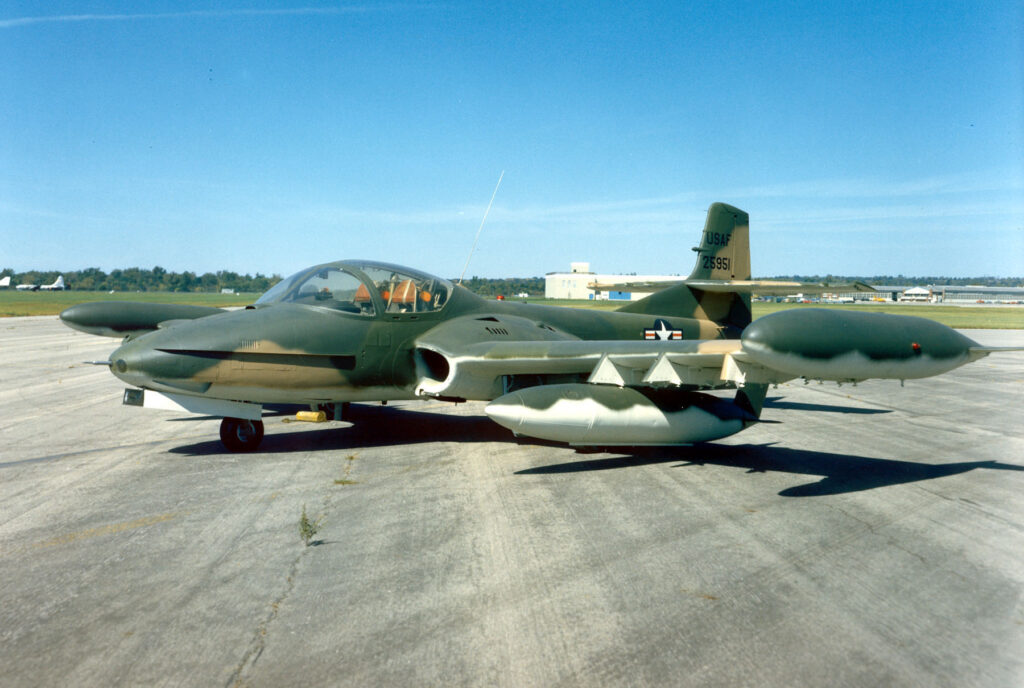
Cessna A-37

History and Development of the Cessna A-37 Dragonfly

The Cessna A-37 Dragonfly is a light attack and observation aircraft developed by the American company Cessna in the 1960s. It was primarily used by the United States Air Force (USAF) during the Vietnam War and was later exported to several other countries. The development of the A-37 Dragonfly resulted from the USAF’s need for a light attack aircraft that could operate in close air support and counter-insurgency missions.

The history of the Cessna A-37 Dragonfly can be traced back to the early 1960s when the USAF issued a requirement for a new light attack aircraft. Cessna, along with several other companies, submitted proposals for the project. However, Cessna’s design, which was based on their successful T-37 Tweet trainer aircraft, was ultimately selected by the USAF. The prototype of the A-37, designated as the YA-37A, made its first flight in October 1963.

The A-37 Dragonfly was a twin-engine, two-seat aircraft with a maximum speed of 500 miles per hour and a range of 1,000 miles. It was equipped with various weapons, including machine guns, rockets, and bombs, making it a versatile aircraft for different missions. The A-37 also had the unique feature of carrying and launching the AIM-9 Sidewinder air-to-air missile, making it a capable fighter aircraft.

In 1967, the A-37 Dragonfly was officially introduced into service with the USAF and designated the A-37A. It was based at the Bien Hoa Air Base and used in the Vietnam War, where it proved to be a highly effective aircraft in close air support and counter-insurgency missions. Its small size and maneuverability allowed it to operate in rugged terrain and provide support to ground troops. The A-37 also had a low infrared signature, making it difficult for enemy anti-aircraft weapons to detect and track.

Cessna A-37
DAYTON, Ohio — Cessna YA-37A Dragonfly at the National Museum of the United States Air Force. (U.S. Air Force photo)

The success of the A-37 in Vietnam led to its export to several other countries, including South Vietnam, Thailand, and Ecuador. These countries used the A-37 in various conflicts and found it a reliable and effective aircraft. In total, over 500 A-37s were produced, and it remained in service with the USAF until the early 1990s.

In addition to its combat roles, the A-37 Dragonfly also significantly developed the Forward Air Controller (FAC) concept. FACs were responsible for coordinating air support for ground troops, and the A-37’s ability to operate near the battlefield made it an ideal aircraft for this role. The success of the A-37 in this role led to the development of dedicated FAC aircraft, such as the OV-10 Bronco.

Despite its success, the A-37 Dragonfly was not without its flaws. Its small size and limited payload capacity meant it could only carry a limited amount of weapons and fuel, reducing its effectiveness in longer missions. It also lacked modern avionics and electronic warfare capabilities, making it vulnerable to enemy air defenses.

Key Features and Specifications of the Cessna A-37 Dragonfly

The Cessna A-37 Dragonfly is a light attack and observation aircraft developed by the Cessna Aircraft Company in the 1960s. The United States Air Force primarily used and exported it to several other countries. The A-37 was designed to be a versatile and cost-effective aircraft that could perform a variety of missions, including close air support, interdiction, and reconnaissance.

One of the features of the Cessna A-37 Dragonfly is its compact size. It has a wingspan of only 33 feet and a length of 29 feet, making it a small and agile aircraft. This compact size allowed the A-37 to operate from short and unimproved runways, making it suitable for deployment in remote and austere locations. Additionally, the A-37 was designed to be easily maintainable in the field, with many of its components being interchangeable and easily accessible.

The A-37 was also equipped with a powerful engine, the General Electric J85-GE-17A turbojet, which gave it a top speed of over 500 miles per hour. This engine, combined with the aircraft’s lightweight design, gave the A-37 an impressive rate of climb and maneuverability. It could also carry a significant amount of weapons and fuel, allowing it to stay in the air for extended periods.

In terms of armament, the Cessna A-37 Dragonfly was equipped with two 7.62mm machine guns and could carry up to 6,000 pounds of external ordnance. This included a variety of bombs, rockets, and missiles, making it a formidable ground attack aircraft. The A-37 was also equipped with a sophisticated targeting system, allowing it to deliver its weapons on target accurately.

Another notable feature of the A-37 was its ability to operate at low altitudes. This was particularly useful for close air support missions, where the aircraft needed to fly at low levels to engage targets accurately. The A-37 was also equipped with a low-level bombing system, which allowed it to drop bombs with a high degree of accuracy while flying at low altitudes.

In terms of specifications, the Cessna A-37 Dragonfly had a maximum takeoff weight of 16,000 pounds and a range of over 1,000 miles. It could also operate at altitudes of up to 35,000 feet, giving it the ability to perform a variety of missions in different environments. The A-37 was also equipped with various avionics and navigation systems, including a radar, an inertial navigation system, and a radio navigation system.

The Cessna A-37 Dragonfly was also known for its ruggedness and durability. It was designed to withstand harsh operating conditions and operate in various weather conditions. This made it a reliable and versatile aircraft that could be deployed in various theaters of operation.

Military Applications and Operations of the Cessna A-37 Dragonfly

One of the main reasons for the A-37’s success in military operations is its ability to operate in rugged and austere environments. This aircraft was designed to take off and land on short, unimproved runways, making it ideal for use in remote areas or on makeshift airfields. This feature has made the A-37 a valuable asset in counterinsurgency and counterterrorism operations, where the need for quick and agile air support is crucial.

In addition to its ruggedness, the A-37’s small size and low profile make it a difficult target for enemy air defenses. This was especially important during the Vietnam War when the aircraft was used for close air support and reconnaissance missions. Its small size and maneuverability allowed it to fly low and slow, providing accurate and practical support to ground troops.

The A-37’s armament also played a significant role in its success in military operations. It was equipped with two 7.62mm machine guns and could carry up to 6,000 pounds of external ordnance, including bombs, rockets, and missiles. This made it a formidable weapon against ground targets, and its ability to carry a wide range of weapons allowed it to adapt to different mission requirements.

One of the most notable military operations in which the A-37 was used was the Salvadoran Civil War in the 1980s. The Salvadoran Air Force, with the support of the United States, used the A-37 to conduct airstrikes against rebel forces. The aircraft’s ability to operate in rugged terrain and its armament proved to be crucial in the success of these operations.

In addition to its use in active combat, the A-37 has also been used in various military training exercises. Its versatility and low operating costs have made it popular for training pilots in close air support and ground attack missions. The aircraft’s simple design and ease of maintenance also make it an ideal platform for training ground crews.

In conclusion, the Cessna A-37 Dragonfly has proven to be a reliable and versatile aircraft in military applications and operations. Its ruggedness, small size, and armament have made it a valuable asset in various conflicts and training exercises. Its continued use in military operations worldwide is a testament to its capabilities and effectiveness in supporting ground troops and conducting various missions.

Notable Variants and Modifications of the Cessna A-37 Dragonfly

One of the most significant variants of the A-37 Dragonfly was the A-37B, an upgraded version of the original A-37A. The A-37B featured a more powerful engine, improved avionics, and increased fuel capacity. These enhancements allowed the aircraft to carry a heavier payload and fly longer missions, making it even more effective in combat situations. The A-37B also had a reinforced airframe, which made it more durable and able to withstand harsher environments.

In addition to the A-37B, several other variants of the A-37 Dragonfly were developed for specific purposes. One such variant was the OA-37B, a dedicated observation and forward air control (FAC) aircraft. It was equipped with advanced sensors and communication systems to gather intelligence and direct ground forces during missions. The OA-37B was also used for search and rescue operations, as it could carry a rescue hoist and medical equipment.

Another notable variant of the A-37 Dragonfly was the A-37C, a modified version of the A-37B. The A-37C had an extended nose section, which housed a laser designator and target acquisition system. This allowed the aircraft to accurately guide laser-guided bombs and missiles, making it a more effective ground attack aircraft. The A-37C also had improved navigation and communication systems, which made it suitable for night and all-weather operations.

Apart from these variants, several modifications were made to the A-37 Dragonfly, further enhancing its capabilities. One of the most significant modifications was installing a General Electric J85-GE-17A engine, which increased the aircraft’s thrust and top speed. This modification was primarily done to improve the A-37’s performance in high-altitude environments, where the thinner air affected its engine’s performance.

Another notable modification was the addition of a gun pod under the aircraft’s fuselage. This allowed the A-37 to carry an additional 20mm cannon, increasing its firepower and making it more effective in ground attack missions. The gun pod could also be easily removed, allowing the aircraft to be used for other purposes, such as reconnaissance or training.

In conclusion, the Cessna A-37 Dragonfly underwent several notable variants and modifications throughout its service, further enhancing its capabilities and performance. From the A-37B, with its increased payload and durability, to the A-37C, with its laser-guided bomb capabilities, these variants and modifications made the A-37 Dragonfly a versatile and reliable aircraft that played a crucial role in the Vietnam War and beyond.

T-41 Trainer: Introduction, Role, and Legacy

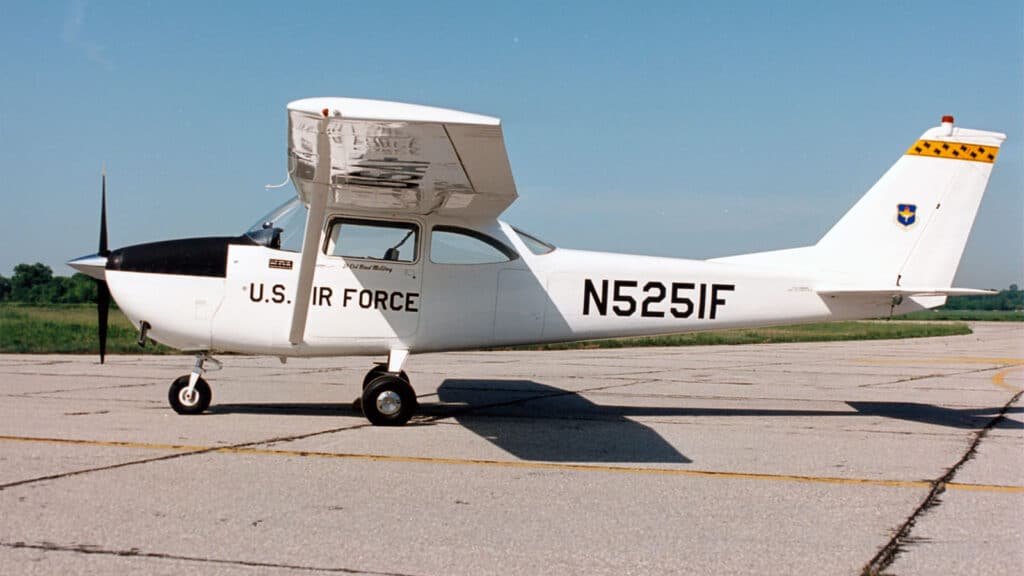
Cessna T-41 Trainer Mescalero

History of the T-41 Trainer

The T-41 Trainer is a military training aircraft derived from the popular Cessna 172 Skyhawk. The history of the T-41 Trainer is closely linked to the United States Air Force (USAF) and its need for a new primary trainer.

In the late 1950s, the USAF sought a replacement for its aging piston-engine trainers, including the T-34 Mentor and T-37 Tweet. They required a modern, robust, cost-effective aircraft that could provide comprehensive training to new pilots.

Cessna Aircraft Company submitted their Cessna 172 for consideration, already widely used as a civil general aviation aircraft. The USAF selected the Cessna 172 for further evaluation and modification, creating the military version known as the T-41.

The T-41A, as designated, featured minor modifications to meet military standards. These modifications included reinforced wing spars, upgraded avionics, and additional military-specific equipment such as a smoke generator, student pilot/stick instructor control configuration, radio navigation aids, and attachment points for rocket pods and machine guns, should the need arise.

In 1964, the T-41A entered service with the USAF, replacing the T-34 Mentor as the primary trainer. It was primarily used for initial flight screening solo and instrument flight training. The T-41B variant was also developed as an instrument training aircraft.

In addition to the USAF, the T-41 Trainer was also used by other branches of the United States military, including the United States Army and the United States Navy. It was used for various purposes, such as pilot screening, liaison, and light transport missions.

Over the years, the T-41 Trainer gained popularity worldwide and was exported to numerous countries. It served as a primary trainer for many air forces globally, including those of Germany, Singapore, and Thailand.

Towards the late 1980s, the T-41 Trainer began to be phased out of service with the USAF as newer and more advanced training aircraft were introduced. However, it continued to be used by other countries for several more years.

Today, the T-41 Trainer is considered a classic military training aircraft and is still flown by civilian operators and private individuals worldwide. Its history as a derivative of the Cessna 172 Skyhawk reflects the adaptability and versatility of the original design, which has been a cornerstone of general aviation for decades.

Introduction to the T-41 Aircraft (Mescalero)

The T-41 Trainer, also known as the Cessna T-41 or Cessna R172, was a military trainer aircraft used by the United States Air Force (USAF) and many other air forces worldwide. It was a variant of the civilian Cessna 172 Skyhawk aircraft.

The T-41 Trainer was primarily used for initial flight, instrument, and navigation training. It had a single engine, four seats, and a high-wing design, making it suitable for training. The aircraft had a fixed tricycle landing gear and was powered by a Continental O-300 piston engine.


The USAF initially used the T-41 for flight screening of potential pilots and cadet training at the United States Air Force Academy. It was also utilized for liaison duties, light transport, and as a general-purpose support aircraft. Additionally, it served as an observation aircraft during military operations.

The T-41 Trainer was widely exported to various countries as a training aircraft due to its reliability, ease of maintenance, and versatile capabilities. It provided a cost-effective solution for military flight training programs.

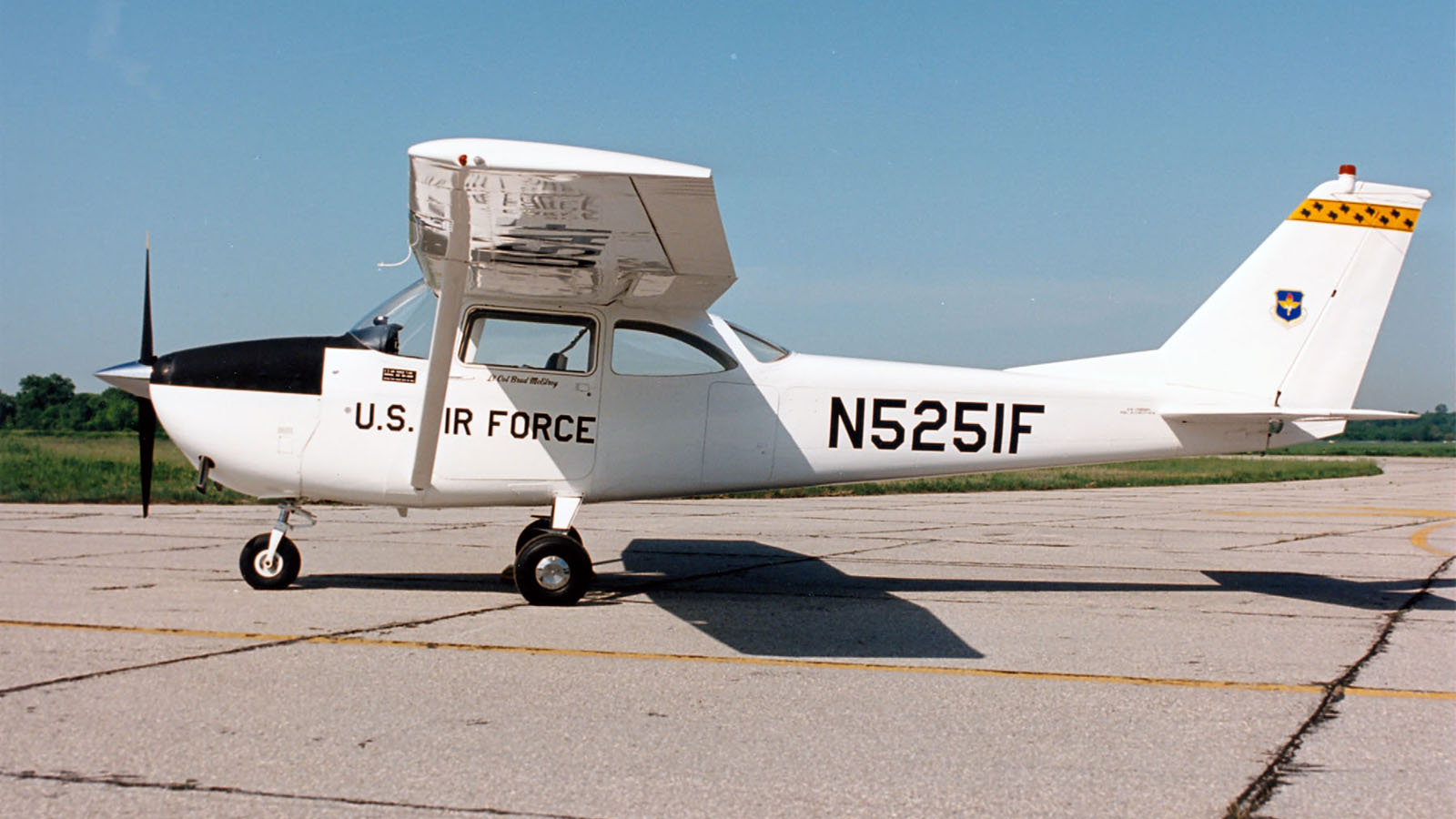
Cessna T-41 Trainer Mescalero

Role of the T-41 Trainer in Military Pilot Training

Introduction to Flight:

The T-41 was an initial trainer aircraft, often used as the first step for students transitioning from ground-based training to actual flight operations. It was designed to provide a safe and straightforward platform for trainees to gain essential flying skills.

Familiarization:

The T-41 trainer introduced trainees to the fundamentals of flight, including basic aircraft controls, instrument interpretation, takeoff, landing procedures, and navigation techniques. It allowed students to get accustomed to being in the air and handling an airplane.

Single-Engine Propeller Aircraft:

The T-41 trainer featured a single engine and a fixed landing gear, which made it relatively easy to operate and maintain. This helped trainee pilots develop proficiency in flying propeller-driven aircraft before moving on to more complex jet-powered platforms.

Visual Flight Rules (VFR) Training:

The T-41 Trainer was primarily used for visual flight rules (VFR) training, which means flying without relying heavily on instruments. Trainees learned to navigate using visual cues such as landmarks, roads, rivers, and other ground references. This training was essential for future military pilots who often operate in diverse and challenging environments.

Flight Discipline and Procedures:

The T-41 Trainer emphasized flight discipline and adherence to standardized procedures. Trainees developed essential skills in communication, cockpit resource management, emergency procedures, and decision-making, all crucial for military aviation.

Transition to Advanced Training Aircraft:

After completing the training on the T-41 trainer, students would progress to more advanced military aircraft such as jet trainers or combat aircraft. The skills acquired on the T-41 laid a solid foundation for further aviation training, enabling trainees to handle more demanding aircraft systems.

Leadership and Confidence Building:

Military pilot training aims to develop technical flying skills and build strong leadership qualities and self-confidence. The T-41 was crucial in helping trainees develop these qualities by providing them with hands-on experience, challenges, and opportunities to learn and overcome obstacles.

While the T-41 trainer was eventually replaced by more modern training aircraft (Slingsby T67 Firefly), its role in military pilot training was instrumental in shaping countless aviators who served in various air forces worldwide.

Legacy and Impact: Contributions of the T-41 to Aviation History

The T-41, also known as the Cessna 172, has significantly contributed to aviation history with its legacy and impact. Here are some of its notable contributions:

  • Training Aircraft: The T-41/Cessna 172 has been widely used as a primary training aircraft by flight schools and aviation organizations worldwide. Its stable flight characteristics, simple controls, and reliability make it an ideal platform for training new pilots. Countless aviation enthusiasts have taken their first flight lessons on a T-41, contributing to the development of skilled pilots across generations.

  • Civilian Aviation: The T-41/Cessna 172 played a crucial role in the growth and expansion of civilian aviation. Its widespread use by private pilots and aviation enthusiasts enhanced personal travel and recreational flying. The affordability and availability of the T-41 made it accessible to a wide range of individuals, helping popularize general aviation worldwide.

  • Flight Testing and Research: Versions of the T-41, such as the Cessna 172RG, have been employed for flight testing and research purposes. This allowed scientists and engineers to gather valuable data on various aspects of aircraft performance, flight dynamics, and safety. The T-41 has served as a platform for testing new technologies, conducting flight experiments, and advancing aviation research.

  • Aviation Safety and Regulations: The T-41’s role in flight training has contributed significantly to aviation safety and establishing regulatory standards. It has played a vital role in teaching new pilots essential aviation principles and procedures, helping them develop good airmanship and ensuring safer skies. Its ubiquity in training has also influenced the creation and refinement of aviation regulations and standards.

  • Endurance Records: The T-41/Cessna 172 holds several endurance records, further establishing its impact on aviation history. For instance, in 1958, Robert Timm and John Cook set a world record for the longest continuous flight without refueling, flying a Cessna 172 for over 64 days. These records showcased the endurance and reliability of the T-41, highlighting its capabilities and performance in long-duration flights.

The T-41/Cessna 172’s contributions to aviation history include its role as a training aircraft, its impact on civilian aviation, its use in flight testing and research, its influence on aviation safety and regulations, and its endurance record achievements. Its legacy is evident in the countless pilots trained on it, the advancements it propelled in the aviation industry, and its impact on expanding and popularizing general aviation.