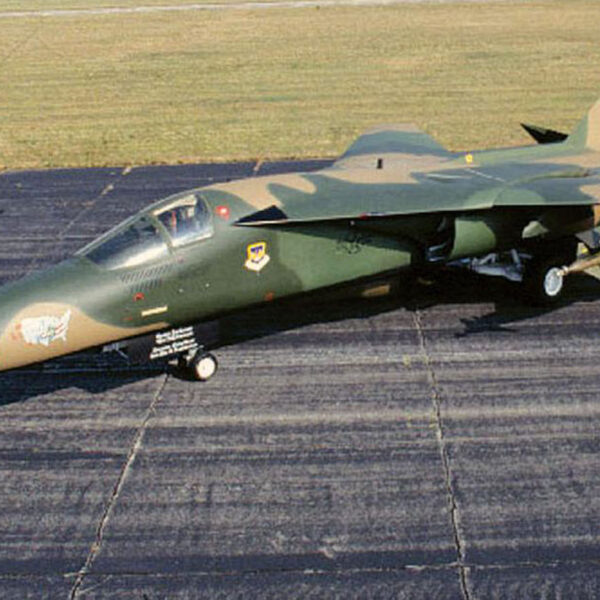
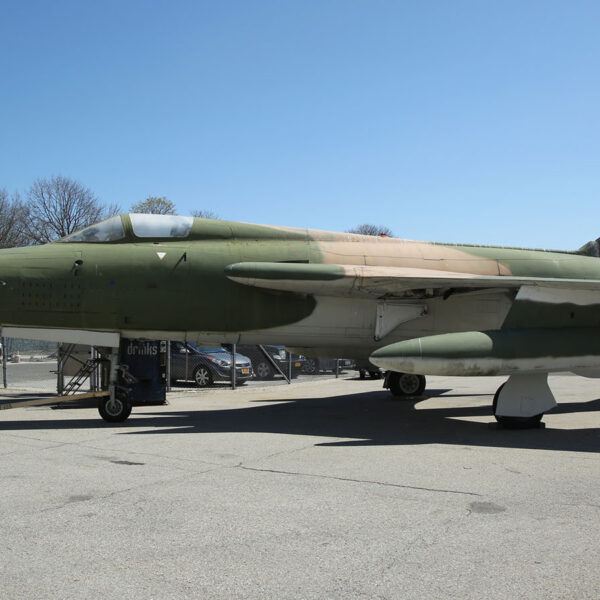
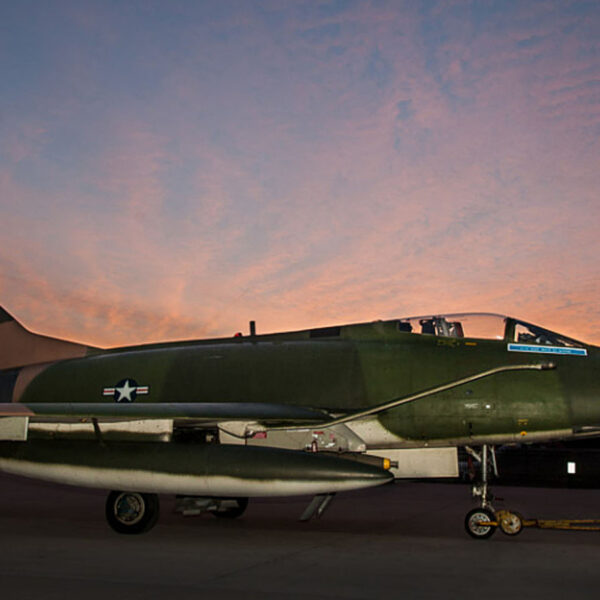
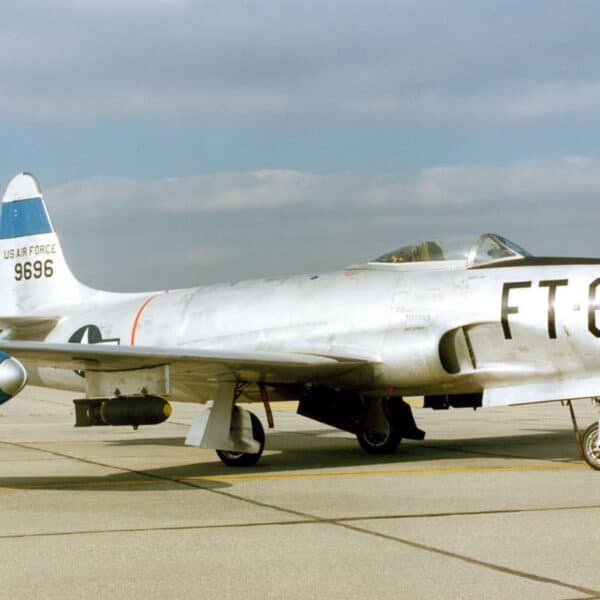
F-111 Aardvark: Genesis, Design Features, Military Role, and Triumphs

F-111 Aardvark

F-111 Aardvark

The F-111, a legend of American aviation, has left an indelible mark on military history.

The Genesis of the Iconic F-111

The genesis of the iconic General Dynamics Corporation F-111 Aardvark was like finding your way through a dense fog, a diplomatic dance between politics and engineering where the end game wasn’t entirely clear at first. Born from President Kennedy’s desire for cost-effective defense solutions during the height of the Cold War, it was conceived as an all-in-one aircraft that would serve both the Navy and Air Force.

The development process wasn’t smooth sailing; you’d be right to call it tumultuous. The initial design underwent several revisions, each with its challenges and setbacks. But persistence paid off, and in 1964, after years of tweaking and testing, this masterpiece of aviation ingenuity made its maiden flight.

The F-111 Aardvark was more than just an aircraft – it symbolized American resilience in times of global tension. It negotiated technological barriers gracefully and emerged as one of the most versatile military aircraft in history.

So, while its path to existence may have been shrouded in uncertainty initially, there’s no denying that this iconic piece of machinery has rightfully earned its place in aviation history. In unassuming yet undeniable ways, it changed our understanding of what tactical bombers could be capable of.

F-111 Aardvark

Innovative Design Features

Imagine a plane that can morph mid-flight, altering the sweep of its wings to adapt to changing conditions – that’s one of the game-changing design features of this versatile aircraft! The F-111 Aardvark is known for its variable-sweep wing design. This allows it to adjust its wing configuration depending on the mission requirements and flight conditions, essentially making it a ‘one size fits all’ plane.

But don’t stop there; there’s more. The F-111 also boasts an automated terrain-following radar system. This means the aircraft can fly at low altitudes in any weather condition while avoiding obstacles. It’s like having an extra set of eyes that never blink!

Add another notch on your belt when you think about speed because this bad boy was designed with afterburners that allow supersonic speeds without too much fuel. So not only is it intelligent and adaptable, but it’s also super fast.

So there you have it –  the standout features packed into the F-111 Aardvark’s innovative design. From its unique variable-sweep wing technology to its advanced radar systems and impressive speed capabilities, we’re talking about a true marvel of aviation engineering!

Role in Military Conflicts

Let’s delve into how this remarkable aircraft played a crucial role in various military conflicts, shall we?

The F-111 Aardvark is an iconic symbol of American might and technological prowess. Its unique design and capabilities made it a formidable tool during the war.

The F-111 established itself as one of Vietnam’s most valuable strategic bombers. It outperformed other planes with its ability to fly at supersonic speeds at low altitudes, making it nearly invincible to enemy fire. It was deployed in Operation Linebacker II in 1972, where it displayed its incredible bombing accuracy.

General Dynamics F-111F Cockpit
DAYTON, Ohio — General Dynamics F-111F cockpit at the National Museum of the United States Air Force. (U.S. Air Force photo)

Over time, the F-111 became integral to NATO operations as well. During Libya’s bombing raids in 1986, the aircraft enabled successful strikes against critical targets under Operation El Dorado Canyon. Years later, when Iraq invaded Kuwait in 1990, Aardvarks were instrumental in attacking Iraqi infrastructure during Operation Desert Storm.

The F-111’s service record tells a tale of relentless power and versatility. Throughout its operational lifetime spanning several decades and numerous conflict zones worldwide, this exceptional aircraft left an indelible mark on military aviation history that won’t be forgotten anytime soon.

Operational Challenges and Triumphs

The renowned F-111 Aardvark aircraft faced operational challenges throughout its lifespan and achieved remarkable triumphs. From its inception during the Cold War era to its retirement in 1998, the F-111 encountered various technical difficulties. These included problems with wing load distribution and electronic systems, initially hindering combat performance.

However, the F-111 overcame these setbacks through continuous improvements and modifications. Its unmatched speed and range capabilities made it an iconic symbol of American military might. The unique variable-sweep wing design allowed for versatile flight characteristics, enhancing operational effectiveness.

Furthermore, the F-111’s ability to deliver precision strikes under all weather conditions demonstrated its technical triumph over time. The groundbreaking Terrain Following Radar (TFR) system enabled the aircraft to fly at extremely low altitudes while avoiding ground obstacles, showcasing human ingenuity and technological advancement.

While the F-111 Aardvark faced definite challenges, it is evident that these hurdles led to impressive innovations and demonstrable successes within military aviation history.

General Dynamics F-111F Cockpit

Legacy and Influence in Aviation History

You’ve got to appreciate this remarkable machine’s lasting impact; its indomitable spirit symbolizes the perseverance and innovation that continue to guide modern aviation development. The F-111 Aardvark, often called an ‘unsung hero’ in aviation history, has left a legacy that can’t be ignored.

Its design and technological advancements pushed boundaries, setting new standards for aircraft capabilities. Think about it: the Aardvark was one of the first planes to employ afterburners for increased speed. These beasts could fly at supersonic speeds with a level of precision unmatched during their time. Not only did they excel in speed but also in variable-sweep wing technology; adaptability was key when facing different flight conditions.

The influence of this iconic swing-wing bomber stretches far beyond its operational lifespan. It’s inspired several successors, including today’s advanced fighter jets like the F-14 Tomcat and F-15 Strike Eagle. Yes, it had its challenges, but don’t all significant innovations? The Aardvark’s contributions are embedded deep within the DNA of contemporary military aircraft models.

Frequently Asked Questions

What is the maximum speed and altitude the F-111 Aardvark can achieve?

The F-111 Aardvark can attain a maximum speed of 1,650 mph and reach an altitude of up to 66,000 feet. Quite impressive.

How much did it cost to develop and manufacture each F-111 Aardvark?

Unfortunately, due to government confidentiality and varying production factors, the exact costs for developing and manufacturing each F-111 Aardvark aren’t publicly available.

What types of weaponry can the F-111 Aardvark carry?

The F-111 Aardvark could carry a wide range of weaponry. It’s outfitted to handle air-to-ground missiles, bombs, and nuclear weapons. This versatility made it a formidable force in combat situations.

How many crew members does the F-111 Aardvark require for operation?

It required two crew members: a pilot and a weapons systems officer.

Are any F-111 Aardvarks on display in museums or exhibitions around the world?

Yes, there are several F-111 Aardvarks on display around the world. You’ll find them in museums and exhibitions in the United States, Australia, and England.  

The P-51 Mustang: The Legendary Fighter Plane That Shaped History

P-51 Mustang

P-51 Mustang


Flying through the clouds with unrivaled speed and precision, the P-51 Mustang has an indelible mark on aviation history. Nicknamed the “Cadillac of the Sky,” the Mustang was a formidable fighter plane that played a significant role in World War II. Its impressive performance, versatility, and iconic design quickly made it an aviation legend.

History

The P-51 Mustang was designed and produced by North American Aviation during the 1940s. Initially developed for the British Royal Air Force (RAF), it was primarily intended to serve as a long-range escort fighter. At the time, Allied bombers desperately needed reliable protection against German Luftwaffe fighters during deep penetration missions over Nazi-occupied Europe.

Equipped with advanced features, the Mustang quickly proved its mettle on the battlefield. Its sleek and aerodynamic design allowed it to reach incredible speeds and altitudes, making it an invaluable asset in aerial combat. Powered by a Rolls-Royce Merlin engine, the Mustang could reach a top speed of over 400 miles per hour, making it one of the fastest piston-powered aircraft of its time.

P-51 Mustang

P-51 Capabilities

P-51 Cockpit
P-51 Cockpit

One of the Mustang’s most iconic attributes was its long-range capacity. With extra fuel tanks, the P-51 could accompany heavy bombers, such as the B-17 Flying Fortress, to their targets deep within enemy territory and safely back to base. This capability significantly decreased bomber losses, as the Mustangs created a protective shield around the bombers, engaging enemy aircraft and preventing them from reaching their targets.

The North American P-51 Mustang was also known for its exceptional maneuverability and firepower. Armed with six .50 cal machine guns, it could sustain intense air-to-air combat. The Mustang’s ability to take on enemy fighters head-on, combined with its remarkable speed and firepower, gave Allied pilots the upper hand in dogfights against the Luftwaffe and Axis forces.

P-5 Changed WW2

Perhaps one of the most significant turning points during World War II, and a testament to the Mustang’s capabilities, was the introduction of the P-51D variant. This model incorporated a bubble canopy and improved visibility, enhancing the pilot’s situational awareness. It was in this variant that the Mustang indeed became an aviation legend.

The Mustang’s impact extended beyond World War II. After the war, surplus P-51s were sold to various nations and continued serving in numerous post-war conflicts. In the Korean War, Mustangs were instrumental in providing close air support for troops on the ground, proving their versatility once again.

The P-51 Today

Even in the modern era, the P-51 Mustang remains an enduring symbol of aviation excellence. It is still seen at airshows and museums worldwide, giving spectators a glimpse into the past. Several restored Mustangs are flown by dedicated enthusiasts who appreciate and honor the aircraft’s legacy, bringing it alive for future generations.


P 51 Today


What movies included the P-51 Mustang?

Several movies have featured the P-51 Mustang, a renowned World War II fighter aircraft. Some notable examples include:

  • Twelve O’Clock High (1949): This war film showcases the P-51 Mustang extensively.
  • Memphis Belle (1990): The movie revolves around the final mission of the B-17 bomber “Memphis Belle,” but also features P-51 Mustangs escorting the bomber formation.
  • Red Tails (2012): This movie portrays the Tuskegee Airmen, an African-American group of P-51 Mustang pilots during World War II.
  • Empire of the Sun (1987): Though not the primary focus, the P-51 Mustang appears in this film.
  • The Tuskegee Airmen (1995): Similar to Red Tails, this movie showcases the experiences of the Tuskegee Airmen, including their use of the P-51 Mustang.
  • Tora! Tora! Tora! (1970): While primarily centered on the Pearl Harbor attack, the movie also features a brief scene with a P-51 Mustang.
  • Flying Tigers (1942): This film tells the story of the American Volunteer Group, the Flying Tigers, who flew P-40 Warhawks and later transitioned to P-51 Mustangs.
  • The War Lover (1962): Starring Steve McQueen, this movie contains scenes featuring P-51 Mustangs.
  • Thunderbolt (1947): This documentary-style film showcases the missions of P-47 Thunderbolts but also features sequences with P-51 Mustangs.
  • A Yank in the RAF (1941): Though the P-51 Mustang is not the primary focus, it also appears briefly in this movie.

These are just a few examples, as the P-51 Mustang has appeared in numerous war films and documentaries.

Famous Pilots Who Flew the P-51 Mustang


Several famous pilots flew the P-51 Mustang during World War II and beyond. Some of the most notable ones include:

  1. Chuck Yeager – The first pilot to break the sound barrier, Yeager flew the P-51 during World War II and later in his career as a test pilot.
  2. Bud Anderson – A triple ace pilot, Anderson is known for his service in the 357th Fighter Group and his impressive combat record while flying the P-51.
  3. Robin Olds – Another renowned triple ace, Olds flew the P-51 during World War II and later commanded the famous 8th Tactical Fighter Wing during the Vietnam War.
  4. Don Gentile – A member of the renowned 4th Fighter Group in World War II, Gentile became one of the war’s leading aces while flying the P-51.
  5. John D. Landers – Known for his colorful “Big Beautiful Doll” P-51, Landers was a highly successful pilot and ace during World War II.
  6. George Preddy – A highly decorated pilot and one of the top aces of the 352nd Fighter Group, Preddy flew the P-51 and is credited with shooting down over 26 enemy aircraft.

These are just some famous pilots who flew the P-51 Mustang. Many more talented pilots flew this iconic aircraft during World War II and beyond.

Frequently Asked Questions

What was the top speed of the P-51 Mustang?

World War II P-51 Fighter in Clouds

The most common model, the P-51D, had a top speed of approximately 437 mph (703 km/h) at high altitudes.

Which is faster, P-51 Mustang or Spitfire?

The P-51 Mustang generally has a higher top speed than the Spitfire. The Mustang’s top speed is around 437 mph (703 km/h), while the Spitfire’s is about 370 mph (595 km/h).

Was the Mustang a good dogfighter?

The Mustang was widely regarded as an excellent dogfighter during World War II. Its high speed, maneuverability, and firepower made it an effective aircraft for aerial combat. The Mustang had an impressive climb rate, enabling it to gain altitude quickly and engage enemy planes. It also had good maneuvering capabilities, allowing it to outmaneuver enemy aircraft.

Who built the P-5 Mustang?

North American Aviation, an American aerospace manufacturer, built the P-51 Mustang.

How many airplanes did the P-51 shoot down?

The P-51 Mustang is credited with shooting down approximately 4,950 enemy aircraft during the war.

Conclusion

The P-51 Mustang’s legacy goes beyond its impressive performance and combat accomplishments. It symbolizes the bravery and determination of the pilots who flew them and the technological advancements that played a crucial role in shaping aerial warfare. It serves as a reminder of the sacrifices made by those who fought for freedom and the impact a single machine can have on history.

KC-135 Stratotanker

KC-135 Refueling F-15

KC-135 Stratotanker


The KC-135 Stratotanker has been a steadfast companion in the skies since its development. Its aerial refueling capabilities allow it to extend the reach and endurance of other aircraft, ensuring they can carry out their missions without interruption. Over the years, this mighty aircraft has undergone upgrades and modifications to keep up with technological advancements and evolving military needs.

From the Vietnam War to present-day conflicts, the KC-135 Stratotanker has proven its indispensability time and time again. It serves as a lifeline, providing fuel to keep aircraft in the air and troops on the ground safe.

As we look to the future, the KC-135 Stratotanker will continue to play a crucial role in military operations, ensuring that our forces remain agile and ready to face any challenge that comes their way.

History and Development of the KC-135 Stratotanker

It was derived from the Boeing 367-80 ‘Dash 80’ prototype. The Dash 80 was initially designed as a commercial jet transport (the Boeing 707 airliner).  The United States Air Force (USAF) quickly recognized its potential for aerial refueling.

In 1954, the USAF awarded Boeing a contract to develop the KC-135, and the prototype took its maiden flight on August 31, 1956.

The KC-135 was explicitly designed to meet the USAF’s high-capacity aerial refueling aircraft requirement. It featured a cylindrical fuselage, swept wings, and four turbojet engines. It also had a flying boom to transfer fuel to other aircraft in mid-air. This allowed the KC-135 to extend the range and endurance of fighter jets, bombers, and other military aircraft.

Over the years, the KC-135 Stratotanker underwent several upgrades and variants to enhance its performance and capabilities. It played a crucial role in various military operations, including the Vietnam War, Operation Desert Storm, and the ongoing Global War on Terror.

Its versatility, reliability, and ability to refuel multiple aircraft simultaneously have made the KC-135 an indispensable asset for the USAF and allied nations worldwide.

Aerial Refueling Capabilities of the KC-135

KC-135 Refueling B-52

The KC-135 Stratotanker, with its state-of-the-art aerial refueling capabilities, is an essential asset for the United States Air Force. Equipped with specialized boom and drogue systems, this remarkable aircraft can refuel various planes, including fighter jets, bombers, and reconnaissance aircraft.

The primary refueling method used by the KC-135 is the flying boom system. Controlled by the boom operator in the rear of the aircraft, a long telescoping tube extends from the end and is guided into the receptacle of the receiving aircraft. This precise control allows for a high fuel transfer rate from the Stratotanker’s tanks to the receiving aircraft’s tanks.

In addition to the flying boom system, the KC-135 is also equipped with drogue systems. These systems consist of hoses with baskets attached to the end. The receiving aircraft, fitted with a probe, makes contact with the basket, allowing fuel to flow through the hoses and into its tanks.

The aerial refueling capabilities of the KC-135 Stratotanker greatly enhance the mission capabilities of the United States Air Force. By enabling mid-air refueling, the Stratotanker extends the range and endurance of other aircraft, allowing them to undertake longer and more complex missions.

Upgrades and Modifications of the KC-135

Boeing KC-135R Stratotanker
KC-135 Stratotanker Cockpit

Enhanced with cutting-edge technology and mind-blowing modifications, the KC-135 has transformed into a fuel-transfer powerhouse capable of defying the limits of imagination. The KC-135 has undergone various upgrades and changes to ensure its relevance in modern warfare.

One significant upgrade is the addition of the Multi-Point Refueling System (MPRS). This system allows the KC-135 to refuel multiple aircraft simultaneously, increasing its efficiency and effectiveness during missions. With MPRS, the Stratotanker can transfer fuel to up to three receiver aircraft at once, reducing refueling time and enabling more aircraft to be serviced in a shorter period.

Furthermore, the KC-135 has been equipped with advanced avionics and communication systems. These upgrades enhance its situational awareness and enable seamless integration with other aircraft and ground stations. With improved communication capabilities, the KC-135 can efficiently coordinate aerial refueling operations and support joint missions.

Additionally, the KC-135 has received structural modifications to extend its lifespan. These upgrades include reinforcement of the airframe, improved corrosion resistance, and enhanced maintenance procedures. By increasing the aircraft’s longevity, these modifications ensure that the KC-135 remains a reliable and sustainable asset for the United States Air Force.

In conclusion, the KC-135 has undergone remarkable upgrades and modifications, cementing its position as a cutting-edge fuel-transfer platform. With enhanced capabilities such as the Multi-Point Refueling System, advanced avionics, and structural improvements, the KC-135 continues to serve as a vital asset in aerial refueling operations, supporting the mission readiness of the United States military.

Importance of the KC-135 in Military Operations

To truly grasp the significance of the KC-135 in military operations, it’s essential to understand its role as a fuel-transfer powerhouse. As a vital component of aerial refueling, the KC-135 ensures that military aircraft can extend their range, stay airborne for longer, and reach remote locations without frequent landings.

This capability is crucial in various military operations, including combat missions, humanitarian aid, and disaster relief efforts. The KC-135’s ability to refuel multiple aircraft simultaneously dramatically enhances the efficiency and effectiveness of air operations. It enables aircraft to remain in the air for extended durations, providing continuous support and surveillance.

The KC-135’s versatility allows it to refuel various aircraft, including fighters, bombers, and reconnaissance planes. This versatility further enhances its role in military operations.

Without the KC-135, the flexibility and reach of military aircraft would be severely limited, hampering their ability to respond swiftly and effectively to ever-changing operational requirements.

Future Outlook for the KC-135 Stratotanker

The future outlook for the KC-135 Stratotanker is a topic of concern and speculation. With technological advancements and the emergence of more modern aircraft, the KC-135’s role in military operations is being questioned.

As a pilot, you may wonder how long the KC-135 will continue to be a vital asset in the military. While it has served admirably for decades, its age and limited capabilities cannot be ignored. The need for a more advanced and efficient aerial refueling platform is becoming increasingly apparent.

However, despite its future uncertainty, the KC-135 still plays a crucial role in military operations today. Its ability to provide aerial refueling support to various aircraft is unmatched. The reliability and versatility of the KC-135 make it an essential asset in maintaining global military readiness.

As technology advances, the KC-135 will eventually be replaced by a more modern aircraft. The Air Force has already begun exploring options for the next generation of aerial refueling platforms. These new aircraft will undoubtedly possess enhanced capabilities, allowing for more efficient and effective operations.

In conclusion, while the future of the KC-135 Stratotanker may be uncertain, its importance in military operations cannot be underestimated. As a pilot, you may find yourself flying the KC-135 for years. However, it is crucial to adapt and embrace the advancements in technology that will shape the future of aerial refueling.

Frequently Asked Questions

Is the KC-135 Stratotankers currently in service?

The KC-135 Stratotanker is still in active service with the United States Air Force (USAF). The aircraft is the primary aerial refueling platform for the USAF and has been in service since the 1950s. It is used to refuel other aircraft during flight, extending their range and mission capabilities. The USAF has also modified some KC-135s to perform other roles, such as reconnaissance and electronic warfare.


What is the maximum fuel capacity of the KC-135 Stratotanker?

The maximum fuel capacity of the KC-135 Stratotanker is around 200,000 pounds.

How long does it take for the KC-135 to perform an aerial refueling operation?

Refueling time depends on the type of aircraft being refueled. For a B-52, it could take approximately 30 minutes to transfer about 100,000 pounds or about 15,000 gallons of jet fuel. 

What are some of the unique features of the KC-135 Stratotanker that distinguish it from other aerial refueling aircraft?

Some unique features of the KC-135 Stratotanker that set it apart from other aerial refueling aircraft include its ability to refuel multiple aircraft types, its long flight range, and its versatile cargo capabilities.

How does the KC-135 Stratotanker contribute to global military operations and alliances?

The KC-135 Stratotanker is a vital asset in global military operations and alliances. Its aerial refueling capabilities strengthen partnerships and extend the reach of allied forces, ensuring a united front to tackle any challenge.

Conclusion

The KC-135 Stratotanker is a versatile aircraft that has been a game-changer in military operations. It has an incredible history and is known for its aerial refueling capabilities. This allows for extended flight durations and increased operational flexibility.

Throughout its service, the KC-135 Stratotanker has refueled over 100,000 aircraft. This remarkable statistic showcases the immense impact of this aircraft in the skies. Just imagine the countless missions, long-distance flights, and successful operations it has supported throughout its impressive career.

The KC-135 Stratotanker is a remarkable aircraft that has played a crucial role in military operations. Its ability to refuel other aircraft in mid-air has made it an invaluable asset in the skies. With its long history and impressive track record, the KC-135 Stratotanker continues to be an essential component of military operations.

F-105 Fighter Jet, The Thunderchief

F-105 Thunderchief

It may have been the sound of 50,000 pounds of metal hitting the ground, or the shortening of the name of Howdy Doody’s Indian rival, Chief Thunderthud, that made the F-105 known affectionately as the “Thud.” 

F-105 Thunderchief

Development and Design

The F-105 Thunderchief is an incredible fighter jet designed by Republic Aviation in the 1950s. Its primary purpose was to deliver nuclear weapons deep into enemy territory. This aircraft was built with speed and range in mind, allowing it to fly at supersonic speeds and cover long distances without refueling.

The Thunderchief’s sleek and aerodynamic shape minimizes drag and maximizes performance. Its clean lines and swept-back wings enable it to cut through the air effortlessly. Powered by a Pratt & Whitney J75 engine, this jet can reach Mach 2 speeds, twice the speed of sound.

In terms of weaponry, the Thunderchief is equipped with an impressive array of bombs and missiles. It can carry up to 8,000 pounds of ordnance in its internal bay and external hardpoints. With advanced targeting systems, it can accurately strike targets from high altitudes or during low-level flights.

One notable feature of this fighter is its radar-guided navigation systems, which allow pilots to navigate hostile environments at extremely low altitudes while avoiding obstacles. This technology is crucial for successful missions, especially in challenging terrains.

Despite its capabilities, the Thunderchief faced challenges during its operational life. Its size made it vulnerable to anti-aircraft defenses, earning it the nickname ‘Thud.’ However, improvements were made over time to enhance its survivability.

The F-105 Thunderchief is a testament to American engineering prowess during a critical period in aviation history. Its speed, agility, and firepower make it an unforgettable part of military aviation lore.

Role in the Vietnam War

During the Vietnam War, the F-105 Thunderchief, also known as the ‘Thud,’ played a crucial role in combat operations. Swiftly maneuvering through the skies with unmatched precision and power, this formidable aircraft was specifically designed to carry out bombing missions deep into enemy territory. Its primary objective was to target and destroy strategic military installations such as bridges, railways, and supply depots.

Equipped with cutting-edge technology and a powerful engine, the Thunderchief had exceptional speed and agility. It could reach up to Mach 2 at high altitudes, allowing it to quickly evade enemy radar. This speed advantage made it difficult for surface-to-air missiles to lock onto the aircraft effectively.

The F-105’s heavy payload capacity made it an ideal choice for precision strikes against heavily fortified targets. It could carry up to 14,000 pounds of ordnance, including bombs, rockets, and missiles. This extensive arsenal enabled pilots to deliver devastating blows to enemy ground positions.

Despite its impressive capabilities, the Thunderchief faced significant challenges during its missions over Vietnam. The North Vietnamese Army possessed a formidable air defense system, including surface-to-air missile sites and anti-aircraft artillery units. These defenses posed severe threats to American aircraft operating in hostile airspace.

As a result, many F-105s were lost during combat operations in Vietnam. However, their sacrifice was not in vain. The Thunderchief’s relentless bombing campaigns significantly disrupted enemy infrastructure and hampered their ability to wage war effectively.

In conclusion, the F-105 Thunderchief played a vital role during the Vietnam War by carrying out dangerous bombing missions deep into enemy territory. Its speed, agility, and heavy payload capacity allowed it to deliver precise strikes against strategic targets despite facing strong enemy defenses.

Technical Specifications

The ‘Thud’ was a true beast in the skies, boasting impressive technical specifications that left no doubt about its power and capabilities. The F-105 Thunderchief, as it was officially known, was an all-weather fighter-bomber aircraft used by the United States Air Force during the Vietnam War. With its sleek design and powerful engine, this aircraft was built for speed and agility.

F-105 Fighter Jet

F-105 Thunderchief cockpit

In addition to its impressive size and speed, the Thunderchief also had a formidable arsenal. It could carry up to 14,000 pounds of ordnance on nine external hardpoints, including bombs, rockets, missiles, and nuclear weapons. This made it a versatile weapon that could engage targets on the ground and in the air.

Furthermore, the F-105 Thunderchief featured state-of-the-art avionics systems for its time. Its advanced radar capabilities enabled it to detect enemy aircraft at long range and engage them with precision-guided munitions. Its cockpit was equipped with modern instruments and controls that enabled pilots to operate effectively in any weather.

Overall, the F-105 Thunderchief’s technical specifications made it a force to be reckoned with in the skies during the Vietnam War. Its speed, firepower, and advanced technology were invaluable for missions against enemy targets. Whether engaging in air-to-air combat or delivering devastating airstrikes on ground targets, this fighter jet proved to be one of the most capable aircraft.

Notable Missions and Achievements

During its missions in the Vietnam War, the F-105 Thunderchief achieved remarkable feats on the battlefield.

The F-105 Thunderchief played a crucial role in Operation Rolling Thunder, a sustained bombing campaign against North Vietnam. It delivered devastating airstrikes on enemy targets, including bridges, military installations, and transportation hubs.

Known for its exceptional speed and agility, the Thunderchief was often tasked with high-risk missions deep into hostile territory. It flew low-level strikes to destroy surface-to-air missile sites and neutralize enemy radar capabilities.

The F-105 also excelled in close air support operations, providing vital assistance to ground troops engaged in intense combat. Its accurate delivery of bombs helped protect American forces while inflicting heavy casualties on enemy positions.

One of the most noteworthy achievements of the F-105 was its ability to carry nuclear weapons as part of a deterrence strategy during the Cold War. While it never used them in actual combat, this capability was a deterrent against potential adversaries.

These notable missions and achievements demonstrate the versatility and effectiveness of the F-105 Thunderchief as a fighter jet during one of America’s most challenging conflicts. Its contribution to Operation Rolling Thunder, successful execution of high-risk missions, support for ground troops, and nuclear deterrence capabilities all highlight why this aircraft remains an iconic symbol of American air power during the Vietnam War.

Legacy and Impact

Despite its controversial reputation, the F-105 Thunderchief left a lasting legacy and significantly impacted the outcome of the Vietnam War. As a pilot flying this powerful fighter jet, you experienced firsthand how it revolutionized air warfare and set new standards for speed and firepower.

The Thunderchief’s most notable legacy is its role as the primary strike aircraft during the war. Its ability to carry a massive payload allowed it to deliver devastating blows to enemy targets. You relied on its impressive speed and range to penetrate enemy territory, delivering precision strikes that crippled their defenses. The Thunderchief’s success in destroying crucial infrastructure significantly weakened the North Vietnamese forces and hampered their ability to wage war.

Another aspect of its legacy was its contribution to electronic warfare capabilities. Equipped with advanced radar-jamming technology, you could disrupt enemy communication systems, providing invaluable support to ground forces. This capability proved crucial in neutralizing enemy threats and minimizing casualties.

Moreover, the F-105 played a vital role in shaping future aircraft designs. Its pioneering use of titanium alloys made it lighter yet more robust than previous fighters, setting a precedent for subsequent generations of military aircraft. Additionally, lessons learned from operating this complex machine led to advancements in pilot training programs and tactics.

While controversies surround high loss rates, it is essential not to overlook the Thunderchief’s overall impact on aerial warfare strategies during one of history’s most challenging conflicts. Your experience piloting this fighter jet demonstrated firsthand how it changed the course of the Vietnam War by providing unmatched firepower and electronic warfare capabilities. The F-105 Thunderchief will forever be remembered as an iconic symbol of American air power during that era.

Frequently Asked Questions

How long does it take to train a pilot to fly the F-105 Thunderchief?

Becoming a skilled pilot for the F-105 Thunderchief takes several months of intense training. You’ll need to learn advanced aerial combat tactics, navigation systems, and how to handle its powerful weaponry.

How many F-105 Thunderchief aircraft were built in total?

In total, they built 833 F-105 Thunderchief aircraft.

What were the main challenges faced during the development of the F-105 Thunderchief?

Developing the F-105 Thunderchief wasn’t a smooth ride. It faced challenges like a turbulent storm, battling against its own weight and engine limitations. But through perseverance and innovation, it became an iconic fighter jet.

Did the F-105 Thunderchief have any significant design modifications throughout its operational period?

Yes, the F-105 Thunderchief underwent significant design modifications throughout its operational period. These changes improved its performance, avionics systems, and weapon capabilities, ensuring it remained a formidable fighter jet.

Were there significant controversies or incidents involving the F-105 Thunderchief during the Vietnam War?

Yes, the F-105 Thunderchief was involved in major controversies and incidents during the Vietnam War. It faced criticism for its vulnerability to enemy fire and suffered a high loss rate due to anti-aircraft weapons.

Conclusion

So, next time you see a thunderstorm rolling in, think about the F-105 Thunderchief and its incredible impact during the Vietnam War.

This mighty fighter jet proved itself time and time again with its impressive speed, firepower, and versatility. While some may argue that it had shortcomings, such as vulnerability to enemy fire, it’s important to remember that no aircraft is perfect.

The Thunderchief played a crucial role in shaping military tactics and paved the way for future generations of fighter jets. Its legacy will forever be etched as a symbol of American strength and innovation.

The F-100 Super Sabre: A USAF Workhorse

F-100 Super Sabre


The USAF F-100 Super Sabre, with its impressive statistics and capabilities, has left a lasting impact on the world of aviation.

With a top speed of over 800 miles per hour and the ability to carry up to 7,000 pounds of ordnance, this aircraft was a force to be reckoned with.

Developed in the late 1950s by North American Aviation, the F-100 boasted several key features that set it apart from its predecessors. Its innovative design included advanced aerodynamics and a powerful Pratt & Whitney J57 engine.

The F-100 also played a significant role in various military operations throughout its operational history. From serving as an air superiority fighter during the Vietnam War to providing close air support for ground troops, this jet proved its worth time and again.

Over the years, notable variants and upgrades were introduced to further enhance its performance.

Today, we delve into the development, capabilities, successes, variations, and overall legacy of this iconic fighter jet – the USAF F-100.

F-100 Super Sabre

Development and Design of the F-100 Fighter Jet

The development and design of the F-100 fighter jet resulted from extensive research and collaboration between multiple aerospace companies. In the early 1950s, the United States Air Force (USAF) recognized the need for a high-performance supersonic aircraft to replace its aging fleet. This led to competition among manufacturers, including North American Aviation, Republic Aviation Corporation, and Lockheed Aircraft Corporation.

North American Aviation ultimately won the contract in 1951 and began working on the F-100 Super Sabre. The design team faced numerous challenges as they sought to create an aircraft capable of supersonic flight and highly maneuverable. They incorporated several innovative features into the F-100, such as swept wings and an afterburner system.

The swept-wing design allowed for better performance at high speeds by reducing drag and improving stability. It also enabled shorter takeoff and landing distances, making it more versatile for different operational environments. The afterburner system significantly enhanced thrust during combat, providing additional power when needed.

Another critical aspect of the F-100’s development was its advanced electronics systems. The aircraft featured radar technology for improved navigation and target acquisition capabilities. It also had a sophisticated weapons control system that allowed pilots to engage targets from long distances effectively.

Throughout its service with the USAF, the F-100 underwent several upgrades to further enhance its capabilities. These included improvements in engine performance, avionics systems, and armament options.

Developing and designing the F-100 fighter jet involved extensive research and collaboration among multiple aerospace companies. The resulting aircraft showcased cutting-edge technologies such as swept wings and an afterburner system, while incorporating advanced electronics for superior combat effectiveness.

Key Features and Capabilities of the F-100

The F-100 Super Sabre, a remarkable fighter jet developed by the United States Air Force (USAF), was designed to surpass all expectations regarding speed and maneuverability. With its sleek and aerodynamic design, this aircraft can reach speeds exceeding Mach 1. It is equipped with an afterburner that delivers impressive thrust, enabling it to climb rapidly and perform quick evasive maneuvers.

One of the standout features of the F-100 is its exceptional firepower. This fighter jet is armed with four 20mm cannons, each capable of firing at over 1,500 rounds per minute. Additionally, it can carry a wide range of air-to-air missiles and bombs, making it a versatile weapon on the battlefield.

Not only does the F-100 possess incredible offensive capabilities, but it also excels in defense. Advanced radar systems enable pilots to detect enemy aircraft from great distances. This enables early warning detection and gives pilots ample time to react.

Furthermore, the F-100 boasts excellent maneuverability due to its unique swept-wing design. This configuration reduces drag and increases lift at high speeds, resulting in superior performance during dogfights or evasion tactics.

Overall, the F-100 Super Sabre is a testament to technological advancement in military aviation. Its speed, firepower, and agility make it an indispensable asset for any air force seeking dominance in aerial combat.

Operational History and Successes of the F-100

Imagine yourself in the cockpit of the F-100 Super Sabre, flying over enemy territory and completing a high-risk mission with precision and skill. The operational history of the F-100 is filled with numerous successes demonstrating its capability as a fighter jet.

The F-100 was crucial during the Vietnam War, primarily for close air support missions. Its speed, agility, and firepower made it influential in engaging ground targets. The aircraft’s ability to deliver accurate strikes at low altitudes allowed it to provide valuable assistance to troops on the ground.

One notable success of the F-100 was its participation in Operation Rolling Thunder, which aimed to disrupt North Vietnamese logistics and supply lines. The aircraft’s versatility enabled it to carry out bombing runs and strafing attacks effectively. It proved instrumental in destroying enemy infrastructure such as bridges, roads, and supply depots.

Additionally, the F-100 excelled in air-to-air combat engagements. Advanced avionics systems enhanced pilots’ situational awareness, giving them an edge over their adversaries. D ring the war, F-100s achieved multiple aerial victories against enemy MiG fighters.

Beyond Vietnam, the F-100 also served with distinction in other conflicts, including Operation Desert Storm and Operation Allied Force. Its robust design and exceptional performance capabilities ensured its relevance even amidst evolving warfare technologies.

The operational history of the F-100 Super Sabre is marked by countless successes in close air support missions and air-to-air combat engagements. Its effectiveness as a fighter jet is evident through its contributions during significant historical conflicts.

Notable Variants and Upgrades of the F-100

.

One of the most significant variants was the F-100D, which featured improved avionics and an upgraded engine. This variant also introduced a more advanced fire control system, enabling pilots to engage targets accurately. It also increased fuel capacity and improved range, allowing for extended missions.

Another notable variant was the F-100F Wild Weasel II, designed explicitly for the Suppression of Enemy Air Defenses (SEAD) missions. Equipped with specialized electronic warfare systems and radar-seeking missiles, this variant was crucial in neutralizing enemy surface-to-air missile threats during conflicts like the Vietnam War.

In terms of upgrades, one prominent example is the F-100C’s conversion to become an unmanned target drone known as QF-100. This modification enabled it to be a realistic training and weapon-testing target.

Furthermore, many F-100s were retrofitted with aerial refueling capability by adding external fuel tanks or installing in-flight refueling probes. T’s upgrade significantly extended their operational reach by enabling mid-flight fueling from tanker aircraft.

These notable variants and upgrades transformed the F-100 Super Sabre into a versatile and adaptable fighter jet that could fulfill various mission profiles. As you take off in this iconic aircraft, you will have complete confidence in its enhanced capabilities provided by these advancements.

Legacy and Impact of the F-100 Fighter Jet

The legacy of the F-100 Super Sabre reverberates through the annals of aviation history, leaving an indelible mark on future generations of military aircraft. The first supersonic jet fighter in service with the United States Air Force (USAF), the F-100 set a new standard for speed and performance. Its impact can be seen not only in its successful combat missions but also in its advancements in aviation technology.

One notable advancement introduced by the F-100 was its use of a low-mounted swept-wing design, which significantly improved its aerodynamic performance. T’s design enabled better maneuverability at high speeds and reduced drag, allowing pilots to achieve unprecedented dogfight agility. The F-100 also featured an afterburner that significantly increased thrust, allowing it to reach supersonic speeds.

 F-86 SabreF-100 Super Sabre
First Flight19471953
Top SpeedMarch 1.25Mach 1.25
RadarNoneAPG-30
Service Ceiling49,000 ft50,000 ft
ArmamentSix .50 caliber machine gunsFour M39 cannon

This table highlights key differences between the two aircraft and emphasizes how the F-100 surpassed its predecessor in speed, altitude, radar technology, and armament.

In conclusion, the legacy of the F-100 Super Sabre is undeniable. Its groundbreaking design and technological advancements paved the way for future generations of military aircraft. The impact on aviation history is still felt today, serving as a testament to the United States Air Force’s ingenuity and engineering prowess.

Frequently Asked Questions

How many F-100 Fighter Jets were produced by the USAF?

The United States Air Force (USAF) produced 2,294 F-100 Super Sabre fighter jets. A total of 1,274 F-100D fighter jets were produced. The F-100 was a famous aircraft and played a crucial role during its service period. Its production ran from 1953 to 1959 and was eventually replaced by more advanced models like the F-105 Thunderchief.

Can the F-100 Fighter Jet perform aerial refueling?

Yes, the F-100 fighter jet can perform aerial refueling. T’s capability allows the F-100 to extend its range and endurance during missions without landing and refueling.


What were the primary challenges faced during the development of the F-100 Fighter Jet?

The primary challenges of developing the F-100 fighter jet were ensuring sufficient engine power and designing an airframe capable of high speeds. The aircraft had to be capable of flying at supersonic speeds, which required innovative design solutions to reduce drag and maintain stability. Additionally, advancements in materials and manufacturing techniques were necessary to ensure durability and structural integrity under intense flight conditions.

Did the F-100 Fighter Jet see combat in any major conflicts?

The United States Air Force heavily used the F-100 Fighter Jet during the Vietnam War. D ring this time, it performed various roles, such as ground attack and close air support.


How does the F-100 Fighter Jet compare to other fighter jets of its time in terms of speed and maneuverability?

The F-100 fighter jet was highly regarded among its contemporaries. It possessed exceptional agility and a remarkable top speed, allowing me to outperform many other fighter jets of my time. The F-100’s performance capabilities were widely recognized and contributed to its success in various missions during significant conflicts.

Conclusion

In conclusion, the USAF F-100 Fighter Jet was a revolutionary aircraft that left an indelible mark on aviation history. With its sleek design and advanced capabilities, it soars through the skies with precision and power. From its successful operational missions to its various upgrades, the F-100 proved to be a force to be reckoned with.

F-80 Shooting Star

F-80 Shooting Star

The F-80 Shooting Star is a historic American jet fighter aircraft that played a significant role in the early years of the United States Air Force (USAF) and in the transition from propeller-driven combat aircraft to the jet age.

Originally developed by Lockheed during World War II under the designation P-80, it was designed by a team led by the renowned engineer Clarence “Kelly” Johnson, who later became famous for Lockheed’s advanced aircraft development programs.

Background Information:

During its development, the F-80 Shooting Star marked a significant advancement in military aviation technology.

Although the Shooting Star arrived too late to see major combat service in World War II, it quickly became an important symbol of American aviation progress.

The F-80 was the first operational jet fighter used by the USAF and one of the first successful jet fighters produced in the United States. Its introduction gave American pilots valuable experience with the speed, handling, and maintenance requirements of jet-powered aircraft.

Compared with the piston-engine fighters that had dominated the skies during World War II, the F-80 offered much higher speeds and represented a major technological leap forward. It helped establish the foundation for later generations of American jet fighters.

The aircraft also saw important service during the Korean War, where it was used in fighter, ground-attack, and reconnaissance roles.

While it was eventually outclassed in air-to-air combat by more advanced swept-wing jets such as the Soviet-built MiG-15, the F-80 remained useful as a reliable strike aircraft.

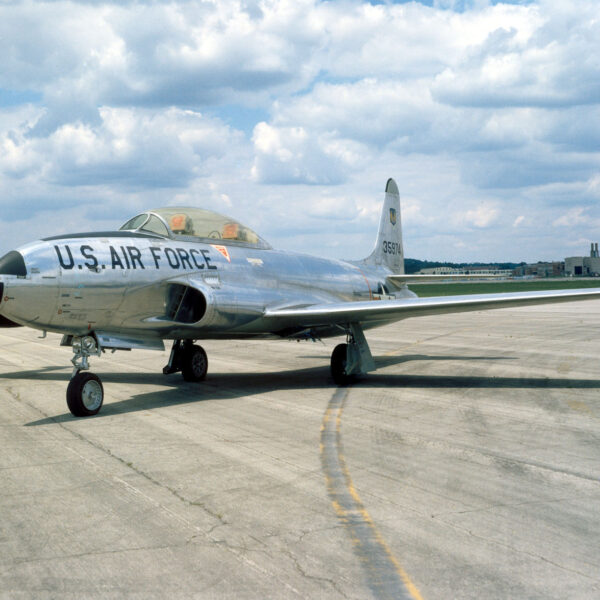
Its legacy continued through the T-33 Shooting Star, a two-seat trainer version that became one of the most widely used jet training aircraft in the world.

As a result, the F-80 Shooting Star holds an important place in aviation history as a pioneering jet fighter that helped shape the future of the United States Air Force.

Development and Service Introduction:

  • The F-80 Shooting Star was developed by the Lockheed Aircraft Corporation in the late 1940s, following the end of World War II.
  • It was designed to meet the growing need for jet-powered fighters to combat the German Me 262 during the war.
  • The prototype of the F-80, called the XP-80, made its maiden flight in January 1944.
  • The aircraft entered service with the USAF in 1945 and was deployed during the later stages of World War II, though it did not see combat.
F-80 Shooting Star

Design and Features:

  • The F-80 was a single-seat, single-engine aircraft with a straight-wing configuration.
  • It featured tricycle landing gear, a departure from the traditional tail-dragger landing gear used in most aircraft at the time.
  • The aircraft was powered by a General Electric J33 turbojet engine, which provided a top speed of nearly 600 mph (965 km/h).
  • It was armed with six .50 caliber Browning machine guns and could carry up to 2,000 pounds (907 kg) of bombs or rockets.

Operational History of the F-80 Shooting Star:

  • The F-80 Shooting Star served with distinction during the Korean War, where it was primarily used for ground-attack missions.
  • It provided close air support to ground troops and conducted various interdiction missions, targeting enemy supply lines and infrastructure.
  • The F-80 faced initial challenges in air-to-air combat due to its limited maneuverability compared to Soviet MiG-15 fighter jets. However, the USAF made modifications to improve its performance.
  • Overall, the F-80 scored several aerial victories and played a crucial role in the early stages of the Korean War.
F-80 Cockpit

Countries That Used the F-80

Several countries purchased or acquired the F-80 Shooting Star from the United States through military assistance programs. Some of the countries that operated the F-80 include:

Italy: The Italian Air Force received many F-80Cs and F-80Ds used in the 1950s.

Belgium: Belgium acquired F-80Cs in the late 1940s and served with the Belgian Air Force until the early 1950s.

Netherlands: The Royal Netherlands Air Force operated F-80Cs and F-80Ds from the late 1940s until the early 1950s.

Turkey: Turkey received F-80Cs in the late 1940s and used them extensively in the Korean War. They operated the aircraft until the early 1960s.

Sweden: The Swedish Air Force used modified F-80Cs, known as RF-80Cs, for aerial reconnaissance from the late 1940s to the mid-1950s.

Venezuela: Venezuela acquired F-80Cs in the early 1950s and used them until the 1970s.

These are just a few examples of countries that used the F-80 Shooting Star, but there were others.

Italy: The Italian Air Force received many F-80Cs and F-80Ds used in the 1950s.

Belgium: Belgium acquired F-80Cs in the late 1940s and served with the Belgian Air Force until the early 1950s.

Netherlands: The Royal Netherlands Air Force operated F-80Cs and F-80Ds from the late 1940s until the early 1950s.

Turkey: Turkey received F-80Cs in the late 1940s and used them extensively in the Korean War. They operated the aircraft until the early 1960s.

Sweden: The Swedish Air Force used modified F-80Cs, known as RF-80Cs, for aerial reconnaissance from the late 1940s to the mid-1950s.

Venezuela: Venezuela acquired F-80Cs in the early 1950s and used them until the 1970s.

These are just a few examples of countries that used the F-80 Shooting Star, but there were others.

Legacy:

  • The F-80 Shooting Star marked a significant milestone in the development of jet-powered aircraft for the USAF.
  • It paved the way for subsequent jet-powered fighters and helped transition the USAF from propeller-driven to jet-powered aviation.
  • The F-80 also served as the basis for various other aircraft variants, including the RF-80 reconnaissance version and the T-33 trainer.
  • Although more advanced fighters eventually replaced it, the F-80 Shooting Star remains important in aviation history.

Frequently Asked Questions

Is the F-80 still flying?

The F-80 Shooting Star is no longer in active military service. It was phased out of service by most air forces in the 1970s. While a few privately owned F-80s still exist, they are primarily preserved in museums or used for static display purposes.

How fast was the F-80?

The F-80, also known as the Lockheed P-80 Shooting Star, had a top speed of approximately 600 miles per hour (965 kilometers per hour) or Mach 0.78. However, later variants of the F-80, such as the F-80C and F-80 Shooting Star (T-33), had a slightly higher top speed of around 600-650 miles per hour (965-1,046 kilometers per hour).

How many F-80 aircraft were built?

A total of 1,715 F-80 aircraft were built.

What aircraft replaced the F-80?

The aircraft that replaced the F-80 was the North American F-86 Sabre.

Conclusion

In summary, the F-80 Shooting Star was the first operational jet fighter used by the USAF. It served with distinction during the Korean War.

Furthermore, it played a crucial role in the early development of jet-powered aviation. The F-80 set the stage for the future of American military aircraft design.

F-86 Sabre

F-86 Sabre

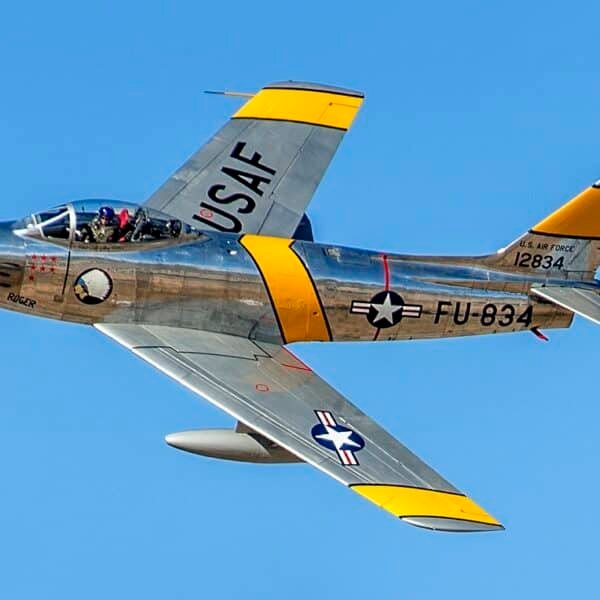
The F-86 Sabre, also known as the North American F-86 Sabre, was a transonic jet fighter aircraft developed by North American Aviation. It was used primarily by the United States Air Force (USAF) during the early years of the Cold War, most famously in the Korean War. Introduced in the late 1940s, the Sabre represented a major step forward in fighter design, combining swept wings, a powerful jet engine, and excellent high-speed handling.

These features allowed it to approach transonic speeds. This made it one of the most advanced fighter aircraft of its time. The F-86 became especially well known for its role in aerial combat over Korea, where it was frequently matched against the Soviet-designed MiG-15. These encounters, particularly in an area known as “MiG Alley” near the Yalu River, became some of the most intense jet-versus-jet battles in aviation history.

Although the MiG-15 had certain advantages in climb rate and altitude performance, the F-86 Sabre was praised for its superior maneuverability, stability, gunsight technology, and overall pilot-friendly design.

Skilled USAF pilots used these strengths effectively. This helped the Sabre earn a strong reputation as a capable and reliable fighter. It became one of the most widely produced jet fighters of the post-World War II era. The F-86 was built in several variants and served with numerous air forces around the world.

Beyond its combat service, it helped shape the future of jet fighter development. The F-86 contributed to the transition from propeller-driven aircraft to modern jet-powered military aviation. Its success during the Korean War secured its place as one of the most iconic fighter aircraft of the 20th century.

Development

F-86 Sabre

Developed by North American Aviation, the F-86 Sabre was introduced in 1949 and became operational the following year. It was designed to counter enemy MiG-15 aircraft in the Korean War theatre. The Sabre was known for its exceptional performance, speed, and maneuverability, making it a formidable opponent in air-to-air combat.

Armaments

The F-86 Sabre had a swept-wing design and was powered by a single jet engine. It featured six .50 caliber (12.7mm) machine guns mounted in the nose and provisions for carrying additional external ordnance such as rockets, bombs, and fuel tanks. In addition to its air superiority role, the Sabre was utilized for ground attack missions, reconnaissance, and as a fighter-bomber.

F-86 sabre in Combat

The F-86 Sabre achieved significant success in combat and earned a favorable reputation as one of the most capable jet fighters of the early Cold War era. Introduced at a time when air combat was rapidly shifting from propeller-driven aircraft to high-speed jets, the Sabre combined a swept-wing design, strong maneuverability, and reliable handling at high speeds.

These qualities made it especially effective in dogfights. A pilot’s ability to turn, dive, climb, and maintain control under pressure could determine the outcome of an engagement.

During the Korean War, the F-86 was credited with destroying many enemy aircraft, particularly in the air battles over northwestern Korea, often known as “MiG Alley.” Its primary adversary was the Soviet-designed MiG-15, a fast and heavily armed jet fighter that posed a serious threat to United Nations aircraft.

Although the MiG-15 had advantages in certain areas, such as climb rate and high-altitude performance, the Sabre offered excellent control, visibility, and stability. This gave skilled pilots important advantages in close combat.

The Sabre’s performance was enhanced by features such as responsive flight controls and effective gunsight technology. These helped pilots aim more accurately during high-speed engagements. Armed typically with six .50-caliber machine guns, the F-86 relied on precision, pilot training, and tactical discipline rather than sheer firepower alone.

American and allied pilots used teamwork, experience, and well-developed tactics to counter the MiG-15’s strengths and exploit its weaknesses.

Conclusion

After the Korean War, the F-86 Sabre did not fade quickly from military service. Instead, it continued to serve with numerous air forces around the world for several decades. This proved that its value extended far beyond its famous role in the skies over Korea.

Many nations adopted the Sabre because it combined speed, maneuverability, solid firepower, and dependable engineering. This made it highly effective for both air combat and training duties. Variants built in the United States, Canada, Australia, and other countries helped spread the aircraft’s influence even further, allowing it to remain useful as jet technology continued to advance.

The F-86 saw service with air forces in Europe, Asia, the Middle East, and Latin America. It was used in a variety of military operations and regional conflicts. In some cases, it served as a front-line fighter; in others, it was later adapted for ground-attack missions or used to train pilots transitioning into the jet age.

Notably, Sabres were flown by Pakistan during the Indo-Pakistani conflicts, where the aircraft gained additional combat recognition. Other operators valued the Sabre for its ruggedness, ease of maintenance, and forgiving flight characteristics.

Its long service life, strong combat record, and reputation for reliability helped secure the F-86 Sabre’s place as one of the classic fighter aircraft of the twentieth century. More than just a successful Korean War jet, it became a symbol of early jet-age aviation and an influential design that shaped fighter development for years to come.

Best Fighter Aircraft: Top 10 USAF

f-16-falcon-jet-fighters-in-clouds
F-4C is one of the best fighter aircraft

The United States Air Force has a long and storied history of aviation excellence, with a diverse fleet of fighter aircraft that have played pivotal roles in conflicts around the world. In this article, we will explore the top 10 USAF fighter aircraft, examining their capabilities, impact, and legacy in military aviation. From iconic classics like the F-15 Eagle to cutting-edge advancements like the F-35 Lightning II, these aircraft represent the pinnacle of American air power and technological innovation. Join us as we delve into the history and accomplishments of these incredible machines and discover what makes them stand out as some of the best fighter aircraft in the USAF’s arsenal, highlighting the best fighter aircraft available today.

  1. The F-35 Lightning II, a cutting-edge fifth-generation aircraft, is a single-seat stealth multirole fighter designed to excel in both air-to-air and air-to-ground missions. With its advanced intelligence, surveillance, targeting, and reconnaissance capabilities, the F-35 sets a new standard in combat aircraft technology.
  2. The F-22 Raptor, a fifth-generation, twin-engine, single-seat stealth fighter, is meticulously designed for air superiority missions, boasting advanced stealth technology, unrivaled speed and agility, and integrated avionics that empower the pilot to efficiently track, identify, and ultimately defeat hostile threats across a variety of combat scenarios.
  3. F-16 Fighting Falcon: This single-engine, multi-role fighter jet is known for its flexibility and versatility. The F-16 can perform air-to-air and air-to-ground missions and is widely used by several countries.
  4. F-15 Eagle: The F-15 is a twin-engine, all-weather tactical fighter aircraft primarily designed for air superiority missions. It possesses high maneuverability, speed, and advanced avionics, making it one of the most effective fighters in the U.S. Air Force.
  5. A-10 Thunderbolt II: Also known as the “Warthog,” the A-10 is a twin-engine, single-seat attack aircraft primarily designed for close air support of ground forces. It has a large 30mm cannon, can carry a variety of air-to-ground missiles and bombs, and is highly armored to withstand enemy fire.
  6. F-14 Tomcat: Although retired from active service in the U.S. Air Force, the F-14 remains iconic. This supersonic twin-engine fighter was primarily used for air superiority and fleet defense missions, featuring long-range radar, advanced weaponry, and variable-sweep wings.
  7. F-117 Nighthawk: Also retired but historically significant, the F-117 was the first operational stealth aircraft. It was designed as a low-observable, ground-attack aircraft capable of striking targets with precision in night or adverse-weather conditions.
  8. F-4 Phantom II: Another retired aircraft, the F-4 served as a versatile, reliable, and highly adaptable fighter-bomber in the U.S. Air Force. It played a vital role during the Vietnam War, and its design innovations influenced later fighter aircraft.
  9. F-111 Aardvark: Although primarily used by the U.S. Air Force in the past, the F-111 deserves mention due to its innovative design and operational capabilities. It was the first swing-wing combat aircraft, capable of performing a range of missions, including interdiction, strategic bombing, and reconnaissance.
  10. F-117X Seahawk: Designed as a prototype, the F-117X was a potential successor to the F-117 Nighthawk. It featured improved stealth technology, advanced avionics, and enhanced radar evasion capabilities, but the project was canceled before entering full production.

Best Fighter Aircraft

In conclusion, the United States Air Force has a long history of developing some of the most advanced and capable fighter aircraft in the world. From the iconic F-15 Eagle to the cutting-edge F-22 Raptor, these aircraft have played a crucial role in protecting American interests and projecting power across the globe. While each aircraft on this list has its own unique strengths and capabilities, they all represent the skill, innovation, and dedication of the men and women of the USAF. As technology continues to evolve, the Air Force will push the boundaries of what is possible in aerial combat, ensuring it remains a dominant force in the skies for years to come.

The History of the KC-135 Stratotanker

KC-135

Introduction to the KC-135 Stratotanker

The KC-135 Stratotanker is a military aerial refueling aircraft that has served as a vital component of the United States Air Force (USAF) since its introduction in the 1950s. Designed by Boeing, this aircraft was created primarily to extend the operational range and endurance of military fighter and bomber aircraft by providing air-to-air refueling capabilities. Its ability to transfer fuel in-flight has significantly enhanced the flexibility and responsiveness of air operations, enabling U.S. forces to conduct long-range missions without the need for immediate land-based refueling stations.

The KC-135 Stratotanker’s significance extends beyond mere capability; it has been a critical asset in numerous military operations throughout its service history. From the Cold War to modern conflicts, this aircraft has played a crucial role in supporting global military engagements. Its ability to refuel multiple aircraft simultaneously allows for sustained air power, which is invaluable during extended conflicts and operations.

Engineered for rapid deployment and a wide operational range, the KC-135 has adapted to various mission environments. The aircraft can operate in diverse conditions, making it an essential component of strategic airlift and refueling operations. Its versatility is apparent, as it has also been utilized for cargo transport and medical evacuation roles in addition to its primary function as a tanker.

In summary, the KC-135 Stratotanker has established itself as a cornerstone of military aviation, facilitating the effective coordination of air missions and contributing significantly to the success of U.S. military operations. Its influence continues to be felt, as modern adaptations and upgrades ensure its relevance in contemporary warfare.

Development and Design Evolution

The history of the KC-135 Stratotanker’s development reflects the dynamic needs of the U.S. Air Force during the Cold War era. In the early 1950s, military leaders recognized the necessity for a strategic air refueling aircraft to enhance bomber and fighter operations. The Air Force set specific requirements for a new aircraft capable of refueling jets in flight, which would ultimately lead to the design of the KC-135.

Boeing was selected to develop the KC-135 based on its previous experience and expertise in aircraft design. The aircraft’s design, which commenced in 1954, was heavily influenced by the Boeing 707 commercial airliner, utilizing a modified version of its fuselage. The KC-135 features a high-wing configuration with four turbofan engines mounted under the wings, which allows for increased fuel efficiency and improved range.

Incorporating advanced technology for its time, the KC-135 was equipped with a flying boom refueling system, allowing it to transfer fuel to multiple aircraft simultaneously. This system not only streamlined operations but also maximized mission capabilities. The aircraft’s design ensured stability in flight, as well as compatibility with various U.S. military aircraft that required refueling, which included strategic bombers and fighter jets.

Throughout the decades, the KC-135 has undergone several modifications to improve its performance and expand its operational lifespan. Avionics upgrades, enhanced navigation systems, and improved fuel management technologies have allowed the aircraft to meet the evolving demands of modern warfare. Additionally, the KC-135 has been configured for various roles beyond aerial refueling, including cargo transport and medical evacuation, reflecting the adaptability of its design.

Thus, the design evolution of the KC-135 Stratotanker has played a crucial role in maintaining air superiority, showcasing the importance of innovation in military aerospace engineering.

KC-135 refueling B-52

Operational History and Notable Missions

The KC-135 Stratotanker has played a pivotal role in the United States Air Force’s aerial refueling capabilities since its introduction in the late 1950s. With its extensive operational history, it has supported a myriad of military conflicts, including the Vietnam War, the Gulf War, and contemporary operations in the Middle East.

During the Vietnam War, the KC-135 proved indispensable for extending the range and endurance of U.S. aircraft. Its ability to refuel multiple aircraft types enabled long-range missions that were crucial for strategic bombing campaigns and reconnaissance operations. Notably, the use of the KC-135 during Operation Rolling Thunder facilitated sustained air operations over North Vietnam, allowing fighter jets to reach their targets efficiently.

The aircraft further demonstrated its versatility in the Gulf War, where its contributions were vital to the success of Operation Desert Storm. By providing timely refueling for fighter jets and bombers, the KC-135 ensured that coalition forces could engage in extended combat without frequent returns to base. This capability not only enhanced operational tempo but also allowed for the execution of complex missions behind enemy lines.

In addition to these significant conflicts, the KC-135 continues to serve in modern-day operations, including those in Afghanistan and Iraq. Its ability to support both air-to-air refueling and cargo transport has rendered it an essential asset in the U.S. military’s arsenal. The Stratotanker has adapted to meet the demands of evolving combat scenarios, ensuring that it remains relevant on the contemporary battlefield.

The operational history of the KC-135 Stratotanker illustrates its unparalleled contribution to air power and mission success, showcasing its ability to support a range of military operations over decades of service.

Legacy and Future of the KC-135

The KC-135 Stratotanker has established itself as a pivotal asset in the U.S. Air Force since it first took to the skies in 1956. With its primary role in air refueling, the aircraft has not only contributed to mission success in conflicts but also been instrumental in enhancing the operational range and flexibility of various military aircraft. Its legacy can be observed in both the strategic capabilities it has provided to the U.S. military and the influence it has had on air refueling technology.

As of now, the KC-135 is set to remain in service for several more years, though it faces challenges such as aging airframes and the introduction of newer refueling platforms, like the KC-46 Pegasus. Even with these challenges, the KC-135 remains relevant; its proven fuel-delivery capability ensures it remains a preferred choice for many air operations. Current operational status shows that while newer aircraft like the KC-46 are beginning to take over some missions, the KC-135 retains a vital role in supporting global operations, NATO missions, and contingency requirements.

Looking ahead, plans to retire the KC-135 have been discussed within the Air Force, but definitive timelines remain fluid. Factors influencing retirement include budget allocations and strategic assessments of air refueling needs. Until a complete transition to newer refueling systems is complete, the KC-135 will likely continue to participate in key military operations, ensuring that the legacy of this aircraft endures for years to come. The aircraft’s impact on military strategy cannot be understated; it has shaped the dynamics of air warfare, optimized logistic capabilities, and fostered international partnerships, reinforcing not only the U.S. Air Force’s role but also the collaborative efforts of allied nations in joint operations.

Astounding Aircraft and Their Roles in the USAF

a close up of a plane

Aircraft and Their Roles in the USAF

Aircraft and Their Roles in the USAF boast an impressive, extensive fleet of aircraft designed and optimized for specialized roles and missions. First and foremost, we have the ever-vigilant air superiority fighters entrusted with safeguarding the skies.

These fighters ensure the nation’s security.

At the forefront of this critical mission, the mighty F-22 Raptor stands tall, renowned for its unmatched stealth capabilities and superior maneuverability. This fifth-generation fighter aircraft is truly a force to be reckoned with, empowering the USAF to maintain air dominance with its advanced radar systems and state-of-the-art avionics.

Equally important in military aircraft are formidable multirole fighters, versatile assets capable of executing a wide range of missions in air and ground combat scenarios. Among these sophisticated aircraft, the F-35 Lightning II stands out as a shining example, embodying the United States Air Force’s cutting-edge technology.

With its state-of-the-art stealth capabilities, advanced sensors, and exceptional combat performance, the F-35 continues to redefine the modern airpower concept.

The F-35 Lightning II represents a significant leap forward in military aviation technology, incorporating innovative features and systems that provide unmatched precision and versatility on the battlefield.

Aircraft and Their Roles in the USAF

  1. Fighter Aircraft: These are primarily designed for air superiority, close air support, and interception missions.
    • Examples: F-15 Eagle, F-16 Fighting Falcon, F-22 Raptor, F-35 Lightning II
  2. Bomber Aircraft: Designed to deliver ordnance against ground targets from strategic and tactical distances.
  3. Attack Aircraft: Primarily for close air support missions, aiding ground forces.
  4. Transport/Cargo Aircraft: Used for transporting troops, equipment, and supplies.
    • Examples: C-5 Galaxy, C-17 Globemaster III, C-130 Hercules
  5. Tanker Aircraft: Designed for aerial refueling to extend the range and endurance of other aircraft.
  6. Reconnaissance and Surveillance Aircraft: Used for intelligence, surveillance, and reconnaissance (ISR) missions.
    • Examples: U-2 Dragon Lady, RC-135 Rivet Joint, RQ-4 Global Hawk
  7. Trainer Aircraft: Used for pilot training and aircrew training.
  8. Command and Control Aircraft: Provide airborne command and control capabilities in operations.
    • Examples: E-3 Sentry (AWACS), E-8 Joint STARS, E-4B National Airborne Operations Center (NAOC)
  9. Electronic Warfare Aircraft: Focus on jamming enemy radar and communications or protecting friendly forces from electronic attack.
    • Examples: EC-130H Compass Call
  10. Search and Rescue Aircraft: Designed for locating and recovering personnel, often in hostile environments.
  • Examples: HH-60 Pave Hawk
  1. Special Operations Aircraft: Tailored for special operations missions, including infiltration, exfiltration, and resupply of special operations forces.
  • Examples: CV-22 Osprey, MC-130 Combat Talon
  1. Drones/Unmanned Aerial Vehicles (UAVs): Used for various roles, including reconnaissance, strike missions, etc.
  • Examples: MQ-9 Reaper, RQ-4 Global Hawk
  1. Experimental/Test Aircraft: Platforms for testing new technologies, systems, or flight characteristics.

– X-15: A rocket-powered aircraft used for high-speed and high-altitude research during the 1950s and 1960s.

– SR-71 Blackbird: A long-range reconnaissance aircraft with advanced stealth technology capable of flying at hypersonic speeds.

– F-117 Nighthawk: The first operational aircraft designed with stealth technology for precision strike missions.

– Boeing X-32: A prototype aircraft developed for the Joint Strike Fighter program, competing against the F-35 Lightning II.

– Bell X-1: The first aircraft to break the sound barrier in level flight, flown by Chuck Yeager in 1947.

– North American X-15: A rocket-powered aircraft that reached altitudes of up to 354,200 feet and speeds of over Mach 6.

– Eurofighter Typhoon DA2: A development aircraft used to test advanced avionics and weapon systems for the Eurofighter Typhoon.

– Boeing X-51 Waverider: An unmanned hypersonic aircraft that demonstrates sustained high-speed flight.

– Lockheed Martin X-35: The competitor to the Boeing X-32 in the Joint Strike Fighter program, which ultimately became the F-35 Lightning II.

– NASA X-43: An unmanned experimental aircraft that set the world record for the fastest speed ever recorded by an aircraft, reaching Mach 9.6.

  • Examples vary, as they may be one-of-a-kind or limited-production for testing purposes.

In conclusion, the variety of aircraft utilized by the United States Air Force is truly astounding. From fighter jets to cargo planes, each aircraft serves a critical role in ensuring the safety and security of our nation. The dedication and skill of the men and women who fly and maintain these aircraft is truly commendable. The constant innovation and advancement in technology continue to push the boundaries of what these aircraft can achieve. The USAF’s fleet of aircraft is a testament to the capabilities and strength of our military forces.