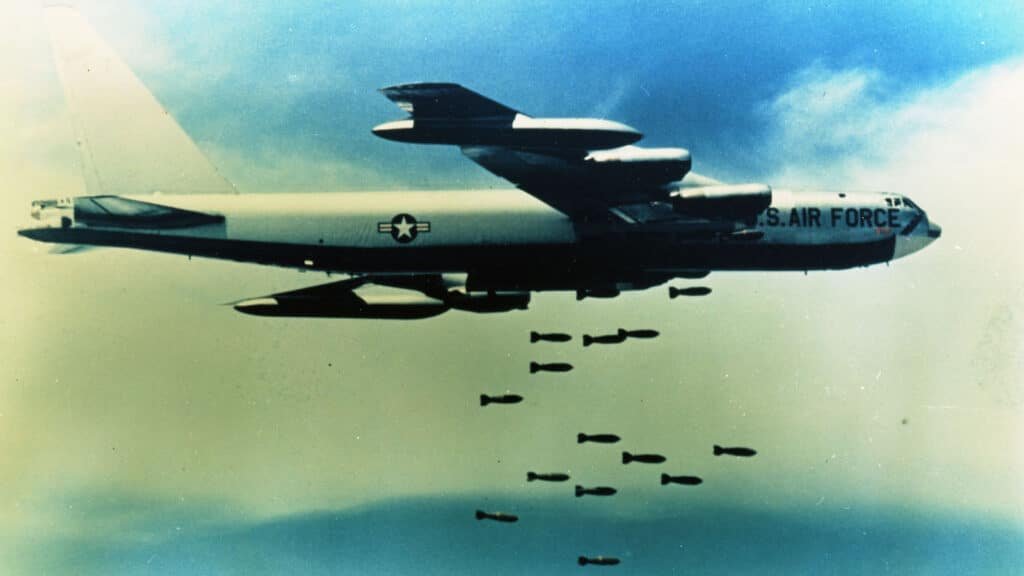
B-52 Stratofortress

B-52 copy

“Unleash the power of the skies with the B-52 Stratofortress – the ultimate bomber aircraft.”

Introduction

The B-52 Stratofortress is a long-range, heavy bomber aircraft that has been in service with the United States Air Force since the 1950s. It is known for its iconic design, with a distinctive swept-wing and eight engines, and has played a crucial role in various military operations and conflicts. With its ability to carry many weapons and travel long distances, the B-52 has proven to be a versatile and reliable aircraft, earning its place as a symbol of American military power. In this introduction, we will explore the history and capabilities of the B-52 Stratofortress.

B-52 inflight

History and Evolution of the B-52 Stratofortress


The B-52 Stratofortress is a long-range, heavy bomber aircraft that has been a staple of the United States Air Force since its introduction in the 1950s. With its distinctive swept-wing design and powerful engines, the B-52 has played a crucial role in shaping the history of aerial warfare.

The origins of the B-52 can be traced back to the early 1940s when the United States Army Air Forces (USAAF) began to explore the concept of a long-range, high-altitude bomber. This was in response to the growing threat of Soviet air power and the need for a strategic deterrent. In 1946, the USAAF issued a request for proposals for a new bomber, which would eventually lead to the development of the B-52.

The prototype of the B-52, known as the YB-52, took its maiden flight in April 1952. It was a massive aircraft, measuring over 150 feet long and weighing over 200,000 pounds. The YB-52 was powered by eight Pratt & Whitney J57 turbojet engines, which gave it a top speed of over 600 miles per hour and a range of over 8,000 miles. This impressive performance made the B-52 a formidable weapon in the US arsenal.

The B-52 entered service with the US Air Force in 1955, quickly becoming a symbol of American military might. Its ability to carry various nuclear and conventional weapons made it a versatile and powerful tool in the Cold War. During this time, the B-52 underwent several upgrades and modifications, including adding in-flight refueling capabilities and improved avionics systems.

In the 1960s, the B-52 was also used extensively in the Vietnam War. Its long-range capabilities allowed it to conduct bombing missions deep into enemy territory, and its heavy payload capacity made it an effective weapon against ground targets. However, the B-52’s large size and lack of maneuverability made it vulnerable to enemy anti-aircraft fire, resulting in several losses during the conflict.

The B-52 was vital to the US Air Force’s strategic bomber fleet. In the 1980s, the B-52 underwent a major upgrade program, including installing new engines and avionics systems. This modernization effort extended the B-52’s service life and ensured its continued relevance in the ever-changing landscape of aerial warfare.

In the 1990s, the B-52 was again called into action in the Gulf War. Its ability to carry a large payload and conduct precision strikes made it a valuable asset in the coalition’s efforts to liberate Kuwait from Iraqi forces. The B-52’s role in this conflict solidified its reputation as a reliable and versatile aircraft.

In the years that followed, the B-52 continued to be used in various conflicts, including the wars in Afghanistan and Iraq. Its ability to adapt to changing mission requirements and its long-range capabilities made it an essential tool for the US military. In recent years, the B-52 has also been used for humanitarian aid missions, showcasing its versatility beyond its role as a bomber.

Today, over 60 years after its first flight, the B-52 remains a crucial part of the US Air Force’s strategic bomber fleet. Its longevity and adaptability are a testament to its design and the continuous efforts to upgrade and modernize it. As technology advances, the B-52 will undoubtedly undergo further upgrades and modifications to ensure its relevance in the ever-evolving landscape of aerial warfare. The B-52 Stratofortress has stood the test of time and will continue to be a symbol of American military power for years.

USAF B-52 Stratofortress

Role and Impact of the B-52

The B-52 Stratofortress, also known as the “Buff” (Big Ugly Fat Fellow), is a long-range, heavy bomber aircraft that has been in service with the United States Air Force (USAF) since the 1950s. Despite its age, the B-52 remains a crucial component of the USAF’s arsenal and has played a significant role in modern warfare.

First introduced in 1955, the B-52 was designed to carry nuclear weapons and serve as a deterrent against the Soviet Union during the Cold War. However, with the changing nature of warfare, the B-52 has evolved to become a versatile and adaptable aircraft capable of carrying out a wide range of missions. From conventional bombing to intelligence gathering and even humanitarian aid, the B-52 has proven its worth time and time again.

One of the most significant roles of the B-52 in modern warfare is its ability to deliver precision strikes. With advanced technologies such as GPS-guided munitions and satellite communication systems, the B-52 can accurately hit targets from a safe distance. This capability has been crucial in the fight against terrorism, where the B-52 has been used to strike high-value targets in remote locations, minimizing collateral damage and reducing the risk to ground troops.

Moreover, the B-52’s long-range capabilities make it an ideal platform for conducting strategic bombing missions. With a range of over 8,000 miles, the B-52 can reach many parts of the world without refueling. This has been particularly useful in conflicts such as the Gulf War and the recent operations in Afghanistan and Iraq, where the B-52 has provided continuous air support for ground troops.

In addition to its combat roles, the B-52 has played a significant role in intelligence gathering. Equipped with advanced sensors and communication systems, the B-52 can collect and transmit valuable information to ground forces in real time. This has been crucial in providing situational awareness and aiding in decision-making on the battlefield.

The B-52 has also been a vital asset in humanitarian aid missions. In the aftermath of natural disasters, the B-52 has been used to deliver food, water, and medical supplies to affected areas. Its large payload and long-range capabilities make it an ideal platform for providing aid to remote and inaccessible locations.

Furthermore, the B-52 has significantly impacted modern warfare through its psychological effect. The sight and sound of a B-52 flying overhead can strike fear into the enemy’s hearts, demoralizing them and weakening their resolve. This has been evident in conflicts such as the Vietnam War, where the B-52’s presence alone was enough to deter enemy forces.

Despite its age, the B-52 remains a crucial component of the USAF’s arsenal, and its impact on modern warfare cannot be overstated. Its versatility, long-range capabilities, and advanced technologies have made it a formidable weapon in the hands of the USAF. However, the B-52’s role in modern warfare has its challenges.

One of the main challenges facing the B-52 is its aging airframe. Maintenance and upgrades are becoming increasingly costly, with some aircraft over 60 years old. The USAF has been working on modernization efforts to keep the B-52 relevant and effective in modern warfare. These efforts include upgrading the aircraft’s engines, avionics, and weapons systems and extending its service life.

In conclusion, the B-52 Stratofortress has played a significant role in modern warfare and is a crucial asset for the USAF. Its versatility, long-range capabilities, and advanced technologies have made it a formidable weapon in various missions. However, with the changing nature of warfare, the B-52 will need to continue to evolve and adapt to remain a relevant and practical aircraft.
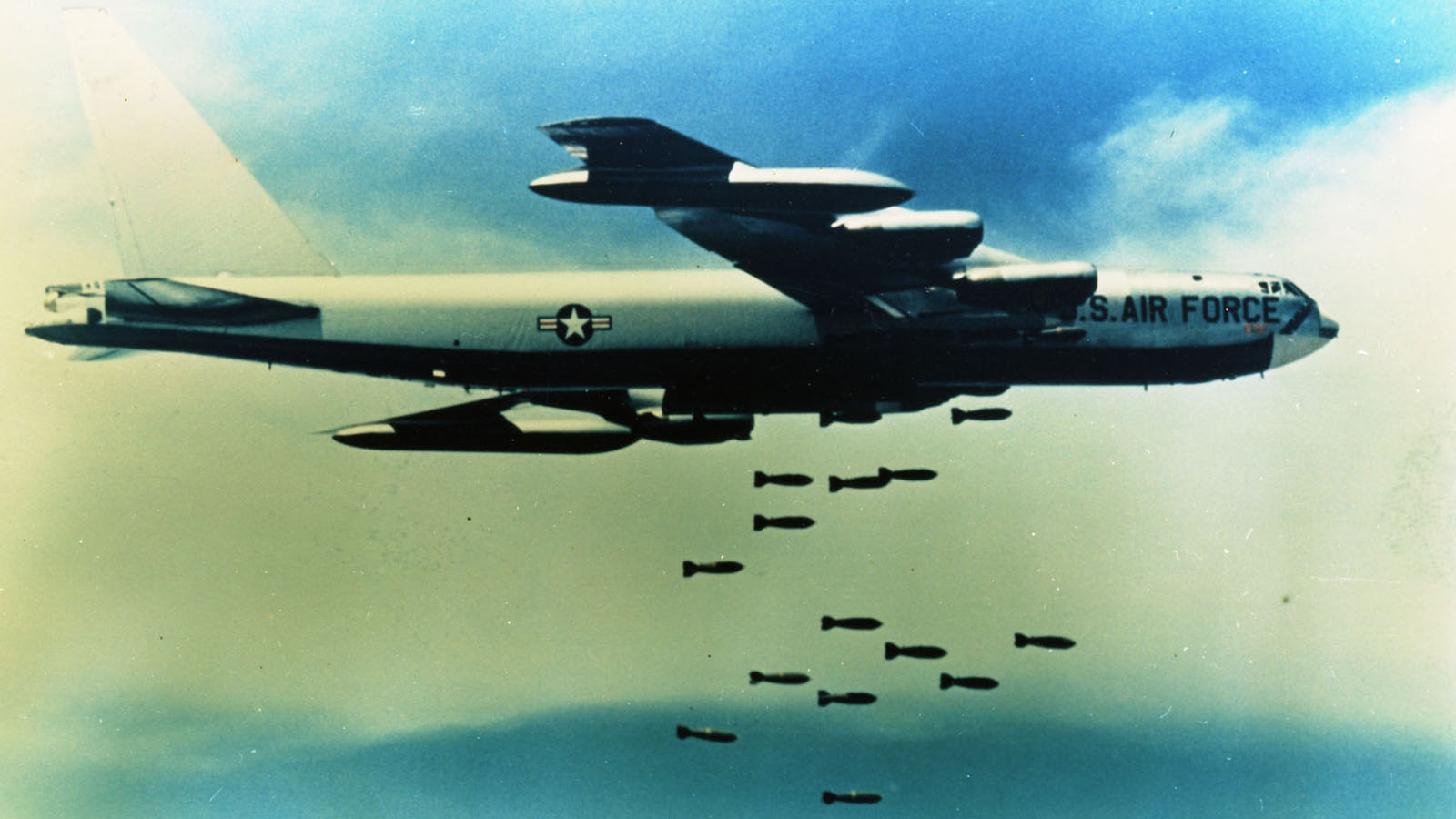
B-52 copy

Capabilities of the B-52 Stratofortress

It is a symbol of American military power and has played a crucial role in various conflicts and missions worldwide. With its impressive technical specifications and capabilities, the B-52 has proven to be a reliable and versatile aircraft that continues to serve the USAF.

One of the most notable features of the B-52 is its size. It has a wingspan of 185 feet and a length of 159 feet, making it one of the largest aircraft in the world. Its size allows it to carry a significant amount of weapons and fuel, giving it a long range and the ability to stay in the air for extended periods. The B-52 can reach a maximum speed of 650 miles per hour and has a range of over 8,800 miles without refueling.

The B-52 is powered by eight Pratt & Whitney TF33-P-3/103 turbofan engines, each producing 17,000 pounds of thrust. These engines give the B-52 the ability to carry a maximum payload of 70,000 pounds, which can include a variety of conventional and nuclear weapons. The aircraft has 12 hardpoints, allowing it to carry many weapons, including bombs, missiles, and mines.

In addition to its impressive payload capacity, the B-52 also has advanced avionics and navigation systems. It has a radar system can detect and track targets from long distances. The B-52 also has an inertial navigation system and a global positioning system (GPS), providing accurate navigation and targeting capabilities.

The B-52 has been continuously upgraded and modernized to keep up with changing technologies and threats. One of the most significant upgrades was the addition of the Conventional Rotary Launcher (CRL) in the 1980s. The CRL allows the B-52 to carry and release a variety of precision-guided munitions, significantly increasing its effectiveness in modern warfare.

Another notable upgrade was the installation of the Sniper Advanced Targeting Pod (ATP) in the early 2000s. The ATP is a precision targeting system that provides real-time video and infrared imagery to the B-52’s crew, allowing them to identify and engage targets more accurately.

The B-52 also can conduct electronic warfare (EW) missions. It has electronic countermeasures (ECM) systems that can jam enemy radar and communications and chaff and flare dispensers to confuse and evade incoming missiles.

Despite its age, the B-52 remains a vital asset for the USAF. Its long range and large payload capacity make it an ideal platform for conducting strategic bombing missions. It has been used in various conflicts, including the Vietnam War, the Gulf War, and, more recently, the fight against ISIS in the Middle East.

In addition to its combat capabilities, the B-52 also serves as a platform for testing and developing new weapons and technologies. Its versatility and reliability make it an ideal choice for conducting research and development missions.

Conclusion

In conclusion, the B-52 Stratofortress is a legendary aircraft that has played a crucial role in military operations for over six decades. Its long-range capabilities, heavy payload capacity, and adaptability have made it a valuable asset for the United States Air Force and its allies. Despite being an older aircraft, the B-52 continues to undergo upgrades and modernization efforts, ensuring its relevance and effectiveness in modern warfare. Its iconic design and impressive track record have solidified its place in aviation history and remain a symbol of American military power.

How much did the B-52 cost?

The cost of the B-52 Stratofortress bomber varies depending on the specific model and any additional modifications or upgrades. The initial production of B-52A had an estimated cost of around $14 million in the 1950s. The newer B-52H, the current active service variant, has an estimated unit cost of approximately $84 million as of 2010. However, it’s important to note that these prices may not reflect the total cost of development, research, and production for the aircraft.

How many crew members were on the B-52?

The B-52 Stratofortress bomber typically had a crew of six members. These crew positions included the aircraft commander, co-pilot, radar navigator, navigator, electronic warfare officer, and tail gunner. However, the specific number of crew members could vary depending on the mission and modifications made to the aircraft.

How fast was the B-52?

The B-52 Stratofortress, a long-range subsonic strategic bomber, has a maximum speed of approximately 650 miles per hour (Mach 0.86) at high altitudes. It can sustain a cruising speed of around 525 miles per hour (Mach 0.77).

How high could the B-52 fly?

The B-52 Stratofortress, a long-range strategic bomber, has a maximum altitude of approximately 50,000 feet (15,240 meters). However, during operational missions, it typically cruises at much lower altitudes, around 40,000 feet (12,192 meters), to optimize efficiency and reduce exposure to potential threats.

How many bombs could the B-52 carry?

The B-52 Stratofortress bomber is capable of carrying a variety of ordnance, including bombs. The B-52 has a maximum internal payload capacity of approximately 70,000 pounds (31,500 kilograms). The exact number of bombs it can carry depends on their size and weight.

How many nuclear weapons can the B-52 carry?

The B-52 Stratofortress can carry various types of weapons, including nuclear weapons. Originally designed to have atomic bombs during the Cold War, it can carry up to 20 nuclear gravity bombs. However, it’s important to note that treaties, international agreements, and specific mission requirements can limit the number of atomic weapons an aircraft carries. Additionally, details regarding current operational capacities and weapon load-outs of particular aircraft may be classified information.

How many B-52s have been built?

As of 2021, 2,042 B-52 Stratofortress aircraft have been built by the American aerospace company Boeing. The first B-52 was delivered to the United States Air Force (USAF) in 1955, and production continued until 1962. However, the B-52 has undergone numerous upgrades and modernizations, allowing it to continue serving in the USAF fleet.
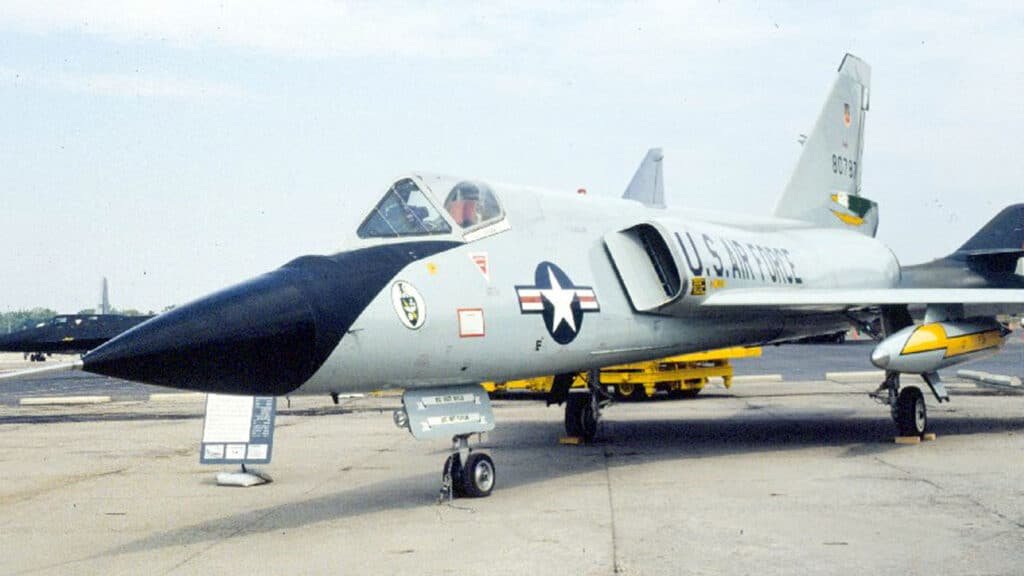
F-106 Delta Dart “The Six.”: Interceptor with Impressive Top Speed

f-106

History and Development of the F-106 Delta Dart

The F-106 Delta Dart, known simply as “The Six,” was a supersonic, all-weather interceptor aircraft developed by the United States Air Force (USAF) in the late 1950s. It was designed to replace the aging F-102 Delta Dagger and was the last dedicated interceptor in the USAF inventory. The development of the F-106 Delta Dart resulted from the Cold War and the need for a high-speed, high-altitude interceptor to defend against potential Soviet bomber attacks.

The history of the F-106 Delta Dart can be traced back to the early 1950s when the USAF initiated a program to develop a new interceptor to replace the F-102. The new aircraft was to have a higher speed, longer range, and better performance in all weather conditions. In 1954, Convair was awarded the contract to develop the F-106, and the prototype flew in December 1956.

The F-106 Delta Dart was a single-seat, single-engine aircraft with a delta wing design. It was powered by a Pratt & Whitney J75 after-burning turbojet engine, which gave it a top speed of Mach 2.3. The aircraft was equipped with advanced avionics and radar systems, including the Hughes MA-1 integrated fire control system.


The F-106 Delta Dart entered service with the USAF in 1959 and was initially deployed to Air Defense Command (ADC) units across the United States. It was also used by the Aerospace Defense Command (ADC) to protect the continental United States from potential Soviet bomber attacks. The F-106 was the primary interceptor for the USAF until the early 1980s, when the F-15 Eagle gradually replaced it.

The F-106 Delta Dart underwent several upgrades and modifications to improve its performance and capabilities during its service. In the late 1960s, the aircraft was equipped with the AN/ASG-18 fire control system, which improved its ability to engage low-flying targets. In the 1970s, the F-106 was upgraded with the AN/ASG-18X fire control system, which included a new radar and improved missile guidance.

The F-106 Delta Dart also played a crucial role in developing the B-58 Hustler supersonic bomber. The F-106 was used as a chase plane during the B-58’s test flights, and its advanced avionics and radar systems were used to gather data on the B-58’s performance.

In addition to its role as an interceptor, the F-106 Delta Dart was also used for other purposes. It was a testbed for various experimental systems, including the X-15 rocket-powered aircraft. The F-106 was also used for training purposes, and a two-seat trainer version, the TF-106, was developed and used by the USAF until the early 1990s.

The F-106 Delta Dart served with distinction for over two decades before retiring in 1988. The more advanced F-15 Eagle replaced it, but its legacy lives on. The F-106 was the last dedicated interceptor in the USAF inventory and played a crucial role in defending the United States during the Cold War. Its advanced technology and capabilities paved the way for future generations of fighter aircraft, and it will always be remembered as a significant part of aviation history.

Top Speed and Performance of the F-106 Delta Dart

The F-106 Delta Dart was a supersonic interceptor aircraft developed by the United States Air Force in the late 1950s. It was designed to be the ultimate defense against Soviet bombers during the Cold War. With its sleek and robust design, the F-106 Delta Dart was known for its impressive top speed and performance capabilities.

F-106 cockpitOne of the most notable features of the F-106 Delta Dart was its top speed. It could reach speeds up to Mach 2.3, making it one of the fastest aircraft. Its powerful Pratt & Whitney J75-P-17 afterburning turbojet engine achieved this, which produced over 24,000 pounds of thrust. This allowed the F-106 to climb to an altitude of 57,000 feet in under two minutes and reach its top speed in seconds.

The F-106 Delta Dart’s top speed was impressive and played a crucial role in its performance as an interceptor aircraft. With its ability to fly at such high speeds, the F-106 could quickly intercept and engage enemy bombers before they could reach their targets. This was a crucial advantage during the Cold War, as it allowed the F-106 to defend against potential attacks from the Soviet Union effectively.

In addition to its top speed, the F-106 Delta Dart also had exceptional maneuverability. Its delta wing design gave the aircraft its name and allowed quick and precise turns at high speeds. This was essential for intercepting and engaging fast-moving targets, such as enemy bombers or missiles. The F-106’s advanced avionics and flight control systems also contributed to its exceptional maneuverability, making it a formidable opponent in the air.


Another impressive aspect of the F-106 Delta Dart’s performance was its range. It had a maximum range of over 1,500 miles, achieved through its large internal fuel capacity and external fuel tanks. This allowed the F-106 to cover vast distances and remain in the air for extended periods, making it a valuable asset for long-range missions.

The F-106 Delta Dart’s top speed and performance capabilities were impressive on paper and put to the test in real-world situations. The aircraft was involved in numerous interceptions and scrambles during the Cold War, proving to be a reliable and effective defense against potential threats. Its speed and maneuverability were particularly crucial during these missions, as they allowed the F-106 to quickly respond to potential threats and protect the United States from enemy attacks.


Notable Features and Upgrades of the F-106 Delta Dart


Over the years, the F-106 underwent several upgrades to improve its capabilities. Adding the Hughes MA-1 electronic countermeasures (ECM) system was one of the most significant upgrades. This system provided the F-106 with the ability to jam enemy radar and missile guidance systems, making it more difficult for them to track and engage the aircraft. The F-106 also received an improved version of its fire control system, the MA-2. This system included a more powerful radar and improved data link, further enhancing the F-106’s interception capabilities.

Another notable upgrade to the F-106 was the addition of the AIM-4 Falcon air-to-air missile. This missile was specifically designed for the F-106 and was the USAF’s first guided missile. It had a range of over 10 miles and could engage multiple targets simultaneously. The F-106 could carry up to four AIM-4 missiles, giving it a significant advantage in air-to-air combat.


Legacy and Impact of the F-106 Delta Dart on Military Aviation


The F-106 Delta Dart played a crucial role in the defense of the United States during the Cold War. It was the primary interceptor for the Strategic Air Command (SAC) and protected the continental United States from potential Soviet bomber attacks. The F-106 was also used for reconnaissance missions, providing valuable intelligence on Soviet activities.


The F-106 Delta Dart remained in service with the USAF until 1988, when it was retired and replaced by the F-15 Eagle. However, its legacy continues to be felt in military aviation. The F-106 was the first to use a delta wing design, which has since been incorporated into many other aircraft, including the Concorde and the Eurofighter Typhoon.

The F-106 Delta Dart also paved the way for future advancements in air-to-air combat. Its advanced weapons system and radar technology set the standard for future interceptor aircraft, and its success in air defense missions proved the importance of having a dedicated interceptor in the U.S. military.

Today, the F-106 Delta Dart is remembered as one of U.S. history’s most iconic and successful interceptor aircraft. Its legacy continues to be celebrated by aviation enthusiasts, and its impact on military aviation is still felt today. The F-106 Delta Dart will always hold a special place in the history of the United States Air Force, and its contributions to national defense will never be forgotten.

F-101 Voodoo: Development, Design, Performance, and Operational History

F-101


F-101 Voodoo

The F-101 Voodoo, a powerful and versatile aircraft, was crucial in reconnaissance missions. Its development and design pushed the boundaries of aviation technology, resulting in outstanding performance and specifications.

Throughout its operational history, the Voodoo established itself as a formidable force in the skies. This article explores the enduring legacy and impact of the F-101 Voodoo, shedding light on its pivotal role in shaping the future of aerial reconnaissance.

Development and Design of the F-101 Voodoo

The development and design of the F-101 Voodoo are being discussed. The F-101 Voodoo was a supersonic jet fighter aircraft developed and designed by McDonnell Aircraft Corporation in the late 1950s. It was primarily intended as a long-range bomber escort for the United States Air Force (USAF).

The development of the F-101 Voodoo involved extensive research and testing to ensure its effectiveness in combat situations. The design of the aircraft featured a distinctive ‘double delta’ wing configuration, which provided excellent high-speed performance and maneuverability.

Additionally, the F-101 Voodoo was equipped with powerful engines that allowed it to reach speeds of over Mach 1. The development and design of the F-101 Voodoo also incorporated advanced avionics and weapon systems, including radar-guided missiles and a rotary internal weapons bay. These features further enhanced the aircraft’s capabilities in air-to-air and air-to-ground missions.

Overall, the development and design of the F-101 Voodoo played a crucial role in its success as a versatile and reliable fighter aircraft.

F-101

Performance and Specifications of the F-101 Voodoo

The F-101 Voodoo’s performance and specifications, including its top speed and payload capacity, are crucial factors determining its effectiveness in combat situations. With a top speed of over Mach 1.7, the Voodoo is one of the fastest aircraft of its time, allowing it to intercept and engage enemy targets quickly. Its payload capacity of up to 15,000 pounds enables it to carry a wide range of weapons, including air-to-air missiles, bombs, and rockets. This gives it versatility in different mission scenarios.

Regarding performance, the Voodoo’s agility and maneuverability are notable attributes. Its delta wing design and powerful engines provide excellent low-speed handling and high-speed stability. This allows the aircraft to engage in both air-to-air and air-to-ground combat effectively. Additionally, the Voodoo’s advanced radar and avionics systems enhance its situational awareness and targeting capabilities, increasing its combat effectiveness.

The F-101 Voodoo’s specifications also contribute to its effectiveness in combat. Its length of 67 feet and a wingspan of 39 feet provide stability and control during flight. The aircraft’s maximum takeoff weight of 52,400 pounds allows it to carry a significant amount of fuel and weapons, extending its endurance and mission capabilities.

Overall, the F-101 Voodoo’s performance and specifications make it a formidable fighter aircraft capable of engaging and dominating various combat situations.

Operational History of the F-101 Voodoo

Flying missions over Southeast Asia during the Vietnam War, the F-101 Voodoo played a crucial role in conducting surveillance and delivering precision strikes on enemy targets. The operational history of the F-101 Voodoo is a testament to its versatility and effectiveness in combat.

Initially designed as a long-range bomber escort, the Voodoo quickly adapted to the changing needs of the military. Its ability to carry various weapons and advanced navigation and targeting systems made it an ideal aircraft for reconnaissance and strike missions.

During the Vietnam War, the F-101 Voodoo flew countless missions, gathering vital intelligence on enemy positions and movements. Equipped with high-resolution cameras and other sensors, it provided valuable imagery and data to military planners. The Voodoo’s reconnaissance capabilities were further enhanced by introducing the RF-101 variant, specifically designed for photo and electronic reconnaissance missions.

In addition to its reconnaissance role, the F-101 Voodoo also carried out precision strikes on enemy targets. Armed with various ordnances, including conventional bombs and air-to-ground missiles, it could destroy critical enemy infrastructure and disrupt their operations. The Voodoo’s speed and agility made it difficult for enemy defenses to track and engage, further enhancing its effectiveness in combat.

Overall, the F-101 Voodoo’s operational history during the Vietnam War highlights its importance in gathering intelligence and carrying out precision strikes. Its adaptability and performance in various missions solidified its reputation as a competent aircraft.

Role of the F-101 Voodoo in Reconnaissance Missions

With its advanced reconnaissance capabilities and versatility, the F-101 Voodoo was crucial in gathering vital intelligence and conducting precision strikes on enemy targets during missions. Its ability to fly at high altitudes and speeds made it an ideal platform for conducting reconnaissance operations, allowing it to capture detailed imagery of enemy installations and movements. Additionally, the Voodoo’s radar systems were state-of-the-art, enabling it to detect and track enemy aircraft from long distances, providing valuable situational awareness to the pilots.

The F-101 Voodoo’s versatile nature allowed it to gather intelligence and carry out precision strikes on enemy targets. Equipped with various weaponry, including air-to-air missiles and bombs, the Voodoo could effectively engage ground targets or enemy aircraft if needed.

The Voodoo’s precision strikes were often carried out with the support of the valuable intelligence it gathered during reconnaissance missions. By knowing enemy targets’ exact location and characteristics, the Voodoo pilots could plan and execute highly effective strikes, minimizing collateral damage and maximizing mission success.

Legacy and Impact of the F-101 Voodoo

One of the most significant legacies of the F-101 Voodoo is its impact on modern aerial surveys, as it paved the way for advanced technologies and tactics still used today.

The F-101 Voodoo, a supersonic jet fighter aircraft, was primarily designed for the United States Air Force as a long-range bomber escort and fighter bomber. However, it was also utilized for reconnaissance missions, where it played a crucial role in gathering vital intelligence during the Cold War era.

The F-101 Voodoo introduced several critical advancements in aerial reconnaissance. It was one of the first aircraft to incorporate high-speed, high-altitude capabilities, allowing it to penetrate enemy airspace and gather essential information. Additionally, the aircraft was equipped with sophisticated cameras and sensors, enabling it to capture detailed images and detect enemy radar installations.

The success of the F-101 Voodoo in reconnaissance missions led to the development of more advanced technologies and tactics in this field. The knowledge gained from operating the F-101 Voodoo helped shape the design of subsequent reconnaissance aircraft, such as the SR-71 Blackbird. Moreover, the tactics and strategies developed during its missions formed the foundation for modern aerial reconnaissance operations.

Frequently Asked Questions

How Many F-101 Voodoos Were Produced During Its Production Run?

During its production run, the F-101 Voodoo produced a total of [insert number] units. The aircraft’s sleek design and powerful engines made it an iconic symbol of military aviation.

What Were the Main Challenges Faced During the Development of the F-101 Voodoo?

The main challenges faced during its development were the need for advanced technology, such as supersonic speed and long-range capabilities, and the requirement to meet the demands of the rapidly evolving Cold War era.

What Were the Major Modifications Made to the F-101 Voodoo Throughout Its Operational History?

Throughout its operational history, the F-101 Voodoo underwent several significant modifications. These changes included upgrades to its avionics, engines, and weaponry systems, enhancing its capabilities and ensuring its effectiveness in combat.

How Did the F-101 Voodoo Contribute to the Cold War Efforts?

The F-101 Voodoo played a crucial role in the Cold War. Its long-range capabilities and ability to carry nuclear weapons made it a formidable deterrent against potential adversaries, contributing to the overall defense strategy.

Were Any Notable Incidents or Accidents Involving the F-101 Voodoo During Its Service?

There were notable incidents and accidents involving the F-101 Voodoo during its service. These incidents and accidents played a significant role in shaping its reputation and impact on military operations.

Conclusion

In conclusion, the F-101 Voodoo was a formidable aircraft with impressive speed and range capabilities.

One interesting statistic is that the F-101 Voodoo set a world speed record in 1957, reaching 1,207 miles per hour.

This record-breaking feat showcases the exceptional performance of this aircraft and solidifies its place in aviation history.

Top 10 US Fighter Pilot Aces of World War II

1024px 56th Fighter Group P 47D Thunderbolt 42 8487

The annals of World War II are filled with extraordinary tales of heroism, particularly in aerial combat. American fighter pilots played a crucial role in achieving victory for the Allies, often facing incredibly dangerous odds to take control of the skies. Here, we look at the top 10 United States fighter pilot aces of World War II, men whose skill, valor, and determination set them apart as some of the most remarkable combatants in military history.

1. Richard Bong – 40 Victories

Major Richard Bong was a highly decorated fighter pilot in the United States Army Air Forces during World War II. He was born on September 24, 1920, in Superior, Wisconsin, and became America’s highest-scoring fighter pilot aces of the war, with 40 confirmed enemy aircraft shot down.

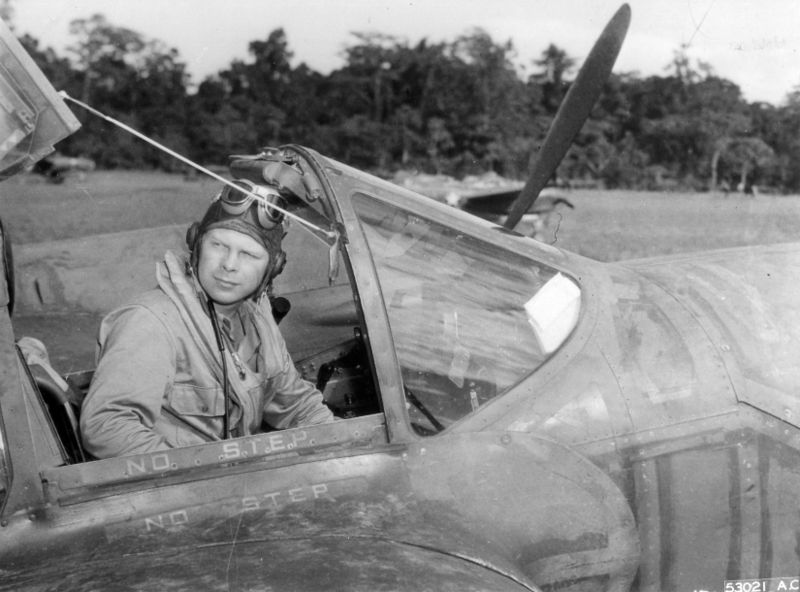
Bong flew a P-38 Lightning, a twin-engine fighter aircraft, primarily in the Pacific theaters of war. He was awarded the Medal of Honor, the highest military decoration in the United States, for his exceptional skill and bravery. However, tragically, Bong died in 1945 during a test flight of a new jet aircraft, cutting short his promising career.

Bong was one of US fighter pilot aces

Richard Bong

Cockpit of P-38

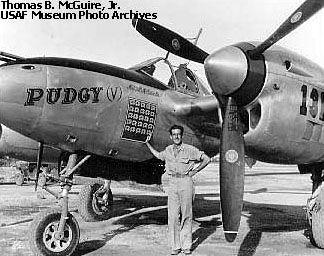
2. Thomas McGuire – 38 Victories

Thomas McGuire was an American and a fighter pilot ace during World War II. He was born on August 1, 1920, in Ridgewood, New Jersey, and grew up near North Arlington. McGuire joined the United States Army Air Corps in 1941 and trained as a fighter pilot.

Thomas McGuire 1

During the war, McGuire served in the Pacific Theater of Operations as a pilot in the 431st Fighter Squadron, 475th Fighter Group. He gained significant recognition for his exceptional combat skills and was credited with downing 16 enemy aircraft.

McGuire’s most notable achievement came on January 7, 1945, when he shot down seven Japanese aircraft in a single mission, becoming the second-highest-scoring American ace. He was posthumously awarded the Medal of Honor for his actions during this mission.

Sadly, on January 7, 1945, during a subsequent mission, McGuire’s P-38 Lightning aircraft experienced mechanical issues and crashed near the island of Negros in the Philippines. Despite heroic efforts to escape the wreckage, McGuire could not detach himself from the aircraft and died in the crash.

Thomas McGuire’s bravery, skill, and contributions during World War II have cemented his place as one of the most respected and celebrated American flying aces.

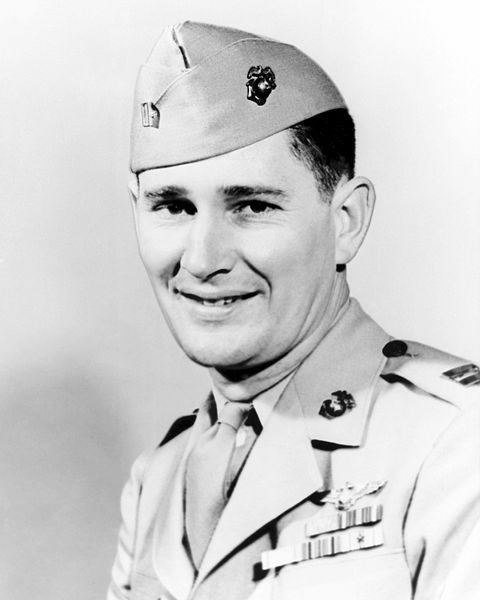
3. David McCampbell – 34 Victories

Commander David McCampbell was a highly decorated naval aviator who served during World War II. He was born on January 16, 1910, in Bessemer, Alabama, and grew up in California. McCampbell joined the United States Navy in 1933 and began his aviation career as a cadet.

David McCampbell

During his service in the Pacific theater of World War II, McCampbell became the Navy’s “Ace of Aces” by shooting down 34 enemy aircraft in 42 days. He achieved this remarkable feat as the commander of Air Group 15 aboard the aircraft carrier USS Essex. McCampbell’s courage, leadership, and aerial skills earned him the Medal of Honor, which he received from President Franklin D. Roosevelt in 1944.

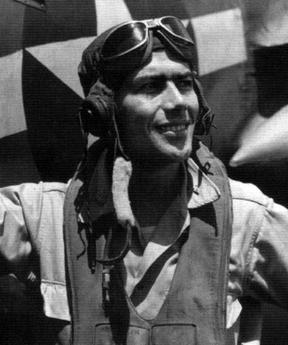
4. Joseph Foss – 26 Victories

Joseph Foss

Joseph Foss, born on April 17, 1915, and passed away on January 1, 2003, was an American aviator, politician, and business executive. He is best known for his service as a fighter pilot during World War II and his impressive combat record as a Marine Corps pilot. Foss was credited with shooting down 26 enemy aircraft, making him one of the leading aces of World War II.

Marine Corps aviator Joseph Foss was another outstanding pilot, scoring 26 victories in the Pacific Theater while flying the F4F Wildcat. Foss would later serve as the Governor of South Dakota and receive the Medal of Honor for his heroism.

5. Robert Johnson – 27 Victories

Robert S. Johnson

During World War II, Robert S. Johnson was an American fighter pilot and flying ace. He was born on February 21, 1920, in Lawton, Oklahoma, and grew up in West Virginia. Johnson joined the U.S. Army Air Corps in 1941 and became a P-47 Thunderbolt pilot. He flew combat missions in the European theater and became widely known for his exceptional skills and combat record. Operating in the European Theater, Robert S. Johnson flew the P-47 Thunderbolt and notched 27 kills. Johnson’s achievements are all the more remarkable, considering he was nearly shot down early in his combat career but managed to evade capture and return to flying.

6. Edward “Butch” O’Hare – 26 Victories

Edward “Butch” O’Hare was an American naval aviator who served during World War II. He was born on March 13, 1914, in St. Louis, Missouri, and grew up in a prominent family. O’Hare joined the U.S. Navy in 1939 and trained as a fighter pilot.

In 1942, O’Hare became the Navy’s first flying ace of World War II for his heroic actions during the Battle of the Coral Sea. While defending the USS Lexington aircraft carrier from a group of attacking Japanese bombers, O’Hare shot down five enemy aircraft in a single engagement. His actions earned him the Medal of Honor, becoming the Navy’s first recipient in World War II.

Butch OHare

Edward O’Hare’s bravery and skill made him a national hero, and he became known as “Butch” due to his rugged personality. Unfortunately, his life was cut short when his aircraft disappeared during a night combat mission in 1943 in the Pacific theater. Despite his untimely death, Edward O’Hare left a lasting legacy as a courageous and decorated naval aviator.


7. Gerald R. Johnson – 22 Victories

Gerald Richard Johnson

Gerald Richard Johnson (June 23, 1920 – October 7, 1945) was a World War II flying ace who flew for the United States Army Air Forces. Johnson commanded the 9th Fighter Squadron and 49th Fighter Group and became the fourth-ranking fighter ace in the Pacific during World War II. He ended his war career with 22 kills.

https://en.wikipedia.org/wiki/Gerald_R._Johnson

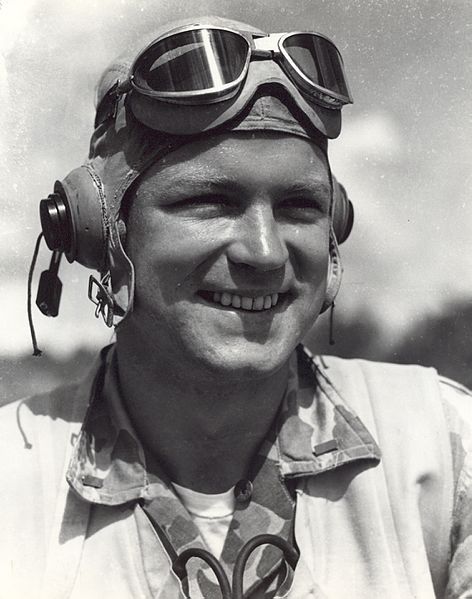
8. Robert Hanson – 25 Victories

Robert Hanson

Robert Murray Hanson (February 4, 1920 – February 3, 1944) was a United States Marine Corps flying ace who shot down 25 Japanese planes during World War II.  He flew the Vought F4U-1 Corsair in the South Pacific.  He was shot down and crashed into the ocean on February 3, 1944.  His Medal of Honor was presented to his mother in Boston, Massachusetts, on August 19, 1944.

9. Walker “Bud” Mahurin – 24.75 Victories

Walker “Bud” Mahurin was among the few American aces to serve in the European and Pacific Theaters. Flying the P-47 Thunderbolt and the P-51 Mustang, Mahurin achieved 24.75 confirmed kills before being captured by the enemy. He survived captivity and returned to the U.S. after the war.

Walker “Bud” Mahurin, born on December 5, 1918, and died on May 11, 2010, was a highly decorated fighter pilot from the United States. He served in the United States Army Air Forces and later the United States Air Force. Mahurin was known for his incredible combat skills and bravery during World War II and the Korean War.

During World War II, Mahurin flew 56 combat missions and achieved 20 aerial victories, making him an “ace” (a fighter pilot credited with shooting down five or more enemy aircraft). He piloted both the P-47 Thunderbolt and P-51 Mustang fighters during the war.

1024px 56th Fighter Group P 47D Thunderbolt 42 8487

In addition to his achievements during World War II, Mahurin also served in the Korean War. He commanded the 4th Fighter-Interceptor Wing and flew the F-86 Sabre. Mahurin was again successful in shooting down enemy aircraft and was awarded the Distinguished Service Cross, the second-highest military medal for valor in combat.

Overall, Walker “Bud” Mahurin is recognized as one of the most successful American fighter pilots of World War II and the Korean War, with 24.25 confirmed aerial victories. He retired from the military in 1956 and later worked in the aerospace industry.

10. Charles MacDonald – 27 Victories

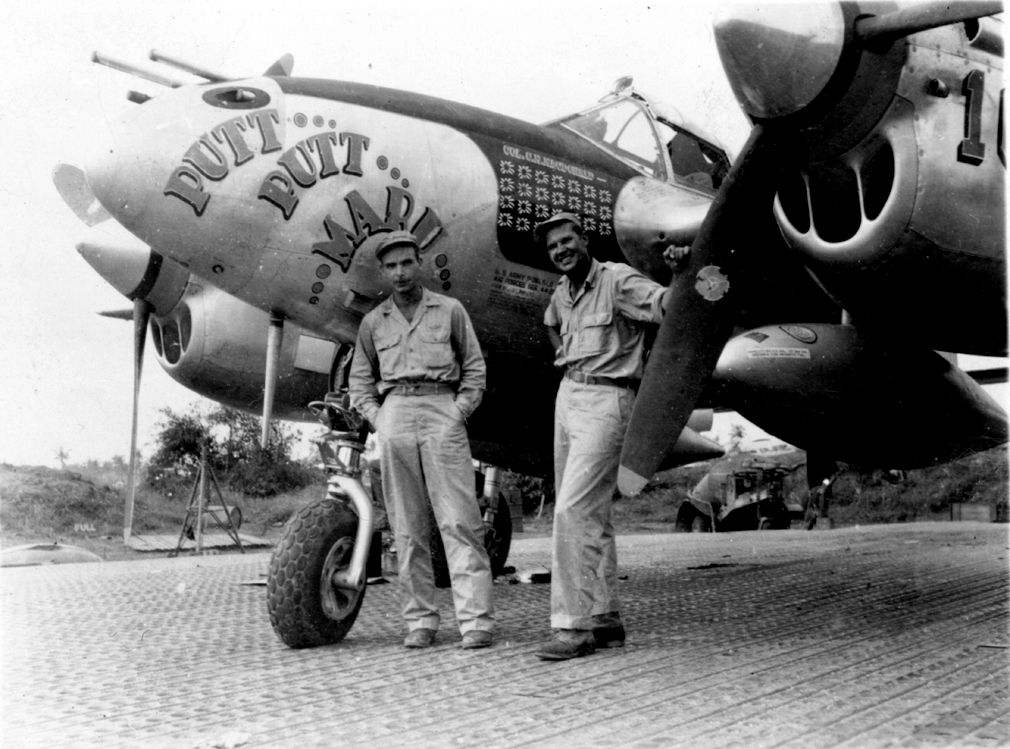
Colonel Charles Henry “Mac” MacDonald was a highly decorated officer and fighter ace in the United States Air Force during World War II. Born November 23, 1914, MacDonald served as the 475th Fighter Group commander for 20 months. He flew the P-38 Lightning aircraft named “Putt Putt Maru” during his tenure.

MacDonald’s exceptional skills and bravery as a pilot earned him the status of the third highest-ranking fighter ace in the Pacific theater during World War II. As an ace, he distinguished himself by shooting down many enemy aircraft in aerial combat, making him a formidable force.

MacDonald’s leadership and combat experience made him highly respected among his fellow pilots and the military community. He played a vital role in the success of the 475th Fighter Group, which participated in various missions and operations during the war.

Colonel Charles Henry “Mac” MacDonald continued to serve in the military for many years after the war. He eventually retired from the Air Force and passed away on March 3, 2002. His contributions and achievements as a fighter ace remain a significant part of his legacy in the history of the United States Air Force.

Charles H MacDonald
MacDonald and Al Nelson in the Pacific with MacDonald’s P-38J Lightning “Putt Putt Maru”.

P-47 Thunderbolt

P-47 Thunderbolt

P-47 Thunderbolt

.

The P-47 Thunderbolt was a force to be reckoned with during World War II. With its rugged design, impressive specifications, and fearless pilots, the Thunderbolt played a crucial role in the war effort.

Get ready to dive into this legendary aircraft’s thrilling history, notable missions, and lasting impact.

Role in World War II

The P-47 Thunderbolt was crucial in World War II, serving as a reliable and versatile fighter aircraft. As a pilot, you’d have appreciated its exceptional firepower, which included eight .50 caliber machine guns and the ability to carry up to 3,000 pounds of bombs or rockets. The Thunderbolt’s rugged construction and sturdy design made it capable of enduring intense combat situations and returning safely to base. Its exceptional range allowed for long-range missions, making it a valuable asset in European and Pacific theaters.

You’d have witnessed the Thunderbolt’s effectiveness in providing close air support to European ground forces. Its firepower and ability to carry significant ordnance made it a formidable adversary for enemy tanks, vehicles, and infantry. The Thunderbolt’s ability to operate from unimproved airstrips, known as ‘jungle fields,’ made it an invaluable asset in the Pacific theater. It played a vital role in the island-hopping campaigns, providing air cover for ground troops and conducting strafing missions.

The P-47 Thunderbolt’s role in World War II can’t be overstated. It served as a defensive fighter, protecting bombers from enemy attacks, and as an offensive weapon, striking targets on the ground with devastating firepower. Its versatility, reliability, and combat effectiveness made it a favorite among pilots and a critical asset for the Allied forces.

Notable Missions and Pilots

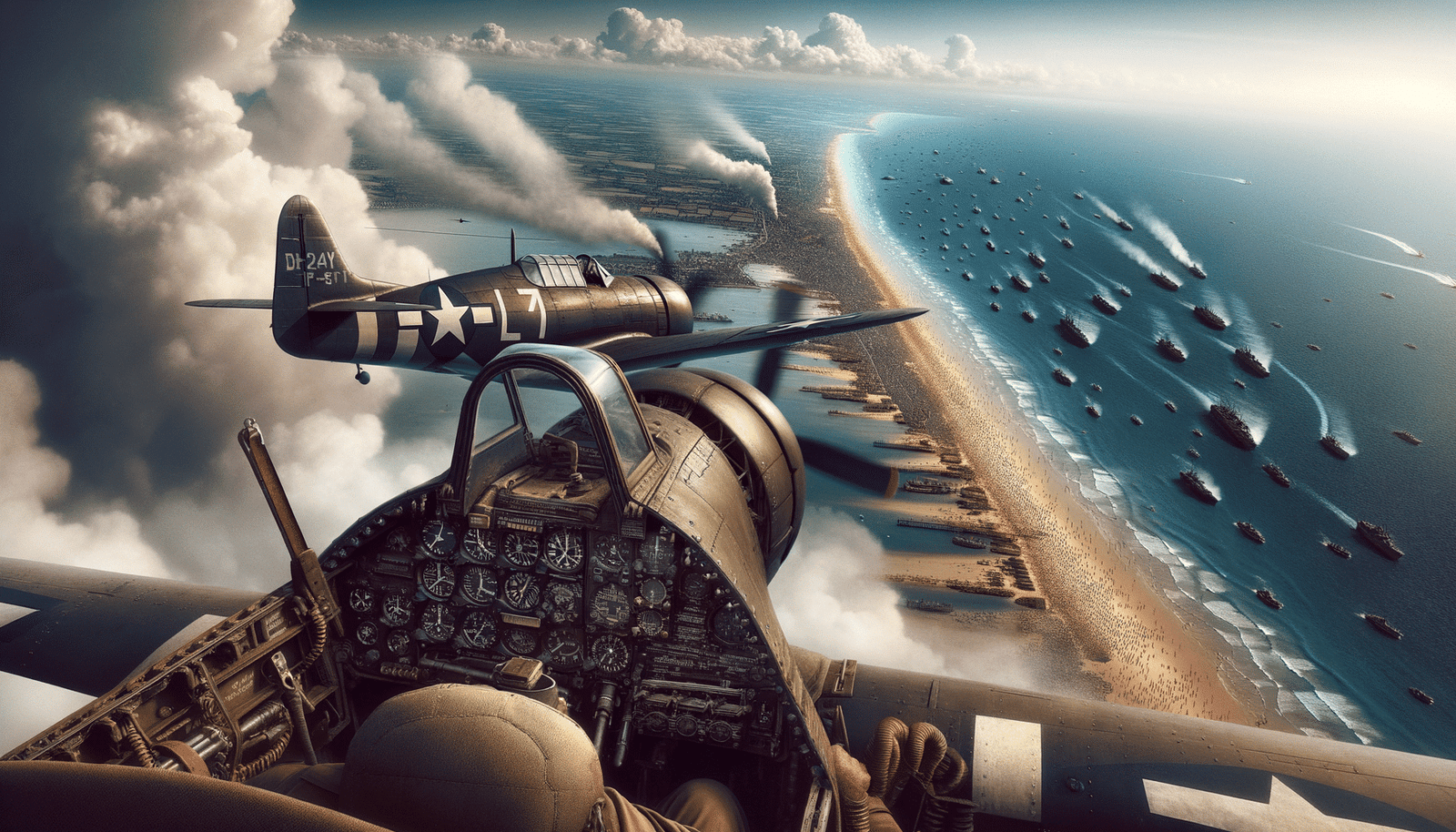
During World War II, you flew the P-47 Thunderbolt on numerous missions, showcasing its capabilities and contributing to the Allies’ success. One notable mission was the Operation Overlord, the D-Day invasion of Normandy. As a pilot, you provided close air support to the troops on the ground, targeting enemy positions and helping to secure the beachhead. Your Thunderbolt’s robust construction and heavy firepower neutralized threats and protected ground forces.

img
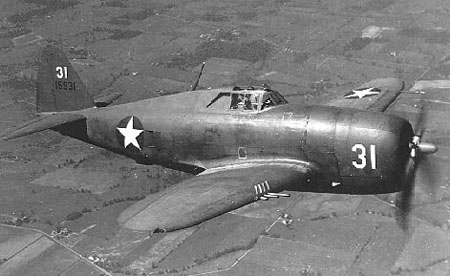
Republic P-47 Thunderbolt in Flight
Republic P-47B-RA in flight side view. (U.S. Air Force photo)

Another notable mission was the bombing campaign against Germany. Flying at high altitudes, you used the Thunderbolt’s superior speed and firepower to escort bombers and engage enemy aircraft. Your role was crucial in ensuring the success of strategic bombing raids, crippling Germany’s industry and infrastructure.

You also participated in the Battle of the Bulge, the last major German offensive on the Western Front. In this intense battle, you flew close air support missions, attacking enemy tanks, vehicles, and troops. Your Thunderbolt’s ability to carry a wide range of artillery made it an effective weapon against ground targets, and your bravery and skill played a vital role in stopping the German advance.

Overall, your missions in the P-47 Thunderbolt demonstrated its versatility and effectiveness in various combat scenarios. Your contributions, alongside other pilots, helped secure victory for the Allies in World War II.

Legacy and Impact

Your missions in the P-47 Thunderbolt had a lasting legacy and significantly impacted the outcome of World War II. As a pilot in the P-47 Thunderbolt, you were part of a formidable force that played a crucial role in the Allied victory. Your missions were marked by courage, skill, and determination as you took to the skies to defend freedom and defeat the enemy.

The P-47 Thunderbolt was an exceptional aircraft known for its ruggedness and versatility. It was armed with eight .50 caliber machine guns and could carry up to 2,500 pounds of bombs or rockets. With its powerful engine and excellent firepower, the Thunderbolt could provide adequate air support to ground forces and carry out strategic bombing missions.

Your missions in the Thunderbolt helped establish air superiority, vital in gaining control of the skies and ensuring the success of subsequent Allied operations. You engaged in dogfights with enemy aircraft, covering for bombers and ground troops. Your actions protected your fellow soldiers and disrupted enemy communication and supply lines.

The Thunderbolt’s impact extended beyond the battlefield. Its success in combat boosted the morale of Allied forces and struck fear into the enemy’s hearts. Your missions in this iconic aircraft left a lasting legacy, setting a high standard for future pilots.

Frequently Asked Questions

What Were Some Challenges faced during the Production of the P-47 Thunderbolt?

Challenges were faced during the production of the P-47 Thunderbolt, such as sourcing materials, ensuring quality control, and meeting production deadlines. However, one interesting statistic is the impressive production rate of 15 Thunderbolts daily.

How Did the P-47 Thunderbolt Compare to Other Fighter Aircraft in Speed and Maneuverability?

Compared to other fighter aircraft of its time, the P-47 Thunderbolt stood out in speed and maneuverability. It was faster and more agile, making it a formidable force in the skies.

What Were the Primary Armaments Used by the P-47 Thunderbolt During World War I?

During World War II, the primary armaments used by the P-47 Thunderbolt were eight .50 caliber machine guns and the ability to carry 2,500 pounds of bombs or rockets.

Were Any Notable Instances of the P-47 Thunderbolt Used in Ground Attack Roles?

There were notable instances of the P-47 Thunderbolt being used in ground attack roles during World War II. It was a versatile aircraft capable of delivering devastating blows to enemy ground targets.

How Did the P-47 Thunderbolt Contribute to the Development of Future Fighter Aircraft?

The P-47 Thunderbolt contributed to the development of future fighter aircraft through its powerful engine, advanced aerodynamics, and heavy armament. It paved the way for faster, more maneuverable planes with increased firepower.

Conclusion

In conclusion, the P-47 Thunderbolt was a formidable aircraft in World War II. Its development and design showcased innovation and efficiency. With impressive specifications and performance, it played a crucial role in combat.

Notable missions and pilots further solidified its reputation as a legendary fighter. The Thunderbolt’s legacy and impact on aviation history can’t be overstated. Its parallelism of power and precision ensured its place in the annals of military aircraft.

The Top Non-US Fighter Pilot Aces of World War II

Many Top 10 Non-US Fighter Pilot Aces Flew the Messersmidt 109

Top 10 Non-US Fighter Pilot Aces

Here are the top 10 non-US fighter pilot aces of World War II—a list populated by legends who survived and thrived in some of the most lethal skies in history. The dogfights of World War II produced some of the most extraordinary feats of aerial combat ever witnessed. The men behind the stick were often equally remarkable, each with his unique combination of skill, daring, and situational awareness.


The US aircraft that suffered the most losses in World War II was the B-17 Flying Fortress, a heavy bomber. The B-17s participated in strategic bombing campaigns in Europe, particularly targeting German industrial and military infrastructure. Due to their extensive use and the dangerous nature of their missions, the B-17s experienced significant losses during the war.


During World War II, a total of 4,735 B-17 Flying Fortress bombers were produced by the United States. Approximately 1,000 were lost in combat operations, either shot down by enemy aircraft or destroyed in other ways.

Definition of a Fighter Pilot Ace

Fighter Pilot Ace is an exceptionally skilled fighter pilot with many air combat victories. The term “ace” originated during World War I and refers to a pilot who had shot down five or more enemy aircraft. A fighter pilot with this designation is typically revered for their outstanding flying skills, tactical prowess, and ability to outmaneuver and defeat enemy aircraft in combat. These individuals are often decorated with military honors and highly respected within military aviation circles.

1. Erich Hartmann – Germany: 352 Victories

Known as the “Black Devil,” Erich Hartmann is the highest-scoring ace ever. Flying primarily the Messerschmitt Bf 109, Hartmann achieved 352 aerial victories. Despite being captured by Soviet forces and spending ten years in a labor camp, he survived the war and became a West German Air Force colonel.

Messerschmitt Bf 109

2. Gerhard Barkhorn – Germany: 301 Victories

Gerhard Barkhorn In one of the Fighter Pilot Aces
Gerhard Barkhorn

Gerhard “Gerd” Barkhorn was a German fighter pilot during World War II. He was born on March 20, 1919, in Königsberg, Germany (now Kaliningrad, Russia), and joined the Luftwaffe (German Air Force) in 1937. Barkhorn became one of the highest-scoring fighter aces of the war, with 301 confirmed victories, making him the second-highest scoring ace in history, behind Erich Hartmann.

Following World War II, he became a high-ranking officer in the German Air Force of the Federal Republic of Germany.   

3. Günther Rall – Germany: 275 Victories

With 275 confirmed victories, Günther Rall is third on the list. Rall served on the Eastern and Western Fronts and was known for his tactical brilliance. He also had the distinction of being one of the most highly decorated Luftwaffe pilots.

4. Otto Kittel – Germany: 267 Victories

Otto Kittel was one of the Luftwaffe’s most effective pilots, amassing 267 victories. He flew the Fw 190 and was exceptionally skilled at ground-attack missions. Unfortunately, he was killed in action in February 1945.

5. Walter Nowotny – Austria/Germany: 258 Victories

Austrian-born Walter Nowotny accumulated 258 aerial victories, primarily on the Eastern Front. Flying both the Bf 109 and the Fw 190, he became one of the youngest captain’s in the Luftwaffe before being killed in combat in 1944 while testing a Me 262 jet fighter.

6. Wilhelm Batz – Germany: 237 Victories

Wilhelm Batz, another Luftwaffe pilot, accrued 237 victories. He was known for his precision and audacity in combat. Batz survived the war but did not continue his military career afterward.

7. Heinz Bär – Germany: 220 Victories

Heinz Bär participated in multiple fronts, including the Eastern Front, the Western Front, and the Mediterranean. With 220 victories, Bär flew various aircraft, including the Messerschmitt Bf 109, the Fw 190, and even the Me 262 jet.

8. Hermann Graf – Germany: 212 Victories

Hermann Graf earned 212 confirmed victories during his time in World War II. His tactical acumen was only paralleled by his skills as a marksman. After the war, he was held as a prisoner of war by both the Americans and the French but was eventually released.

9. Hans-Joachim Marseille – Germany: 158 Victories

Known as the “Star of Africa,” Hans-Joachim Marseille was a prolific ace who primarily fought in North Africa. With 158 victories, he was noted for his chivalry and respect towards enemy pilots. He died in a flying accident in 1942.

10. Hiroyoshi Nishizawa – Japan: 87 Victories

The only non-German pilot on this list, Hiroyoshi Nishizawa, was Japan’s leading ace with an estimated 87 confirmed victories. Flying the Mitsubishi A6M Zero, he was renowned for his fearlessness and extraordinary skill. Nishizawa was killed in 1944 during a transport mission.


Russian Fighter Pilot Aces in World War II

  1. Ivan Kozhedub was the highest-scoring Allied fighter ace of World War II, with 62 confirmed victories. He flew in the Soviet Air Forces and was awarded the title Hero of the Soviet Union three times.
  2. Aleksandr Pokryshkin is one of the best fighter pilots in Soviet history, with 59 confirmed victories. He was also awarded the title Hero of the Soviet Union three times.
  3. Grigory Rechkalov: He had 56 confirmed victories during World War II and was awarded the title Hero of the Soviet Union twice.
  4. Nikolay Golodnikov: He had 52 confirmed victories and was awarded the title Hero of the Soviet Union twice.
  5. Boris Safonov: He had 48 confirmed victories and was awarded the title Hero of the Soviet Union twice.

These are just a few examples, and many more Soviet fighter pilots achieved many aerial victories during World War II.


Japanese Fight Pilot Aces During World War II

  1. Saburo Sakai: He is regarded as one of Japan’s most famous and skilled fighter pilots. Sakai shot down 64 enemy aircraft, including American, British, and Australian planes. Despite suffering severe injuries during the war, he survived and wrote about his experiences in his autobiography, “Samurai!”
  2. Hiroyoshi Nishizawa: Nishizawa is another highly regarded Japanese fighter pilot. He is credited with shooting down 87 enemy aircraft during the war, making him one of the highest-scoring aces of the Japanese Empire. Nishizawa’s combat skills earned him the nickname “Devil of Rabaul.”
  3. Tetsuzo Iwamoto: With 80 confirmed victories, Iwamoto was one of Japan’s top-ranking aces during World War II. He displayed exceptional skills in combat, often flying in the A6M Zero fighter aircraft. Iwamoto survived the war but lost an eye in a training accident.
  4. Shoichi Sugita: Sugita achieved ace by shooting down 38 enemy planes during the war. He primarily flew the Mitsubishi A6M Zero and participated in numerous campaigns, including the Battle of Midway and the Solomon Islands campaign.
  5. Yasuhiko Kuroe: Kuroe was a highly successful Japanese fighter pilot, shooting down 39 enemy aircraft during the war. He participated in various battles, including the Battle of Midway, where he earned commendations for his actions. Like many other Japanese pilots, Kuroe flew the Mitsubishi A6M Zero.

These pilots and others played critical roles in the Japanese war effort, engaging in dogfights and aerial combat throughout the Pacific theater. Their exceptional skills and combat prowess enabled them to earn the status of ace and contribute to Japan’s war efforts during World War II.

Conclusion

World War II fighter aces were exceptional individuals operating under extreme circumstances. While their actions took place in a devastating global conflict, their feats of skill, bravery, and tactical brilliance are unparalleled in the annals of military aviation.

P-40 Warhawk

P-40 Fighter

P-40 Fighter

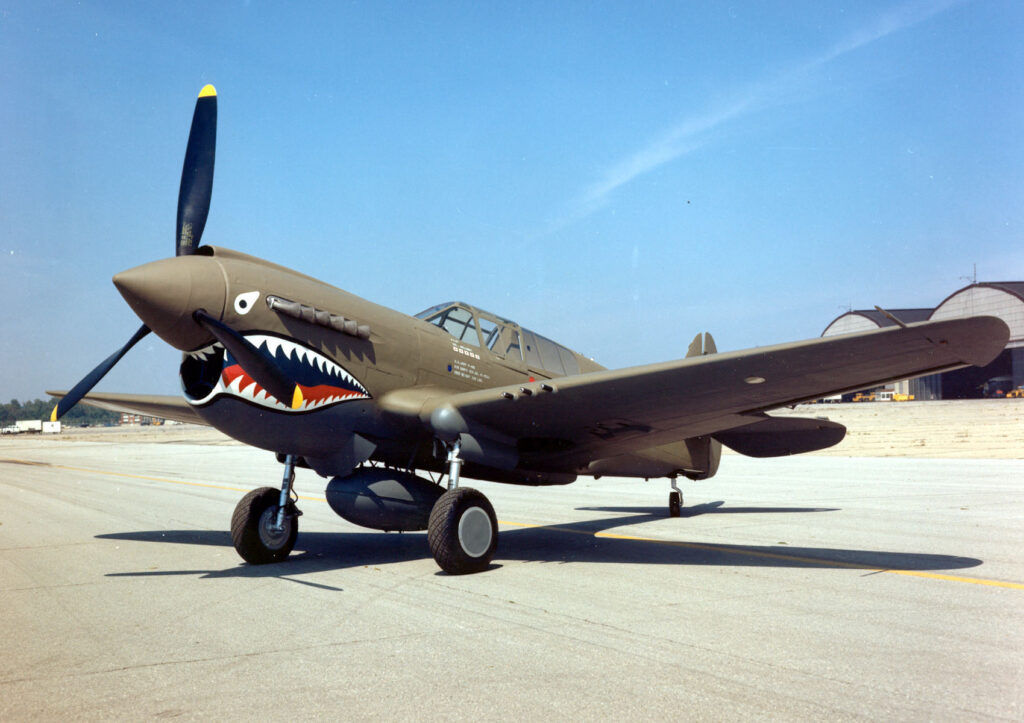
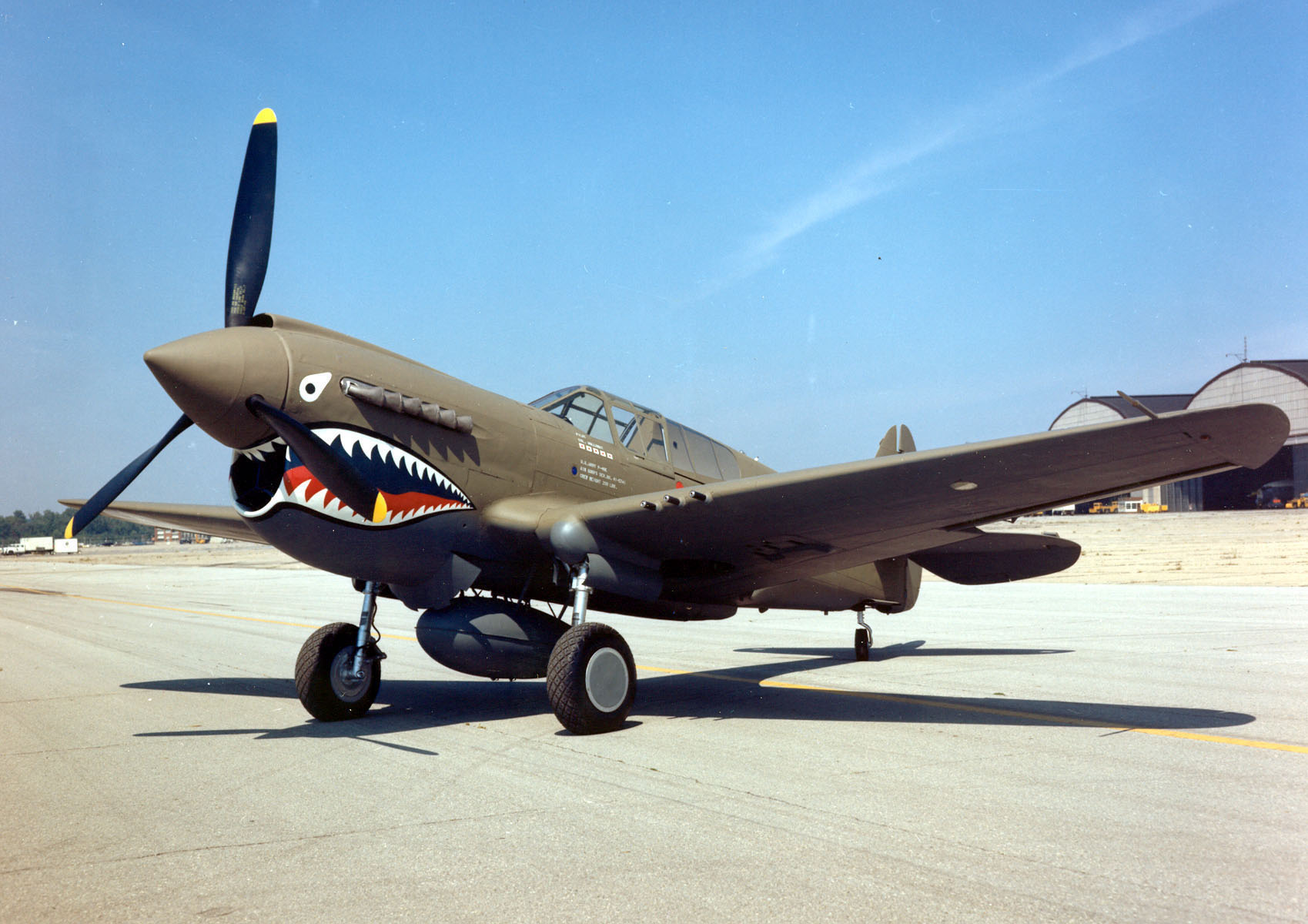
The P-40 Fighter, known as the Warhawk, is legendary in aviation history. Developed and designed during World War II, this formidable aircraft played a pivotal role in combat missions, showcasing its exceptional performance and specifications.

Curtiss P-40E

Development and Design

Aviation experts highly praised his team’s development and design of the P-40 Fighter. The P-40 Fighter, also known as the Warhawk was a World War II fighter aircraft that played a significant role in various military operations. Led by the renowned engineer and designer Curtiss, the team worked tirelessly to create a formidable aircraft that would excel in combat.

One of the critical aspects of the P-40 Fighter’s development was its powerful engine. The team focused on creating a machine that provided optimal performance and speed. They incorporated advanced technologies and made significant improvements to ensure the aircraft’s engine was reliable and efficient.

Additionally, the team paid great attention to the design of the P-40 Fighter. They aimed to create an aircraft that was both aerodynamic and visually appealing. The sleek and streamlined design allowed the plane to cut through the air with minimal resistance, ultimately enhancing its speed and maneuverability.

Furthermore, the team implemented innovative features such as the ‘shark mouth’ design on the front of the aircraft. This unique feature not only added a fearsome appearance but also served a practical purpose by intimidating enemy pilots. The plan quickly became iconic and synonymous with the P-40 Fighter.

Curtiss and his team’s development and design of the P-40 Fighter showcased their expertise and dedication. Their efforts produced an aircraft highly regarded for its performance, reliability, and distinctive appearance.

Performance and Specifications

P-40 Fighter cockpit
P-40 cockpit

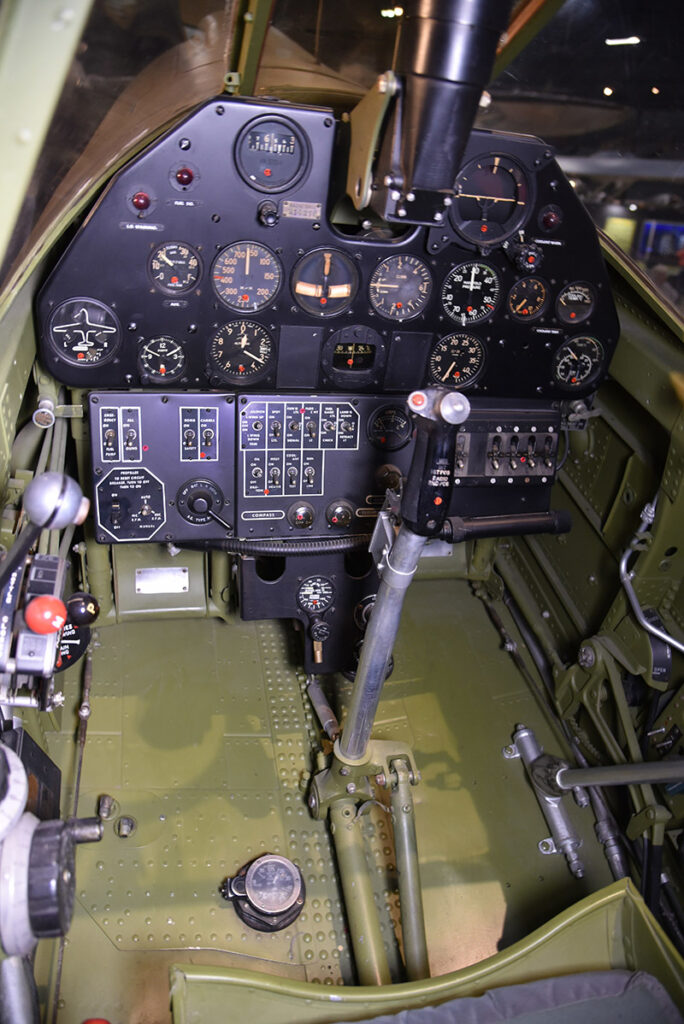
One significant feature of the P-40 Fighter was its ability to perform well at low altitudes. This made it particularly effective in close air support missions and ground attacks. However, its performance at higher altitudes was limited, and it struggled against more advanced enemy fighters. Despite these limitations, the P-40 Fighter played a crucial role in various theaters of war, including the Pacific and North Africa. Its ruggedness, firepower, and versatility made it a favorite among pilots, and Allied forces widely used it throughout the war.

The P-40 Fighter’s specifications resulted from careful consideration and engineering, ensuring it was a valuable asset in combat.

Combat History and Missions

During its service, the P-40 Fighter completed over 20,000 combat missions, showcasing its effectiveness in aerial warfare. The P-40 Fighter was an iconic American fighter aircraft that saw action during World War II. It gained fame for defending Pearl Harbor and its use by the famous Flying Tigers in China. The P-40 was known for its ruggedness, firepower, and agility in combat.

One of the most notable combat missions of the P-40 Fighter was its participation in the Battle of Britain. The aircraft played a crucial role in defending the skies over Britain against the German Luftwaffe. Its speed and maneuverability allowed it to engage enemy aircraft effectively, and its firepower was sufficient to take down enemy bombers.

The P-40 Fighter also saw action in the Pacific theater, providing close air support for ground troops and engaged in dogfights with Japanese aircraft. Its ability to withstand damage and continue flying made it a formidable opponent in aerial combat.

In addition to its combat missions, the P-40 Fighter was used for reconnaissance and ground attack missions. Its versatility made it a valuable asset for the Allied forces.

Overall, the P-40 Fighter proved to be a reliable and effective aircraft during World War II. Its combat history and missions solidified its place in aviation history as an essential fighter aircraft.

Notable Pilots and Aces

Chennault

Although many notable pilots and aces flew the P-40 Fighter, one of the most legendary was Claire Lee Chennault, who led the Flying Tigers and achieved great success against enemy forces. Chennault was an American military aviator who served as a commander of the American Volunteer Group, also known as the Flying Tigers, during World War II. He was known for his strategic leadership and innovative tactics, which played a crucial role in the defense of China against the Japanese forces.

Chennault’s success with the P-40 Fighter can be attributed to his emphasis on aerial tactics and his ability to adapt to the changing circumstances of war. He recognized the limitations of the P-40’s speed and maneuverability compared to other aircraft, but he also understood its strengths, such as its durability and firepower. Chennault developed a strategy that maximized these advantages, focusing on hit-and-run attacks and using the aircraft’s superior armament to its fullest extent.

Under Chennault’s leadership, the Flying Tigers achieved remarkable success. They were credited with shooting down hundreds of Japanese aircraft while suffering minimal losses themselves. Chennault’s tactics and leadership skills significantly impacted the outcome of the war in the Pacific, and he became a celebrated figure in aviation history.

Legacy and Impact

Chennault’s strategic leadership and innovative tactics in the P-40 Fighter had a lasting legacy and significantly impacted the war’s outcome. As the American Volunteer Group commander, also known as the Flying Tigers, during World War II, Chennault revolutionized aerial warfare with his unique approach to combat. He recognized the limitations of the P-40 Fighter and devised tactics that maximized its strengths while minimizing its weaknesses.

Chennault’s most notable innovation was the ‘finger-four’ formation, which involved four aircraft flying in a V-shaped pattern. This formation allowed the P-40s to maintain better situational awareness and cover each other’s blind spots, giving them a distinct advantage against enemy fighters. Additionally, Chennault emphasized the importance of teamwork and discipline among his pilots, ensuring they operated as a cohesive unit.

The impact of Chennault’s leadership and tactics was evident in the success of the Flying Tigers. Despite being outnumbered and facing superior Japanese aircraft, they achieved an impressive kill ratio of 20:1. Their victories boosted American morale and forced the Japanese to divert valuable resources to defend against the Flying Tigers.

Chennault’s contributions extended beyond the war itself. His innovative tactics and emphasis on teamwork influenced future generations of fighter pilots and shaped the development of aerial warfare. The lessons learned from Chennault’s leadership in the P-40 Fighter continue to be studied and applied in modern military strategy.

Frequently Asked Questions


What Was the Role of the P-40 Fighter in the Pacific Theater During World War II?

During World War II in the Pacific theater, the P-40 Fighter played a significant role. It was used for various missions such as air superiority, ground attack, and escorting bombers.

The P-40 was known for its durability and firepower, making it a formidable aircraft against enemy forces. Pilots relied on its speed and maneuverability to engage in dogfights and protect friendly staff. Its contribution to the war effort was crucial in achieving air superiority and supporting ground operations.

How Did the P-40 Fighter Compare to Other Contemporary Fighter Aircraft in Speed and Maneuverability?

When comparing the P-40 Fighter to other contemporary aircraft in terms of speed and maneuverability, it’s important to note that the P-40 wasn’t considered as fast or agile as some of its counterparts. While it was still a formidable machine, its speed and maneuverability were somewhat lacking in comparison. However, the P-40 made up for these shortcomings with its robust construction and powerful armament, which made it a reliable and effective fighter in combat situations.

What Were Some Major Challenges Faced by P-40 Fighter Pilots During Combat Missions?

During combat missions, P-40 fighter pilots faced several significant challenges. They had to contend with the limited speed and maneuverability of the P-40 compared to other contemporary fighter aircraft. Additionally, the P-40 had relatively weaker armor and firepower, making it vulnerable to enemy attacks.

Did the P-40 Fighter Have Any Significant Design Flaws That Affected Its Performance in Combat?

The P-40 Fighter, a widely used aircraft during World War II, had its share of design flaws that affected its performance in combat. Despite its powerful engine and sturdy construction, the P-40 suffered from limited maneuverability and speed compared to its contemporaries.
.

How Did the P-40 Fighter Contribute to the Development of Future Fighter Aircraft Designs?

The P-40 Fighter, known for its robust design and reliability, was vital in shaping future fighter aircraft designs. Its contribution can be seen in developing advanced features like the tricycle landing gear and a centralized cockpit. These innovations improved maneuverability and pilot visibility and influenced subsequent fighter aircraft designs. The P-40 Fighter’s legacy lives on, as its technological advancements paved the way for more advanced and efficient fighter planes.

Conclusion

In the skies of history, the P-40 fighter soared with an indomitable spirit. Its sleek design and fierce performance made it a formidable force in combat. Pilots bravely took the helm, their hearts pounding as they engaged in daring missions. The legacy of the P-40 lives on, etched into the annals of aviation. Like a soaring eagle, its impact is forever etched in the imaginations of those who witness its majestic flight.

P-38 Lightning: A Powerful WWII Fighter Aircraft

P-38

The Lockheed P-38 Lightning 


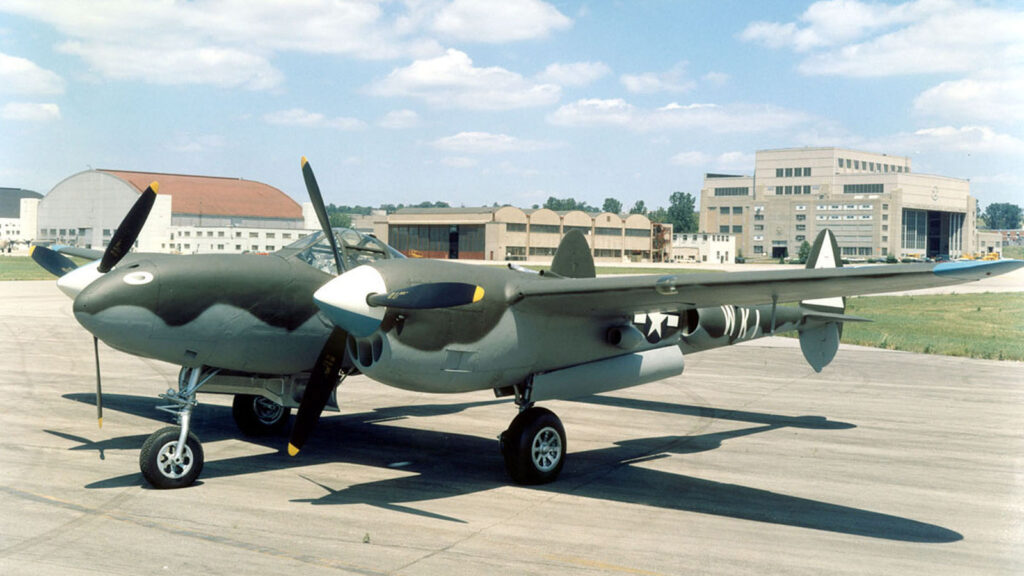
An aircraft that stands tall among the giants of World War II is the Lockheed P-38 Lightning. With its distinctive twin-boom design and impressive capabilities, the P-38 left an indelible mark on the history of aviation. In this blog post, we’ll explore the fascinating story of the P-38 Lightning and its contributions to the war effort.

P-38 Lightning

Birth of a Lightning Bolt


P-38 cockpit
P-38 cockpit

II. Performance and Versatility:

  1. Speed and Altitude: The P-38 was known for its impressive speed and altitude capabilities. It could reach up to 400 mph (640 km/h) and climb to altitudes exceeding 40,000 feet (12,000 meters), making it a formidable adversary for enemy aircraft.
  2. Range: With its twin engines and large fuel capacity, the P-38 had an extended range that made it suitable for long-range escort missions, reconnaissance, and even ground attack roles.
  3. Armament: The Lightning was armed with a potent array of weaponry, including a nose-mounted 20mm cannon and four .50 caliber machine guns. This firepower made it highly effective in air-to-air combat.

World War II

The P-38 Lightning played a pivotal role in World War II on various fronts:

  1. European Theater: The P-38 was crucial in escorting Allied bombers on long-range missions deep into enemy territory. It earned a reputation for its accuracy and dependability in these escort roles.
  2. Pacific Theater: The Lightning was instrumental in combatting the Japanese forces in the Pacific. It scored numerous victories against enemy aircraft and was well-suited for patrolling the vast expanse of the Pacific Ocean.
  3. Reconnaissance: The P-38 was adapted for reconnaissance missions, serving as the eyes and ears of the Allied forces. Its speed and high-altitude capabilities made it an ideal platform for intelligence gathering.

Legacy and Impact


The Lockheed P-38 Lightning left a lasting legacy in the world of aviation. Its innovative design paved the way for future twin-engine aircraft, and its wartime contributions helped turn the tide of the war. Notable P-38 aces, such as Richard I. Bong and Thomas McGuire, achieved remarkable success in aerial combat while flying the Lightning.


Conclusion


The Lockheed P-38 Lightning’s distinctive design, exceptional performance, and versatility made it a formidable weapon in the skies during World War II. Today, the P-38 remains an iconic symbol of a bygone era in aviation, forever etched in the history of flight as a true marvel of its time.

Frequently Asked Questions

What is the P-38?

The P-38, also known as the Lockheed P-38 Lightning, is a twin-engine fighter aircraft used by the United States Army Air Forces during World War II. It was primarily used for long-range escort missions and ground-attack operations.

Who designed the P-38?

The P-38 Lightning was designed by a team led by Clarence “Kelly” Johnson, an aeronautical engineer who worked at Lockheed Corporation. Johnson went on to become one of the most influential aircraft designers in aviation history

What made the P-38 unique?

The P-38 Lightning was known for its distinctive twin-boom design, which housed two engines and a central nacelle that housed the cockpit. This design offered improved stability, speed, and firepower compared to contemporary fighters. The aircraft also featured advanced features for the time, such as tricycle landing gear and a turbo-supercharged engine.

What were the primary roles of the P-38 during World War II?

The P-38 Lightning played a significant role during World War II. Its primary roles included long-range bomber escort missions over Europe and the Pacific, intercepting and engaging enemy fighters, ground-attack operations, and reconnaissance missions. Its versatility and long-range capabilities made it an invaluable asset in various combat scenarios.

How successful was the P-38 in combat?

The P-38 Lightning proved to be highly successful in combat. Its speed and range allowed it to effectively protect bombers during escort missions, contributing to the strategic bombing campaign against Germany and Japan. The P-38 also achieved numerous aerial victories, and many top-scoring American aces flew this aircraft. Additionally, the P-38 performed well in ground-attack operations by carrying bombs, rockets, and even experimental cannon configurations.


F-4 Phantom: The Historical Significance and Technical Specifications

F-4C Best USAF Aircraft

F-4 Phantom

The F-4 Phantom is pivotal in aviation history. This twin-engine, supersonic jet was integral to numerous military operations, notably the Vietnam War. Its innovative design and technical prowess made it a formidable force in the sky. 


F-4C

The Historical Significance of the F-4 Phantom

The F-4 Phantom, a versatile and reliable aircraft, was a cornerstone of the United States Air Force (USAF) and Navy during the Cold War. Its adaptability enabled its use in various roles, such as air superiority, ground attack, and reconnaissance.

The Phantom’s historical significance is tied mainly to its extensive service during the Vietnam War. Despite initial setbacks due to the lack of an onboard cannon, its superior speed and payload capacity made it a formidable opponent in air-to-air combat.

Furthermore, the F-4 Phantom was the last U.S. fighter flown by pilots who attained ace status in the 20th century. This and its service in subsequent conflicts, such as the Persian Gulf War, cements its place in military aviation history.


Technical Specifications and Design Features of the F-4 Phantom

F-4C Phantom II

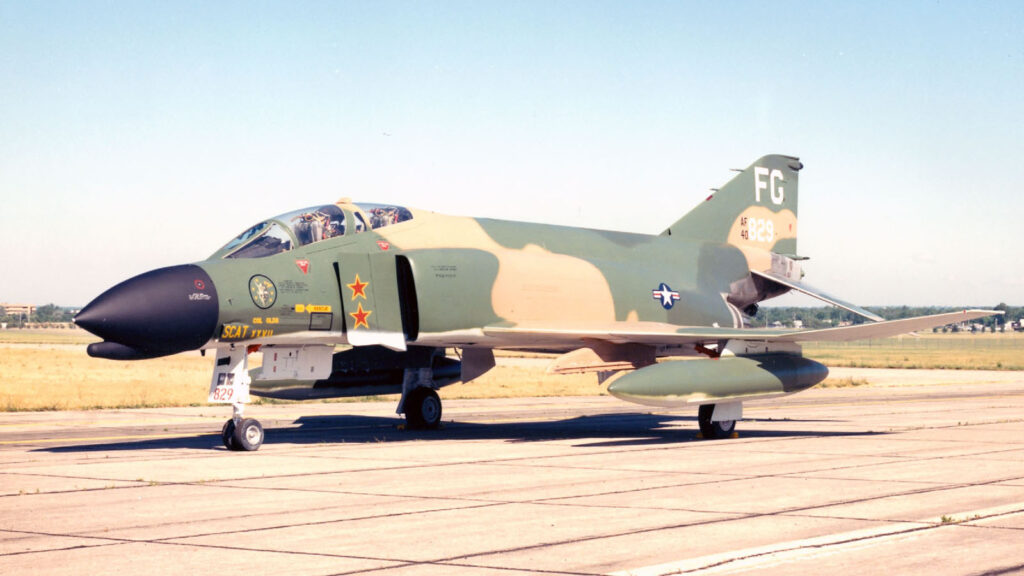
In 1965 the USAF sent its first F-4Cs to Southeast Asia, where they flew air-to-air missions against North Vietnamese fighters and attacking ground targets. Col. Robin Olds, a World War II ace, was the first USAF pilot to score four combat victories with F-4s in Southeast Asia. The aircraft on display is the one in which Col. Olds, the pilot, and Lt. Stephen Croker, the weapons system officer, destroyed two MiG-17s in a single day, May 20, 1967. (U.S. Air Force photo by Ty Greenlees)

The aircraft’s design has a carry load of up to 18,650 pounds of weapons, including air-to-air and air-to-ground missiles and a 20mm M61A1 Vulcan Gatling gun. It was also equipped with an inflight-refueling system, which extended its operational range significantly.

The F-4 Phantom’s robust and versatile design made it adaptable to various roles and operational requirements. While initially designed as an interceptor, it was later used effectively in ground attack and reconnaissance roles. The F-4’s superior speed, exceptional radar systems, impressive payload capacity, and adaptability underscored its importance in military aviation history.

.

The F-4 Phantom’s Role in the Vietnam War

F-4C Backseat
F-4C Backseat

The F-4’s adaptability was showcased in both air-to-air and air-to-ground operations. With its speed and maneuverability, it was often deployed in air superiority missions to counter North Vietnamese MiG fighters. Furthermore, its capacity to carry diverse ordnance allowed it to effectively engage enemy ground forces and infrastructure in strike missions.

Despite the Phantom’s technical prowess, the aircraft faced challenges. Its initial lack of a gun proved disadvantageous in close combat situations. However, introducing the F-4E model, equipped with an internal M61 Vulcan cannon, helped overcome this shortcoming.

The F-4 Phantom’s performance in the Vietnam War solidified its reputation as a reliable, multi-role combat aircraft. It remains a significant symbol of American military aviation history.

Modern Usage and Legacy of the F-4 Phantom

Several nations around the globe continue to utilize the F-4 Phantom in their air forces, underscoring the enduring legacy and modern relevance of this iconic aircraft. Despite its age, the F-4 Phantom remains a formidable force in the air. It has proven its versatility and resilience in various roles, including air superiority, ground attack, and reconnaissance missions.

The F-4 Phantom’s modern usage extends beyond combat roles. It also plays a significant part in training missions, providing pilots with a platform to develop and hone their skills. In recognition of its contributions, the Phantom has received numerous upgrades over the years, ensuring its relevance in an increasingly technologically advanced landscape.

The legacy of the F-4 Phantom is evident in its continued service worldwide. It is a testament to its design and capabilities that this aircraft, which first took to the skies in the 1960s, remains in active service. Indeed, the F-4 Phantom stands as a symbol of aviation history, its enduring presence serving as a reminder of its significant role in shaping the face of modern air warfare.

Notable F-4 Phantom Variants and Their Unique Characteristics


The F-4B, the first production model, was introduced in the 1960s and featured enhanced radar and missile systems, setting the benchmark for future models.

The F-4C, a US Air Force version, was equipped with a ground-attack capability, enhancing its versatility. The F-4D, another Aerial Force variant, featured improved radar and air-to-air missile systems.

The F-4E, a significant upgrade, boasted an internal M61 Vulcan cannon, extended nose, and leading-edge slats to improve maneuverability. The F-4E was the most produced variant, demonstrating its operational value.

The F-4G, the “Wild Weasel V,” was designed for SEAD (Suppression of Enemy Air Defenses) missions, with advanced radar detection and anti-radiation missiles.

The RF-4, a reconnaissance variant, was equipped with cameras and sensors, contributing to intelligence-gathering efforts.

These variants played a critical role in enhancing the F-4 Phantom’s operational capabilities. The continuous improvements and adaptations ensured the F-4 Phantom remained a formidable force in the skies for many decades.

Frequently Asked Questions

What Was the Cost of Manufacturing an F-4 Phantom Jet?

The manufacturing cost of this particular jet model varied depending on the year and specific model. However, reports suggest it ranged between $2.4 million to $18.4 million during its production years.

Who Were Some Notable Pilots of the F-4 Phantom?

Notable individuals who mastered flying this high-speed jet include Colonel Robin Olds, a triple ace, and Steve Ritchie, the only Air Force pilot ace during the Vietnam War.

How Does the F-4 Phantom Compare to Other Fighter Jets of Its Time?

When comparing this jet to its contemporaries regarding speed and maneuverability, it was highly competitive. Despite its size, it boasted impressive speed capabilities and demonstrated exceptional maneuverability in various flight conditions.

What Were the Primary Challenges During the Design and Development of the F-4 Phantom?

The primary challenges during design and development included achieving high performance without compromising stability, incorporating advanced avionics, and integrating powerful engines to ensure speed and maneuverability in various combat scenarios.

Are Any Museums or Exhibitions Where One Can See an F-4 Phantom on Display?

There are numerous institutions globally that showcase this remarkable piece of engineering. Notably, the Smithsonian National Air and Space Museum and the Imperial War Museum Duxford have such exhibits for public viewing.

Conclusion

In conclusion, the F-4 Phantom is a monumental testament to aviation engineering and military strategy prowess. Its unparalleled performance and versatility in combat situations and its enduring legacy in modern warfare have solidified its place in the annals of aviation history.  The F-4 Phantom is not just an aircraft; it’s a monument to human ingenuity, forever soaring in the limitless skies of our collective memory.

Cessna T-37 Tweet

T-37

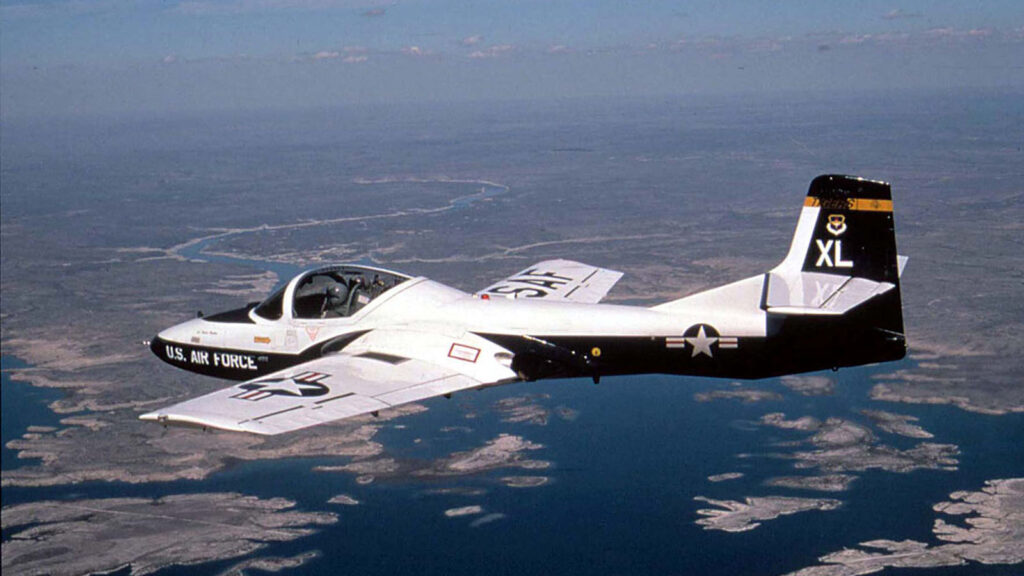
The Cessna T-37

The Cessna T-37, a significant name in aviation history, has been instrumental in shaping the military training landscape.

This twin-engine jet trainer, renowned for its versatility and resilience, was pivotal in numerous notable missions.

This article delves into the historical journey of the Cessna T-37, exploring its specifications, achievements, and enduring legacy in modern aviation.

T-37

 T-37 Tweet aircraft from the 85th Flying Training Squadron, Laughlin Air Force Base, Texas, flies over Lake Amistad during a training mission. It was later stationed at the 64th Flying Training Wing at Reese Air Force Base, Texas. The T-37 Tweet is a twin-engine jet used for training undergraduate pilots, undergraduate navigators, and tactical navigator students in the fundamentals of aircraft handling, instrument, formation, and night flying. The twin engines and flying characteristics of the T-37 give student pilots the feel for handling the larger, faster T-38 Talon or T-1A Jayhawk later in the undergraduate pilot training course. The instructor and student sit side by side for more effective training. The cockpit has dual controls, ejection seats, and a clamshell-type canopy that can be jettisoned. Wikipedia

The Historical Background of the Cessna T-37

In the late 1950s, the Cessna T-37, a twin-engined jet trainer aircraft, was first introduced into the United States Air Force, marking a significant evolution in aviation history. Its introduction came at a time when the need for advanced training of pilots was increasingly becoming apparent, with the jet age already well underway.

The T-37 was designed to provide a high-performance training platform that adequately prepares pilots for the complexities and demands of modern jet flight—the aircraft’s unique design, featuring a side-by-side seating arrangement, allowing for improved instructor-student interaction.

With over 1,000 units produced, the T-37 played a crucial role in training generations of U.S. Air Force pilots and left an indelible mark on aviation history.

T-37 Cockpit

Detailed Overview of the Cessna T-37’s Specifications

The Cessna T-37 exhibits impressive specifications, and its structural and performance-based attributes warrant a detailed exploration.

With a length of 29.3 feet and a wingspan of 33.8 feet, the T-37 boasts a compact yet robust design. Its dual engines, each generating 1,100 pounds of thrust, empower the jet to reach a top speed of 425 mph. The T-37’s operating range extends to 932 miles, allowing for extensive training missions. The jet’s service ceiling is an impressive 35,000 feet, providing ample room for maneuverability training.

The Cessna T-37’s payload capacity is 2,400 pounds, including two 0.30 caliber machine guns and various bombs. The aircraft’s dual-seat configuration is designed for both pilot and co-pilot, positioning the T-37 as a crucial training aircraft in military aviation.

Role of the Cessna T-37 in Military Training

How significantly has the Cessna T-37 impacted the evolution of military pilot training programs worldwide?

The answer is profound.

The Cessna T-37, also known as the ‘Tweet,’ has been an instrumental tool in shaping the landscape of military aviation training.

Its dual-engine, high-wing design and forgiving flight characteristics have made it an ideal platform for initial pilot training, combating the steep learning curve accompanying military flight training.

Notable Missions and Achievements of the Cessna T-37

The Cessna T-37’s notable missions and achievements, including its pivotal role in Operation Desert Storm and its record for training many military pilots, underscore its significance in aviation history.

This twin-engine, high-wing jet trainer aircraft was crucial in aerial combat and reconnaissance missions during the Gulf War.

As a preferred training aircraft, the T-37 has produced thousands of pilots, contributing to global military readiness. Its design features, such as side-by-side seating and tricycle landing gear, have proved advantageous in training.

The Cessna T-37’s enduring legacy, spanning over six decades, is a testament to its performance, versatility, and reliability in military operations and pilot training.

The Legacy and Influence of the Cessna T-37 in Modern Aviation

In light of its profound legacy and extensive use in military operations and pilot training, the Cessna T-37 has significantly influenced modern aviation standards and practices, proving its value far beyond its initial conception.

This twin-engine jet trainer, with its distinctive side-by-side seating arrangement, has been a cornerstone in developing military pilots, particularly in the United States. Its versatile performance and reliability established foundational principles for subsequent aircraft design.

Furthermore, the T-37’s innovative engineering and adaptability for various mission types have set a reference point for future aviation advancements. As a result, the Cessna T-37’s impact continues to resonate, underlining the importance of its design and functionality in shaping today’s aviation landscape.

Frequently Asked Questions

How Much Does It Cost to Purchase a Cessna T-37 Today?

The cost of acquiring such an aircraft can vary significantly based on conditions, age, and modifications. One should consult with certified aircraft dealers or aviation pricing guides to get an accurate estimate.

What Kind of Maintenance Does the Cessna T-37 Typically Require?

Like a high-performance sports car, any jet aircraft typically requires regular engine inspections, avionic system checks, structural evaluations, and preventative care to ensure optimal performance and safe operating conditions.

Are There Any Organizations or Clubs for Cessna T-37 Enthusiasts?

Yes, numerous aviation enthusiast organizations worldwide cater to fans of specific aircraft, including the Cessna T-37. These include online forums, social media groups, and offline networking and knowledge-sharing clubs.

What Are the Challenges in Piloting a Cessna T-37 Compared to Other Jet Trainers?

Piloting challenges vary across different jet trainers. For one particular model, its handling characteristics, visibility from the cockpit, and system complexity can present difficulties compared to other, possibly more modern, training aircraft.

How Many Cessna T-37s Are Still in Operational Condition Today?

Determining the exact number of operational units of a specific aircraft type today involves analyzing current possession records, maintenance logs, and aviation safety data. However, without detailed data, an accurate count is not possible.

Conclusion

The Cessna T-37, an emblem of aviation history, played a pivotal role in military training and notable missions. Its legacy, marked by distinct specifications and achievements, continues influencing modern aviation.

This twin-engine jet trainer is a testament to innovation and resilience, inspiring future generations of aircraft and pilots alike. Indeed, the enduring influence of the Cessna T-37 reaffirms its integral place in the annals of aviation history.

T-33A Shooting Star

Lockheed T-33A

The Shooting Star

The T-33 Shooting Star was a jet trainer aircraft developed by Lockheed Corporation for the United States Air Force (USAF). It was a derivative of the Lockheed P-80/F-80 fighter aircraft and was primarily used for training pilots in advanced jet flying techniques.


Lockheed T-33A

The T-33 first flew in 1948 and became one of the most widely used jet trainers in the world, serving with numerous air forces around the globe. It had a two-seat configuration and was powered by a single turbojet engine, introducing trainee pilots to jet-powered flight before transitioning to high-performance fighters. The T-33 also could be armed with machine guns and rockets for secondary combat missions. Overall, the T-33 Shooting Star played a crucial role in training generations of pilots and contributed to advancing military aviation.

Lockheed T-33A Cockpit

Specifications

The T-33 was a jet trainer aircraft developed by Lockheed in the 1940s. The specifications of the T-33 are as follows:

  1. Dimensions:
  • Wingspan: 38 feet 10 inches (11.84 meters)
  • Length: 37 feet 8 inches (11.5 meters)
  • Height: 11 feet 8 inches (3.56 meters)
  1. Weight:
  • Empty Weight: 8,364 pounds (3,790 kilograms)
  • Maximum Takeoff Weight: 15,600 pounds (7,076 kilograms)
  1. Engine:
  • Powerplant: 1 × Allison J33-A-35 centrifugal flow turbojet engine
  • Thrust: 5,400 lbs (24 kN)
  1. Performance:
  • Maximum Speed: 600 mph (970 km/h)
  • Range: 1,100 miles (1,770 kilometers)
  • Service Ceiling: 48,000 feet (14,600 meters)
  • Rate of Climb: 6,120 feet per minute (31 meters per second)
  1. Armament:
  • Guns: None (although some variants were used for light attack roles and had provisions for machine guns or cannons)
  • External Stores: The T-33 could carry various external stores like rockets, bombs, and practice bombs on its wing hardpoints.
  1. Crew: Typically, a pilot and a student or instructor pilot.
  2. Avionics and Features:
  • Advanced flight instruments and navigational aids for training purposes
  • Cockpit equipped with ejection seats (later variants)
  • Pressurized cabin for high-altitude training
  • Dual flight controls for instructor-student configuration

Frequently Asked Questions

Were spins taught in the T-33?

Yes, spins were taught in the T-33 Shooting Star. The T-33 was a two-seat jet trainer aircraft used by the United States Air Force and several other air forces worldwide. It was known for its stability and was often used to teach pilots basic aerobatic maneuvers, including spins.

Did the T-33 have a pressurized cockpit?

Yes, the T-33 Shooting Star had a pressurized cockpit. The T-33 was the trainer variant of the Lockheed P-80/F-80 Shooting Star, one of the first operational jet fighters used by the United States Air Force.

Was the T-33 easy to fly?

The T-33 was considered relatively easy to fly compared to other military jet aircraft. It was designed specifically as a trainer aircraft, and its flight characteristics and controls were designed to be intuitive and forgiving for student pilots. The T-33 had relatively stable flight characteristics, good low-speed handling, and docile behavior during takeoff and landing. It was also equipped with dual controls, allowing instructors to take over if needed. As a result, many pilots found the T-33 a comfortable and straightforward aircraft to fly.