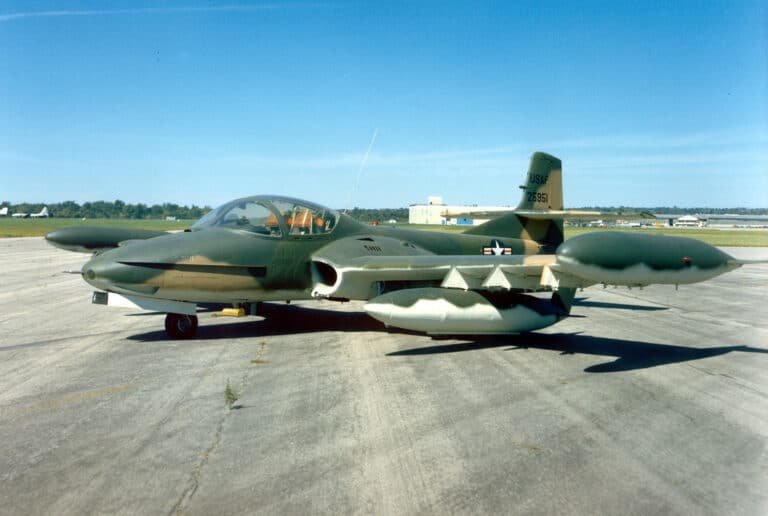
T-38 Talon

T-38

“Experience the thrill of supersonic flight with the T-38 – the ultimate training jet for elite pilots.”

Introduction

The T-38 Talon is a supersonic jet trainer aircraft used by the United States Air Force. It was first introduced in 1961. The T-38 is primarily used for training pilots in advanced flight maneuvers and techniques and for research and development. It is known for its high performance and agility, making it a popular choice for air forces worldwide. NASA has also used the T-38 for astronaut training and as a chase plane for space shuttle missions. Overall, the T-38 has played a crucial role in training and preparing pilots for various missions and has a rich history in the aviation industry.

T-38

The History and Evolution of the T-38 Jet Trainer

The T-38 jet trainer has been a staple in the United States Air Force for over 60 years. It has served as the primary training aircraft for generations of pilots, preparing them for the demands of flying high-performance fighter jets. But how did this iconic aircraft come to be? In this article, we will delve into the history and evolution of the T-38, from its inception to its current role in modern aviation.

The T-38 was first introduced in 1959 as a replacement for the T-33 Shooting Star. It was designed by Northrop Corporation to create a supersonic trainer that could mimic the flight characteristics of the F-100 Super Sabre, the main fighter jet at the time. The T-38 was also intended to be a cost-effective solution for training pilots, as it could be operated at a fraction of the cost of a fighter jet.

The T-38 instantly succeeded with its sleek design and impressive performance capabilities. It quickly became the go-to trainer for the Air Force, and its popularity spread to other branches of the military as well. Over the years, the T-38 underwent several upgrades and modifications to keep up with advancements in technology and to meet the changing needs of the military.

One of the most significant upgrades to the T-38 came in the 1970s with the introduction of the T-38C variant. This version featured a digital avionics system, making it more compatible with modern fighter jets. It also had an improved engine, improving performance and fuel efficiency. The T-38C remains in service today and is the primary trainer for the Air Force’s fighter pilots.

In addition to its role as a trainer, the T-38 has been used for various purposes throughout its history. In the 1960s, NASA used modified T-38s as chase planes for the space shuttle program. These planes were equipped with cameras and other instruments to capture footage of the shuttle during takeoff and landing. The T-38 was also used for research and development, with several experimental versions being built for testing new technologies.

As the T-38 continued to prove its worth as a trainer, it faced challenges and setbacks. In the 1980s, a series of accidents raised concerns about the safety of the aircraft. As a result, the Air Force implemented several upgrades and changes to improve the T-38’s safety record. These included new ejection seats, improved avionics, and structural modifications. These efforts were successful, and the T-38 remains a safe and reliable aircraft today.

In recent years, the T-38 has undergone another round of upgrades to keep up with the demands of modern aviation. The T-38C+ variant, introduced in 2012, features a new digital cockpit, upgraded engines, and improved avionics. These upgrades have extended the lifespan of the T-38 and ensured its continued use as a trainer for years to come.

Today, the T-38 remains essential to the Air Force’s training program. It trains pilots for various fighter jets, including the F-15, F-16, and F-22. NASA also uses it for astronaut training and research purposes. The T-38 has proven to be a versatile and reliable aircraft, standing the test of time and evolving to meet the ever-changing needs of the military.

In conclusion, the T-38 jet trainer has a rich history and has played a crucial role in the evolution of aviation. From its humble beginnings as a replacement for the T-33 to its current status as a modern and advanced training aircraft, the T-38 has proven its worth time and time again. As technology advances, the T-38 will likely continue to evolve and remain a vital part of the Air Force’s training program for many years.

Top Features and Capabilities of the T-38

The T-38 is a supersonic jet trainer aircraft that has been in service with the United States Air Force (USAF) since 1961. It is a twin-engine, two-seat aircraft primarily used to train pilots in advanced flight maneuvers and techniques. Over the years, the T-38 has undergone several upgrades and modifications, making it one of the most versatile and capable aircraft in the USAF’s fleet. In this article, we will explore the top features and capabilities of the T-38 aircraft.

One of the most notable features of the T-38 is its speed. With a maximum speed of Mach 1.3, it is one of the fastest trainer aircraft in the world. This allows pilots to experience supersonic flight and get a feel for handling high-speed aircraft. The T-38 also has a high thrust-to-weight ratio, which means it can accelerate quickly and efficiently perform high-G maneuvers.

In addition to its speed, the T-38 is known for its agility and maneuverability. It has a small turning radius and can perform tight turns and rolls, making it an ideal aircraft for training pilots in air combat maneuvers. The T-38’s aerodynamic design and powerful engines allow it to perform a wide range of maneuvers, from basic flight maneuvers to advanced aerobatics.

Another key feature of the T-38 is its advanced avionics and instrumentation. The aircraft is equipped with a modern glass cockpit, which includes a digital flight display, head-up display (HUD), and a flight management system. This gives pilots a clear and comprehensive view of their flight parameters, making it easier to fly the aircraft and perform complex maneuvers. The T-38 also has a digital autopilot system, which can assist pilots in maintaining precise aircraft control.

The T-38 is also equipped with various sensors and systems, making it a capable trainer aircraft. It has an inertial navigation system, which provides accurate navigation information to the pilots. It also has a radar altimeter, which measures the aircraft’s altitude above the ground. The T-38 also has a digital air data computer, which calculates and displays important flight parameters such as airspeed, altitude, and vertical speed.

One of the most important capabilities of the T-38 is its ability to simulate different types of aircraft. The aircraft can be configured to mimic the flight characteristics of various fighter jets, such as the F-15, F-16, and F-22. This allows pilots to train in a realistic environment and prepare for flying these advanced fighter jets. The T-38 can also simulate different weapon systems, making it an essential training tool for fighter pilots.

The T-38 is also equipped with various safety features, making it a reliable and safe aircraft for training. It has an ejection seat system, which can be activated in an emergency. The aircraft also has a digital flight control system, providing flight stability and control. In addition, the T-38 has a built-in ground collision avoidance system, which alerts pilots if they are in danger of colliding with the ground.

In conclusion, the T-38 is a highly capable and versatile aircraft integral to the USAF’s training program for over six decades. Its speed, agility, advanced avionics, and simulation capabilities make it an ideal aircraft for training pilots in advanced flight techniques. With its continuous upgrades and modifications, the T-38 will continue to play a crucial role in shaping the next generation of fighter pilots.

The T-38 in the United States Air Force

The T-38 Talon is a supersonic jet trainer used by the United States Air Force (USAF) for training and operational purposes. It has been in service since 1961 and has played a crucial role in shaping the skills and capabilities of USAF pilots.

The T-38 is primarily used for training pilots in advanced flight techniques, such as supersonic flight, aerobatics, and instrument flying. It is also used for training in air-to-air and air-to-ground combat tactics. The T-38 is a versatile aircraft that can simulate the handling characteristics of various fighter jets, making it an ideal platform for training pilots for different aircraft types.

The T-38 is used in the USAF’s undergraduate pilot training program, serving as the primary trainer for all pilots. This program is designed to produce highly skilled and competent pilots ready to face the challenges of flying advanced fighter jets. The T-38 plays a crucial role in this program, providing pilots with the necessary skills and experience to handle high-performance aircraft.

One of the key advantages of using the T-38 for training is its supersonic capabilities. The T-38 can reach speeds of up to Mach 1.3, allowing pilots to experience supersonic flight and learn how to handle the unique challenges that come with it. This is a crucial aspect of training for pilots flying supersonic fighter jets, preparing them for the high-speed maneuvers and decision-making required in combat situations.

In addition to its role in training, the T-38 is also used for operational purposes in the USAF. It is primarily used for adversary air support, simulating enemy aircraft in training exercises. This allows USAF pilots to train in realistic scenarios and prepare for potential threats in real-world situations. The T-38’s ability to simulate the handling characteristics of various fighter jets makes it an invaluable asset in these exercises.

The T-38 is also used for operational test and evaluation (OT&E) purposes. This involves testing new aircraft, weapons, and systems in a simulated combat environment. The T-38’s supersonic capabilities and advanced avionics make it an ideal platform for this type of testing. It allows for evaluating new technologies and tactics in a controlled environment before they are implemented in combat situations.

Another important use of the T-38 in the USAF is as a chase plane. A chase plane is a high-performance aircraft that follows and observes other aircraft during flight tests. The T-38 is often used as a chase plane for testing new aircraft and systems, providing valuable data and feedback to engineers and designers. Its high-speed capabilities and advanced avionics make it an ideal platform for this role.

In addition to its operational uses, the T-38 also serves as a demonstration and display aircraft for the USAF. It is often seen performing aerial displays at air shows and events, showcasing its impressive capabilities and agility. This promotes the USAF and serves as a recruitment tool, inspiring future generations to pursue an aviation career.

In conclusion, the T-38 Talon is vital to the USAF’s training and operational arsenal. Its supersonic capabilities, advanced avionics, and versatility make it an ideal platform for training pilots and supporting various operational missions. The T-38 has played a crucial role in shaping the skills and capabilities of USAF pilots and will continue to do so for years to come.

Conclusion

In conclusion, the T-38 is a versatile and reliable supersonic jet trainer used by various air forces worldwide. Its advanced technology and capabilities make it an ideal platform for training pilots and conducting various missions. With its long service history and continuous upgrades, the T-38 remains a crucial asset in the military aviation industry. Its speed, maneuverability, and cost-effectiveness make it a valuable asset for any air force looking to enhance its training and operational capabilities. Overall, the T-38 has proven to be a successful and enduring aircraft, and its legacy is likely to continue for many years.

P-39 Airacobra

P-39

“Unleash the power of the P-39 Airacobra – a deadly combination of speed and firepower.”

Introduction

The P-39 Airacobra was a single-engine fighter aircraft used by the United States Army Air Forces during World War II. It was designed and produced by Bell Aircraft Corporation and was one of the principal American fighter aircraft in service during the early years of the war. The P-39 was unique in its design, with its engine behind the pilot and a tricycle landing gear. It was also one of the first fighters to feature a tricycle landing gear, making it easier to take off and land on rough terrain. Despite some initial setbacks, the P-39 proved a capable and versatile aircraft, serving in various roles such as interceptor, ground attack, and reconnaissance missions. Its distinctive design and contributions to the war effort make it a notable aircraft in aviation history.

P-39

History and Development of the P-39 Airacobra

The P-39 Airacobra was a fighter aircraft that played a significant role in World War II. Developed by the Bell Aircraft Corporation, it was one of the first fighter planes to feature a tricycle landing gear and a mid-mounted engine. The P-39 was also unique in its use of a car-like door for the pilot to enter and exit the cockpit.

The P-39 Airacobra was designed in response to a 1937 United States Army Air Corps request for a new fighter aircraft. The Bell Aircraft Corporation, led by chief engineer Robert J. Woods, submitted its design in 1938. The prototype, designated XP-39, made its first flight on April 6, 1939. However, it was not until October 1940 that the P-39 was officially accepted for production.

One of the most notable features of the P-39 was its mid-mounted engine, which was a departure from the traditional design of fighter planes at the time. This allowed for a more streamlined and aerodynamic fuselage, resulting in a faster and more maneuverable aircraft. The engine was an Allison V-1710, also used in American fighter planes such as the P-38 Lightning and P-40 Warhawk.

The P-39 was the first American fighter plane to feature tricycle landing gear. This design allowed for better ground handling and improved visibility for the pilot during takeoff and landing. However, it also posed a challenge for pilots used to the traditional tail-dragger landing gear. As a result, the P-39 was initially met with mixed reviews from pilots.

One of the most distinctive features of the P-39 was its car-like door for the pilot to enter and exit the cockpit. This design resulted from the mid-mounted engine, which made having a traditional side door impossible. The door was hinged at the top and opened upwards like a car door. This design was not only unique but also provided easier access for the pilot, especially in emergencies.

The P-39 was initially intended to be a high-altitude interceptor, but it was later found to be more effective at low altitudes. This was due to its engine, which was not equipped with a supercharger, making it less effective at high altitudes. As a result, the P-39 was primarily used for ground attack and close air support missions.

The P-39 Airacobra saw action in various theaters of World War II, including the Pacific, North Africa, and the Eastern Front. It was also used by the Soviet Air Force, which received many P-39s through the Lend-Lease program. The P-39 was well-suited for the harsh conditions of the Eastern Front, where its low-altitude capabilities and heavy armament proved effective against German ground forces.

Despite its initial mixed reviews, the P-39 Airacobra proved to be a reliable and versatile aircraft. It was credited with over 9,500 destroyed enemy aircraft, making it one of World War II’s top-scoring American fighter planes. However, it was eventually replaced by more advanced aircraft such as the P-47 Thunderbolt and P-51 Mustang.

P-39 Cockpit

Notable Features

A notable feature of the P-39 was its armament. The P-39 had a 37mm cannon mounted in the aircraft’s nose. This significantly improved from the standard .50 caliber machine guns used in other fighter planes at the time. The 37mm cannon had a higher rate of fire and was more effective against armored targets, making the P-39 a formidable opponent in air-to-air combat.

In addition to its powerful cannon, the P-39 had four .50 caliber machine guns mounted in the wings. This combination of armament gave the P-39 a significant advantage over its enemies, as it could effectively engage air and ground targets. The P-39 was also one of the first fighter planes to have a fully enclosed cockpit, providing better protection for the pilot and improving aerodynamics.

The P-39 was also equipped with an innovative feature called the “tricycle fighter control system.” This system allowed the pilot to control the aircraft’s pitch, roll, and yaw using a single control stick instead of the traditional two-stick system. This made flying the P-39 more intuitive and easier for pilots, especially during high-stress situations in combat.

Another notable innovation of the P-39 was its use of a turbo-supercharged engine. This engine allowed the P-39 to operate at high altitudes, giving it an advantage over fighter planes limited to lower altitudes. The P-39’s turbo-supercharged engine also gave it a higher top speed and improved dogfighter performance.

The P-39 was also one of the first fighter planes to incorporate a tricycle fighter control system and a turbo-supercharged engine, making it a pioneer in aircraft technology. These innovations improved the P-39’s performance and paved the way for future advancements in fighter plane design.

In addition to its notable features and innovations, the P-39 was also known for its versatility. It was used by various Allied forces, including the United States, Soviet Union, and the United Kingdom, in different roles, such as fighter, ground attack, and reconnaissance. The P-39’s ability to adapt to different missions and its reliable performance made it a valuable asset in the war effort.

Combat Performance and Tactics

The P-39 Airacobra was a unique fighter aircraft that played a significant role in World War II. While it may not have been as well-known as other planes of the era, such as the P-51 Mustang or the Spitfire, the P-39 Airacobra had its strengths and capabilities, making it a valuable asset in combat. In this article, we will delve into the combat performance and tactics of the P-39 Airacobra, shedding light on its strengths and weaknesses on the battlefield.

In terms of combat performance, the P-39 was known for its impressive speed and agility. Its top speed of 400 mph made it one of the fastest planes of its time, and its powerful engine allowed it to climb to high altitudes quickly. This made the P-39 a formidable dogfighter opponent, as it could outmaneuver and outrun many adversaries. Its low-altitude performance was also exceptional, making it a valuable asset in ground attack missions.

However, the P-39 also had weaknesses, which became apparent in certain combat situations. Its unconventional design made it difficult to control at high altitudes, and its engine was prone to overheating. This made it less effective in high-altitude dogfights, where other planes, such as the P-51 Mustang, had the advantage. Additionally, the P-39’s armor was not as robust as other fighter planes, making it more vulnerable to enemy fire.

Pilots had to develop specific tactics when flying the P-39 to make up for these weaknesses. One of the most effective tactics was to use the P-39’s speed and agility to its advantage. Pilots would often engage in hit-and-run attacks, using the P-39’s speed to close in on an enemy quickly, fire a few shots, and then retreat before the enemy could retaliate. This tactic was particularly useful against slower and less maneuverable planes.

Another tactic used by P-39 pilots was to take advantage of its powerful armament. The 37mm cannon was especially effective against enemy bombers, as it could take them down with just one shot. Pilots would often target the engines or wings of enemy bombers, causing them to crash and reducing the risk of being hit by return fire. This tactic was crucial in defending against enemy bombing raids and protecting ground troops.

Variants and Modifications of the P-39 Airacobra

One of the most notable variants of the P-39 was the P-39Q. This variant featured a more powerful engine, the Allison V-1710-85, which increased its top speed to 400 mph. It also had a larger fuel capacity, allowing for longer-range missions. The P-39Q also had improved armor protection for the pilot and a revised cockpit layout for better visibility. These modifications made the P-39Q a formidable fighter in low-altitude combat.

Another variant of the P-39 was the P-39N. This variant was designed specifically for the Soviet Union, which was a major user of the P-39 during the war. The P-39N had a more powerful engine, the Allison V-1710-85, and a larger fuel capacity than the P-39Q. However, it also had a revised armament, adding two 20mm cannons in the nose and two .50 caliber machine guns in the wings. This increased firepower made the P-39N a more effective fighter in air-to-air combat.

In addition to these variants, the P-39 underwent several modifications throughout its production. One of the most significant modifications was the addition of a turbo-supercharger. This modification, known as the P-39L, allowed the P-39 to perform better at high altitudes, making it more effective in combat against enemy bombers. The turbo-supercharger also improved the P-39’s overall performance, increasing its top speed and rate of climb.

Another modification of the P-39 was the addition of dive brakes. This modification, known as the P-39D, was designed explicitly for the P-39’s use as a ground attack aircraft. The dive brakes allowed the P-39 to make steeper and more accurate dives, making it more effective in attacking ground targets. This modification was particularly useful in the Pacific theater, where the P-39 was used extensively for ground attack missions.

As the war progressed, the P-39 also underwent modifications to its armament. The P-39Q and P-39N variants were equipped with the British-designed Hispano-Suiza HS 404 20mm cannons, which were more reliable and had a higher rate of fire than the original 37mm cannon. The P-39 also had the option to carry bombs and rockets, making it a versatile aircraft for ground attack missions.

Despite its modifications and variants, the P-39 was criticized for its combat performance. Its mid-mounted engine and centerline armament made it challenging to maneuver, and its lack of a supercharger limited its effectiveness at high altitudes. However, the P-39 still played a significant role in the war, especially in the Soviet Union, where it was used extensively for ground attack missions.

In conclusion, the P-39 Airacobra underwent several modifications and variants throughout its production, making it a versatile and adaptable fighter aircraft. From the P-39Q with its more powerful engine and improved armor to the P-39D, with its dive brakes for ground attack missions, each variant and modification served a specific purpose in the war effort. Despite its limitations, the P-39 played a crucial role in World War II and remains an important part of aviation history.

Legacy and Impact of the P-39 Airacobra

One of the most notable legacies of the P-39 Airacobra was its innovative design. The tricycle landing gear, with a nose wheel instead of a tail wheel, allowed for better ground handling and improved visibility for the pilot during takeoff and landing. The mid-mounted engine also provided a more balanced weight distribution, resulting in better maneuverability and stability in flight. Additionally, the centerline armament, which consisted of a 37mm cannon firing through the propeller hub, was a unique feature that gave the P-39 an advantage in air-to-air combat.

The P-39 Airacobra was also the first fighter plane equipped with a pressurized cockpit, allowing pilots to fly at higher altitudes without the risk of hypoxia. This feature was crucial in the development of future high-altitude fighter planes. The P-39 also had a unique engine cooling system, with the radiator in the rear of the aircraft instead of the traditional location in the wings. This design allowed for a more streamlined fuselage and reduced drag, increasing speed and performance.

During World War II, the P-39 Airacobra was primarily used by the Soviet Air Force, with over 4,700 planes being supplied to the Soviet Union through the Lend-Lease program. The P-39 proved to be a formidable fighter on the Eastern Front, with its centerline armament and maneuverability making it a deadly opponent for German aircraft. The P-39 also saw action in the Pacific Theater, where the US Army Air Forces and the Royal Australian Air Force used it. While it was not as successful in the Pacific due to its limited high-altitude performance, the P-39 still played a significant role in air combat.

After the war, the P-39 Airacobra continued to impact the aviation industry. Its innovative design and features influenced the development of future fighter planes, such as the P-63 Kingcobra and the F-86 Sabre. The P-39 also paved the way for developing other tricycle landing gear aircraft, which became the standard for most modern fighter planes.

Today, the P-39 Airacobra is still remembered and celebrated by aviation enthusiasts and historians. Several P-39s have been restored and are on display in museums worldwide, including the National Air and Space Museum in Washington D.C. and the Russian Air Force Museum in Monino. The P-39 also continues to be featured in air shows, showcasing its unique design and capabilities to new generations of aviation enthusiasts.

In conclusion, the P-39 Airacobra may not have been the most well-known or successful fighter plane of its time, but its legacy and impact on aviation history cannot be denied. Its innovative design and features paved the way for future developments in fighter aircraft, and its role in World War II solidified its place in history. The P-39 Airacobra will always be remembered as a groundbreaking and influential aircraft in the world of aviation.

Frequently Asked Questions

Did the P-39 have a pressurized cockpit?

Yes, the Bell P-39 Airacobra did have a pressurized cockpit. The design of the aircraft included a sealed cockpit with an air pressure system to provide the pilot with a more comfortable operating environment at higher altitudes. This pressurization system helped to alleviate the effects of high-altitude flying, such as reduced oxygen levels and temperature extremes.

What were the main features of the P-39 Airacobra?

The P-39 Airacobra was a single-engine fighter aircraft used by the United States during World War II. It featured an innovative mid-mounted engine, a tricycle landing gear, and a unique tricycle configuration with the engine behind the pilot.

What was the top speed and range of the P-39 Airacobra?

The P-39 Airacobra had a top speed of around 375 mph (600 km/h) and a range of approximately 1,150 miles (1,850 km), making it suitable for various missions, including air-to-air combat and ground attack.

What armament did the P-39 Airacobra have?

The P-39 Airacobra was equipped with one 37mm cannon firing through the propeller hub and four .50-caliber machine guns, two in the nose and two in the wings. This versatile armament gave the aircraft significant firepower against both aerial and ground targets.

How did the P-39 Airacobra perform in combat?

The P-39 Airacobra played a significant role in various combat theaters during World War II. While it offered good maneuverability and firepower, it had some limitations, particularly at high altitudes, where its performance decreased due to the relatively low-mounted engine. However, the aircraft found success in low-altitude operations, often excelling in ground attack missions.

C-7A Caribou

C-7A Caribou

 Introduction

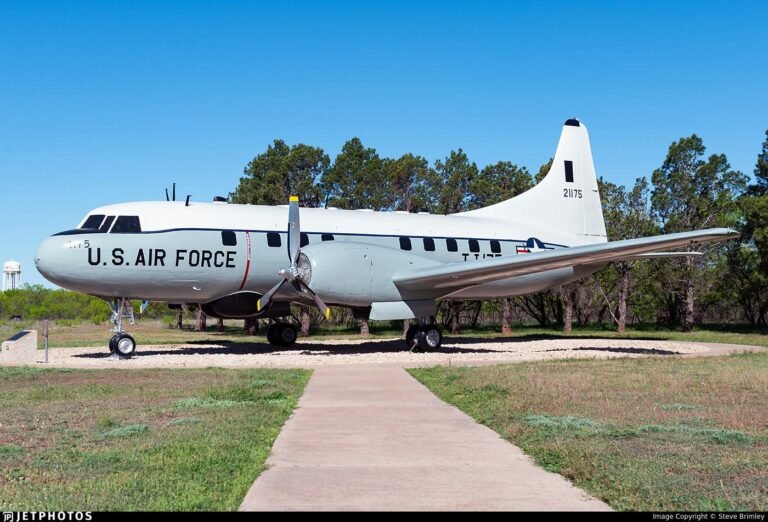
The C-7A Caribou was a military transport aircraft developed and used by the United States Air Force in the 1960s. During the Vietnam War, it was used mainly for airlifting troops, cargo, and medical evacuation missions. The C-7A was a modified version of the commercial aircraft, the Convair CV-2 Caribou. It was known for its short takeoff and landing capabilities, making it ideal for operations in remote and rugged areas. It played a crucial role in the Vietnam War and continued to serve in various military operations until its retirement in the 1980s.


C-7A Caribou


Capabilities C-7A Caribou


One of the main capabilities of the C-7A Caribou is its ability to operate in rugged and remote environments. This makes it a valuable asset for military operations, particularly in areas with limited infrastructure. The C-7A’s short takeoff and landing (STOL) capabilities allow it to operate from small and unimproved airstrips, making it an ideal choice for transporting troops, supplies, and equipment to remote locations.

In addition to its military uses, the C-7A has also been utilized in humanitarian and disaster relief efforts. Its ability to access remote areas and carry large payloads makes it a valuable asset in delivering aid and supplies to areas affected by natural disasters or conflicts.

Another important capability of the theC-7A Caribou is its versatility in cargo transportation. The aircraft has a large cargo hold that can accommodate a variety of cargo, including vehicles, equipment, and supplies. This makes it a popular choice for commercial cargo operations, particularly in remote areas where other aircraft may be unable to operate. The C-7A’s cargo capabilities have also been utilized in scientific research missions, such as transporting equipment and supplies to remote research stations in Antarctica.

The C-7A’s versatility extends beyond cargo transportation. It has also been used for aerial firefighting, with the ability to drop water or fire retardant on wildfires. This capability has been handy in areas where traditional firefighting methods may not be feasible. The C-7A’s STOL capabilities also allow it to operate from smaller airfields closer to the fire, reducing response time and increasing efficiency.


In conclusion, the C-7A is a versatile aircraft that has proven its capabilities in various applications. From military operations to humanitarian aid commercial cargo transportation to scientific research, the C-7A has played a crucial role in modern technology. With its ability to operate in rugged and remote environments, the C-7A remains a valuable asset in various industries and will likely remain so for years.

Evolution of C-7A Caribou

The C-7A Caribou, also known as the Caribou, is a versatile and reliable aircraft that has played a crucial role in military operations for over five decades. Its journey from concept to reality is a testament to the ingenuity and determination of the engineers and designers who brought it to life.

The idea for the C-7A was born in the late 1950s, during the height of the Cold War. The United States Air Force recognized the need for a new tactical transport aircraft that could operate in rugged and remote areas and short and unprepared runways. This would allow for the swift deployment of troops and supplies to any location, even in the most challenging environments.

In 1959, the Air Force requested proposals for a new tactical transport aircraft. Several companies submitted their designs, but the recommendation from Chase Aircraft caught the Air Force’s attention. The Model 329 design was a twin-engine, high-wing aircraft with a unique feature – a rear loading ramp that could accommodate large and bulky cargo.


The Air Force was impressed with the C-7A Caribou and awarded Fairchild Aircraft a contract to build 159 aircraft. The first C-7A Caribou took its maiden flight in 1961, and by 1965, it was officially accepted into service. The Caribou was a game-changer for the Air Force, as it could operate in rough terrain and short runways, making it an invaluable asset in Vietnam.

During the Vietnam War, the Caribou were crucial in transporting troops and supplies to remote and inaccessible areas. Its ability to operate in challenging conditions and its short takeoff and landing capabilities made it a favorite among pilots. The Caribou also proved to be a lifesaver for many soldiers, as it could quickly evacuate wounded personnel from the battlefield.

After the Vietnam War, the Caribou continued to serve in various military operations, including the Gulf War and the invasion of Grenada. However, as newer and more advanced aircraft were introduced, the Caribou’s role in the military began to diminish. In 1988, the Air Force retired the last of its C-7As, marking the end of an era.

Today, the C-7A Caribou may no longer be in active service, but its legacy lives on. Its unique design and capabilities have inspired the development of other tactical transport aircraft, such as the C-130 Hercules.

Boeing KC-97 Stratofreighter

KC-97 Refueling A-7s

“Unleashing the power of air transport with the Boeing KC-97 Stratofreighter.”


KC-97

History and Development of the Boeing KC-97 Stratofreighter

The Boeing KC-97 Stratofreighter is a military aerial refueling and transport aircraft developed by the American aerospace company Boeing in the 1950s. It was a derivative of the Boeing C-97 Stratofreighter, a long-range heavy transport aircraft used by the United States Air Force (USAF) during World War II. The KC-97 was specifically designed to meet the growing demand for aerial refueling capabilities in the post-war era.

The development of the KC-97 began in 1944 when the USAF recognized the need for a dedicated aerial refueling aircraft. At the time, the only way to refuel aircraft in mid-air was through a “looped hose” system, which was time-consuming and dangerous. The USAF saw the potential of using a dedicated tanker aircraft to refuel multiple planes simultaneously; thus, the KC-97 project was born.

Boeing was awarded the contract to develop the KC-97 in 1945, and the first prototype flew in November of that year. The KC-97 was essentially a modified version of the C-97, with the addition of a flying boom refueling system and extra fuel tanks. It also had a reinforced floor to accommodate the weight of the fuel and a larger cargo door for more effortless loading and unloading.

The KC-97 was powered by four Pratt & Whitney R-4360 Wasp Major radial engines, which gave it a maximum speed of 375 mph and a range of over 3,000 miles. It had a maximum takeoff weight of 175,000 pounds and could carry up to 6,000 gallons of fuel for aerial refueling. In addition to its primary role as a tanker, the KC-97 could also be used as a transport aircraft, with a capacity of up to 134 passengers or 83 stretchers for medical evacuation missions.

The first production model of the KC-97, the KC-97A, was delivered to the USAF in 1950. It was followed by the KC-97B, which had improved engines and a larger fuel capacity. The KC-97C, introduced in 1953, had a strengthened airframe and increased fuel capacity, making it the most widely produced variant of the KC-97. In total, 888 KC-97s were built, with the last delivered in 1956.

The KC-97 was crucial to the USAF’s operations during the Cold War. It was used extensively for aerial refueling of strategic bombers, such as the B-47 and B-52, essential for the USAF’s nuclear deterrence strategy. The KC-97 also played a vital role in the Korean War which was used to refuel fighter jets and transport troops and supplies.

In addition to its military use, the KC-97 significantly impacted the commercial aviation industry. The KC-97’s large cargo and long-range capabilities made it an ideal aircraft for commercial airlines. Many KC-97s were converted into civilian airliners; some were used as passenger planes for the famous Berlin Airlift in 1948.

Despite its success, the KC-97 was eventually replaced by more advanced aerial refueling aircraft, such as the KC-135 Stratotanker, in the late 1950s. However, some KC-97s continued to serve in the USAF until NASA used the early 1970s and a few for various research and transport missions.

Today, the KC-97 is a significant milestone in aerial refueling and transport aircraft history. Its development and deployment paved the way for more advanced and efficient tanker aircraft, which play a crucial role in modern military operations. The KC-97’s legacy lives on and will always be remembered as a vital part of aviation history.

KC-97L Stratofreighter

Key Features and Specifications of the KC-97 Stratofreighter


One of the most notable features of the KC-97 is its ability to refuel other aircraft in mid-air. This was a crucial function during the Cold War, as it allowed for extended flight times and increased range for fighter jets and bombers. The KC-97 was equipped with a flying boom, a long, extendable tube that the boom operator could maneuver to contact the receiving aircraft’s receptacle. This process required precision and skill, and the KC-97’s boom operators were highly trained to ensure successful refueling operations.

In addition to its aerial refueling capabilities, the KC-97 also served as a transport aircraft for personnel and cargo. It had a spacious cargo hold that could accommodate up to 83 passengers or 30,000 pounds of cargo. This made it a versatile aircraft that could be used for various missions, including troop transport, medical evacuation, and cargo delivery.

The KC-97 was powered by four Pratt & Whitney R-4360 Wasp Major radial engines, each producing 3,500 horsepower. These powerful engines gave the aircraft a maximum speed of 375 miles per hour and a range of 3,300 miles. It also had a service ceiling of 30,000 feet, allowing it to operate at high altitudes and avoid enemy fire.

One of the most distinctive features of the KC-97 was its double-decker design. The upper deck was used for the cockpit and crew quarters, while the lower deck housed the cargo hold and refueling equipment. This design allowed for efficient use of space and made the KC-97 stand out among other military transport aircraft of its time.

The KC-97 also had a unique tail design, with a triple tail configuration that gave it a distinct appearance in the sky. This design was chosen to improve stability and control during flight, especially during aerial refueling operations. The triple tail also allowed more accessible access to the cargo hold, providing a larger opening for loading and unloading.

Regarding specifications, the KC-97 had a wingspan of 141 feet and a length of 117 feet. It weighed 175,000 pounds when fully loaded and had a maximum takeoff weight of 175,000. It required five crew to operate, including the pilot, co-pilot, navigator, flight engineer, and boom operator.

The KC-97 was also equipped with advanced avionics and navigation systems for its time. It had a radar system for navigation and weather detection and radio communication equipment for communication with other aircraft and ground control. These systems were constantly updated and improved throughout the KC-97’s service life, making it a reliable and efficient aircraft for its missions.

In conclusion, the Boeing KC-97 Stratofreighter was a groundbreaking aircraft that played a crucial role in the USAF’s operations during the Cold War. Its aerial refueling capabilities, spacious cargo hold, and advanced design made it a versatile and reliable asset for various missions. Its legacy lives on, and the KC-97 will always be remembered as a key player in military aviation history.

KC-97 Interior

Military Applications and Operations of the KC-97 Stratofreighter

The Boeing KC-97 Stratofreighter is a military aircraft that has played a significant role in various operations and applications throughout its service. Developed from the successful Boeing C-97 Stratofreighter, the KC-97 was explicitly designed for aerial refueling and transport missions. With its large cargo capacity and ability to refuel other aircraft in mid-air, the KC-97 quickly became a crucial asset for the United States Air Force (USAF) during the Cold War and beyond.

One of the primary military applications of the KC-97 was its role in aerial refueling. During the Cold War, the USAF needed a way to extend the range of their bombers and fighter jets without having to land and refuel. The KC-97 provided the perfect solution with its advanced aerial refueling capabilities. With its large fuel tanks and a hose-and-drogue system, the KC-97 could refuel multiple aircraft simultaneously, allowing them to stay in the air for extended periods and reach their targets without making a pit stop.

In addition to aerial refueling, the KC-97 was crucial in transport missions. With its spacious cargo hold, the KC-97 could transport troops, equipment, and supplies to various locations worldwide. During the Korean War, the KC-97 was used to transport troops and supplies to the front lines, providing vital support to ground forces. It was also used for medical evacuation missions, transporting wounded soldiers from the battlefield to medical facilities.

The KC-97 was also utilized in strategic airlift operations, such as the Berlin Airlift in 1948. When the Soviet Union blockaded West Berlin, the USAF needed a way to supply the city with essential goods and supplies. The KC-97 was crucial in this operation, flying over 200,000 missions and delivering over 2.3 million tons of supplies to the city. This demonstrated the versatility and reliability of the KC-97 in critical military operations.

Aside from its primary roles in aerial refueling and transport, the KC-97 also had other military applications. It was used as a flying command post, providing communication and coordination for ground forces during combat operations. It was also equipped with radar and electronic countermeasures, making it a valuable asset in electronic warfare.

The KC-97 also had a significant impact on search and rescue operations. Equipped with a hoist and rescue equipment, the KC-97 could locate and rescue downed pilots and crew members in remote or hostile areas. This capability proved crucial during the Vietnam War, where the KC-97 was used to rescue numerous downed pilots and crew members.

In addition to its military applications, the KC-97 also played a role in scientific and research missions. In the 1950s, the USAF used modified KC-97s to launch and recover experimental aircraft and satellites. This allowed for the testing and development of new technologies and capabilities, further showcasing the versatility and adaptability of the KC-97.

Despite being retired from active service in the 1970s, the KC-97 continues to impact military operations and applications. Its legacy lives on through its successor, the KC-135 Stratotanker, which is still in use by the USAF today. The KC-97’s contributions to aerial refueling, transport, strategic airlift, search and rescue, and scientific missions have solidified its place in military history as a crucial and versatile aircraft.

In conclusion, the Boeing KC-97 Stratofreighter has played a significant role in various military applications and operations throughout its service. From aerial refueling and transport to strategic airlift and search and rescue, the KC-97 has proven to be a versatile and reliable asset for the USAF. Its legacy continues, and its contributions to military operations will not be forgotten.

Legacy and Impact of the KC-97 Stratofreighter on Aviation History

The Boeing KC-97 Stratofreighter, also known as the “Strat,” was a military aerial refueling and transport aircraft that played a significant role in aviation history. Developed from the successful B-29 Superfortress, the KC-97 was the first aircraft specifically designed for aerial refueling and became the backbone of the United States Air Force’s (USAF) Strategic Air Command (SAC) during the Cold War. Its legacy and impact on aviation history are still felt today, even though it has been retired from service for over 50 years.

The KC-97 was first introduced in 1950 and remained in service until 1978, with over 800 units produced. Its primary role was to refuel other aircraft in mid-air, extending their range and allowing them to stay in the air for longer periods. This was a crucial capability during the Cold War when the USAF needed to maintain a constant presence in the air to deter potential threats from the Soviet Union. The KC-97’s ability to refuel multiple aircraft simultaneously made it a valuable asset for the USAF, and it quickly became the backbone of its aerial refueling fleet.

Aside from its role in aerial refueling, the KC-97 also served as a transport aircraft, carrying troops, cargo, and equipment to various locations worldwide. Its large cargo hold and ability to operate from short and unimproved runways made it a versatile and reliable transport aircraft. During the Korean War, the KC-97 was crucial in transporting troops and supplies to the front lines, earning it the nickname “The Flying Gas Station.”

The KC-97’s legacy and impact on aviation history can be seen in its influence on future aircraft designs. Its success as an aerial refueling and transport aircraft paved the way for developing the larger and more advanced KC-135 Stratotanker, which is still in service today. The KC-135 was based on the design of the KC-97, with improvements in speed, range, and fuel capacity. The KC-135 has been a vital asset for the USAF, serving in various conflicts and operations, including the Vietnam War, Operation Desert Storm, and the ongoing Global War on Terrorism.

The KC-97 also had a significant impact on the commercial aviation industry. In the 1950s, Boeing developed a civilian version of the KC-97, the Model 377 Stratocruiser. This aircraft was the first pressurized commercial airliner and could carry up to 100 passengers. It was a luxurious and comfortable aircraft with amenities such as a lounge, sleeping berths, and a lower deck dining room. The Stratocruiser was a popular choice for long-distance flights, and its success paved the way for future commercial airliners, such as the Boeing 707.

The KC-97 also played a crucial role in developing air-to-air refueling techniques and procedures. Before the KC-97, aerial refueling was a dangerous and challenging task, with a high risk of accidents. The KC-97’s advanced refueling system and training programs helped standardize and improve aerial refueling operations’ safety. This paved the way for developing more advanced aerial refueling techniques, such as the “boom and receptacle” method used by the KC-135 and other modern aircraft.

In conclusion, the Boeing KC-97 Stratofreighter was a groundbreaking aircraft that played a significant role in aviation history. Its legacy and impact can still be seen today in the development of future aircraft and aerial refueling techniques. The KC-97’s contributions to the USAF and commercial aviation industry have solidified its place in history as a crucial and influential aircraft.

Notable Variants and Modifications of the Boeing KC-97 Stratofreighter

The Boeing KC-97 Stratofreighter was a military aerial refueling and transport aircraft that was developed from the C-97 Stratofreighter. It served as a vital component of the United States Air Force’s (USAF) strategic airlift and aerial refueling operations during the Cold War. The KC-97 was in service from 1950 to 1978 and underwent several notable variants and modifications throughout its operational lifespan.

One of the most significant variants of the KC-97 was the KC-97G, which was introduced in 1954. This variant featured upgraded engines, a strengthened airframe, and a larger fuel capacity, allowing it to carry more fuel for aerial refueling missions. The KC-97G also had a redesigned boom operator’s compartment, which improved visibility and made it easier for the operator to perform their duties. This variant was used extensively during the Vietnam War, where it played a crucial role in refueling fighter jets and bombers.

In 1956, the USAF introduced the KC-97L, a modified version of the KC-97G. The KC-97L had a longer fuselage and increased fuel capacity, allowing it to carry more cargo and fuel for longer distances. It also had upgraded engines, which improved its performance and made it more efficient in aerial refueling operations. The KC-97L was used primarily for transporting troops and cargo to remote locations and aerial refueling missions during the Vietnam War.

Another notable variant of the KC-97 was the KC-97F, which was introduced in 1957. This variant was equipped with two J47 turbojet engines in addition to its four-piston engines, which significantly boosted speed and performance. The KC-97F was primarily used for aerial refueling operations, and its increased speed allowed it to keep up with faster jet aircraft. It was also used for transporting cargo and troops, and it played a crucial role in the Berlin Airlift in 1948.

In the late 1950s, the USAF began to phase out the KC-97 in favor of newer, more advanced aerial refueling and transport aircraft. However, the KC-97 remained in service for several more years, and in 1963, the USAF introduced the KC-97H, a modified version of the KC-97G. The KC-97H had upgraded engines, a strengthened airframe, and improved avionics, which made it more efficient and reliable in aerial refueling and transport operations. It was also used for transporting troops and cargo during the Vietnam War.

In addition to these notable variants, the KC-97 underwent several modifications throughout its operational lifespan. One of the most significant modifications was the addition of the Flying Boom, a telescoping tube extending from the rear of the aircraft to transfer fuel to other aircraft during aerial refueling. This modification significantly improved the KC-97’s capabilities and made it a more efficient and effective aerial refueling platform.

The KC-97 also underwent modifications to its cargo compartment, allowing it to carry a variety of cargo, including vehicles, supplies, and troops. It was also equipped with a rear loading ramp, making loading and unloading cargo easier. These modifications made the KC-97 a versatile and reliable transport aircraft, and it was used extensively during the Korean War and the Vietnam War.

In conclusion, the Boeing KC-97 Stratofreighter underwent several notable variants and modifications throughout its operational lifespan. These variants and modifications greatly improved its capabilities and made it a vital component of the USAF’s strategic airlift and aerial refueling operations. The KC-97 played a crucial role in various military operations and remains a significant part of aviation history.

Conclusion

In conclusion, the Boeing KC-97 Stratofreighter was a versatile and reliable aircraft that played a crucial role in military and civilian operations during the mid-20th century. Its ability to transport cargo and personnel and serve as a refueling tanker made it a valuable asset for various missions. Despite being retired from service in the 1970s, the KC-97’s legacy lives on through its contributions to aviation history and its influence on future aircraft designs.

Boeing B-29 Superfortress

B-29

“Unleashing the power of flight with the legendary Boeing B-29 Superfortress.”

Introduction

The Boeing B-29 Superfortress was a four-engine heavy bomber aircraft used by the United States during World War II and the Korean War. It was one of the largest and most advanced bombers of its time, with a range of over 3,000 miles and the ability to carry up to 20,000 pounds of bombs. The B-29 played a crucial role in the Allied victory in the Pacific theater, including dropping atomic bombs on Hiroshima and Nagasaki. It also served as a strategic bomber during the Korean War, solidifying its place in history as one of the most iconic and influential aircraft of the 20th century.

B-29

History and Development of the Boeing B-29 Superfortress

The Boeing B-29 Superfortress is a legendary aircraft crucial in World War II and beyond. A revolutionary bomber set new range, speed, and payload capacity standards.

The Boeing Company developed the B-29 Superfortress in response to a United States Army Air Corps (USAAC) request for a long-range bomber to reach Japan from bases in China. The project was initiated in 1939, and the prototype took flight in September 1942. However, it was not until 1944 that the B-29 was deployed in combat, with the first bombing mission in June of that year.

One of the most remarkable features of the B-29 was its pressurized cabin, which allowed the crew to operate at high altitudes without needing oxygen masks. This was a significant advantage over other bombers, providing the crew a more comfortable and safer environment. The B-29 also had a remote-controlled gun system, which allowed the gunners to operate the machine guns from a central location, reducing the risk of injury.

The B-29 was a massive aircraft with a wingspan of 141 feet and a length of 99 feet. It had a maximum takeoff weight of 140,000 pounds and could carry a payload of up to 20,000 pounds. Its four Wright R-3350 Duplex-Cyclone engines, each producing 2,200 horsepower, gave the B-29 a top speed of 357 miles per hour and a range of 3,250 miles. These impressive specifications made the B-29 the most advanced bomber of its time.

The B-29 was also equipped with cutting-edge technology, including the Norden bombsight, allowing precise bombing from high altitudes. It also had a radar system to detect enemy aircraft and guide the gunners to their targets. These technological advancements gave the B-29 a significant advantage over its adversaries and made it a formidable weapon in the war.

The B-29 was primarily used in the Pacific theater, which played a crucial role in the bombing campaigns against Japan. Its long-range capabilities allowed it to reach targets previously out of reach for other bombers. The B-29 was also used in the famous firebombing raids on Tokyo, which caused significant damage to the city and its industries.

However, the B-29’s most significant contribution to the war effort was its role in dropping the atomic bombs on Hiroshima and Nagasaki, effectively ending the war in the Pacific. The B-29, Enola Gay, and Bockscar delivered the first and second nuclear bombs, forever changing the course of history.

Boeing B-29 Crew

After the war, the B-29 continued to serve in various roles, including reconnaissance, weather research, and air-sea rescue. It also played a crucial role in the Korean War, where it was used for strategic bombing missions. However, with more advanced bombers, such as the B-52, the B-29 was gradually phased out of service.

Today, only a handful of B-29s exist, some used for airshows and others on museum display. However, the legacy of the B-29 lives on, as it paved the way for future bomber designs and played a significant role in shaping the history of aviation.

Notable Missions and Achievements of the B-29 Superfortress

One of the most significant achievements of the B-29 Superfortress was its role in the bombing of Japan during World War II. In 1944, the United States Army Air Forces (USAAF) began using the B-29 to conduct strategic bombing missions against Japan. These missions were aimed at crippling Japan’s industrial and military capabilities and ultimately forcing them to surrender.

The B-29 Superfortress was the first aircraft to be able to carry a massive payload of up to 20,000 pounds of bombs. This allowed it to deliver a devastating blow to Japan’s cities and infrastructure. The most famous of these missions was the bombing of Hiroshima and Nagasaki in August 1945, ultimately leading to Japan’s surrender and the end of World War II.

Aside from its role in the war, the B-29 Superfortress also made significant contributions to aviation. It was the first aircraft to feature a pressurized cabin, allowing it to fly at high altitudes and avoid enemy fire. This innovation paved the way for future aircraft designs and significantly improved the safety and comfort of air travel.

In addition to its strategic bombing missions, the B-29 Superfortress also played a crucial role in the Berlin Airlift in 1948. When the Soviet Union blockaded West Berlin, the USAAF used the B-29 to airlift supplies to the city. This operation was a massive logistical feat and demonstrated the versatility and reliability of the B-29 Superfortress.

The B-29 Superfortress continued to serve in various roles after World War II. It was used in the Korean War, where it carried out bombing missions and provided air support for ground troops. It also played a crucial role in the Cold War, serving as a nuclear deterrent against the Soviet Union.

One of the most remarkable achievements of the B-29 Superfortress was its involvement in developing the atomic bomb. The B-29, named Enola Gay, was the aircraft that dropped the first nuclear bomb on Hiroshima. This event marked a significant turning point in history and solidified the B-29 Superfortress’s place in aviation history.

The B-29 Superfortress also set several speed and distance records during its service. In 1949, a B-29 named Lucky Lady II completed the first non-stop around-the-world flight, covering over 23,000 miles in just over 94 hours. This record-breaking feat demonstrated the B-29’s endurance and reliability.

In the 1950s, the B-29 Superfortress was gradually phased out of service and replaced by newer and more advanced aircraft.

Today, the B-29 Superfortress remains a beloved and iconic aircraft, with several restored examples in museums worldwide. Its legacy lives on, and its contributions to aviation and world history will never be forgotten.

Boeing B-29 Bockscar cockpit

What Made it Stand Out?

The Boeing B-29 Superfortress was a revolutionary aircraft crucial in World War II and beyond. It was the first bomber to have a pressurized cabin, remote-controlled gun turrets, and a range that allowed it to fly long distances without refueling. These design and technological advancements made the B-29 stand out from other aircraft and solidified its place in history.

One of the most notable features of the B-29 was its pressurized cabin. This allowed the crew to fly at high altitudes without needing oxygen masks, making it easier to focus on their mission. The cabin was also equipped with heating and air conditioning systems, making it more comfortable for the crew during long flights. This pressurized cabin was a game-changer in aircraft design and set the standard for future bombers.

Another innovative feature of the B-29 was its remote-controlled gun turrets. This allowed the gunners to operate the turrets from inside the pressurized cabin, providing them with better protection from the harsh conditions of high-altitude flights. The turrets were also equipped with advanced fire control systems, making them more accurate and efficient. This technology significantly improved from previous bombers’ traditional manually operated turrets.

The B-29’s unique wing design contributed to its exceptional performance. The wingspan of the B-29 was an impressive 141 feet, making it one of the largest aircraft of its time. The wings were also designed with a high aspect ratio, which means they were long and narrow, allowing for better lift and fuel efficiency. This design allowed the B-29 to carry a heavy payload while maintaining a long-range, making it a formidable weapon in the war.

In addition to its design, the B-29 also incorporated advanced technology in its engines. The aircraft was powered by four Wright R-3350 Duplex-Cyclone engines, each producing 2,200 horsepower. These engines were equipped with turbochargers, which allowed the B-29 to fly at high altitudes and maintain its speed and performance. The engines were also designed to be more fuel-efficient, giving the B-29 a range of over 3,000 miles without refueling.

The B-29 was also equipped with state-of-the-art navigation and communication systems. Its sophisticated autopilot system allowed the crew to focus on other tasks while in flight. The aircraft also had a radar system to detect enemy aircraft and guide the crew to their targets. This technology was crucial in the success of the B-29’s missions, especially during the bombing of Japan.

The B-29’s design and technology were impressive and constantly evolving. As the war progressed, improvements were made to the aircraft, such as adding more powerful engines and increasing its bomb-carrying capacity. These advancements made the B-29 even more effective as a long-range bomber.

Famous Variants and Modifications of the B-29 Superfortress

One of the most famous variants of the B-29 was the B-29A, also known as the “Silverplate” version. This variant was specifically designed to carry and drop atomic bombs. It had a modified bomb bay, fuel system, and upgraded engines and propellers.

Another notable variant of the B-29 was the B-29B, also known as the “Super Dumbo.” This version was designed for air-sea rescue missions and had a large lifeboat attached to its belly. It also had a more extended range and increased bomb load capacity, making it a versatile aircraft for rescue and bombing missions. The B-29B was used extensively in the Korean War, proving a valuable asset in both roles.

In the post-war years, the B-29 underwent several modifications to keep up with changing technology and warfare tactics. One of these modifications was the addition of radar equipment, which allowed the B-29 to fly at night and in adverse weather conditions. This variant, known as the B-29D, was used extensively during the Korean War for night bombing missions.

The B-29 also saw action in the Cold War, where it was used for reconnaissance missions. The RB-29 variant was equipped with cameras and other surveillance equipment, making it a valuable asset for gathering intelligence. It was also used for electronic warfare, with the addition of jamming equipment and radar detection systems.

In the 1950s, the B-29 underwent a significant overhaul, resulting in the B-50 Superfortress. This variant had upgraded engines, a larger wing span, and increased fuel capacity, giving it a more extended range and better performance. The B-50 was used for strategic bombing missions and was equipped with nuclear weapons, making it a vital part of the United States’ nuclear deterrence strategy during the Cold War.

The B-29 also had a significant impact on civilian aviation. The Boeing 377 Stratocruiser was a commercial airliner based on the B-29 design. It had a pressurized cabin, allowing for comfortable high-altitude flights, and could carry up to 100 passengers. The Stratocruiser was a popular choice for transatlantic flights and was used by various airlines, including Pan American World Airways and British Overseas Airways Corporation.

In the 1960s, the B-29 was retired from active duty, but its legacy continued. Many B-29s were converted into aerial tankers, known as KB-29s, and were used for mid-air refueling of other aircraft. The B-29 also served as a testbed for various experimental technologies, such as the X-1 rocket plane and the X-15 hypersonic aircraft.

Today, the B-29 Superfortress symbolizes American aviation and military power. Several B-29s have been preserved and can be seen in museums worldwide, including the National Museum of the United States Air Force and the Smithsonian National Air and Space Museum. The B-29’s impact on aviation and warfare is undeniable, and its various modifications and variants only add to its legendary status.

Frequently Asked Questions

When was the B-29 Bomber developed?

B-29

The B-29 Bomber was developed in the 1940s during World War II. The prototype of the aircraft flew in September 1942, and it was officially introduced into service in 1944.

What was the significance of the B-29 Bomber?

Boeing B-29 Crew

The B-29 Bomber was crucial in World War II, primarily in the Pacific theater. It was the most advanced long-range bomber of its time and was used for strategic bombing missions against Japan. The B-29 is famous for dropping the atomic bombs on Hiroshima and Nagasaki, leading to Japan’s surrender.

How many crew members were on board a B-29 Bomber?

Boeing B-29 "Bockscar" cockpit"

A fully operational B-29 Bomber typically had a crew of up to eleven members. This included the pilot, co-pilot, navigator, bombardier, flight engineer, radio operator, gunner, and more. Each crew member had a specific role in ensuring the efficient operation and defense of the aircraft.

What were the specifications of the B-29 Bomber?

The B-29 had a wingspan of 141 feet, 3 inches, 99 feet, 0 inches, and a height of 27 feet, 9 inches. Its maximum speed was approximately 357 mph, with a range of about 3,250 miles. The B-29 could carry a full bomb load of 20,000 pounds and was armed with multiple defensive machine guns.

What advancements did the B-29 Bomber introduce?

The B-29 Bomber introduced several technological advancements for its time. It was the first production aircraft to have a pressurized cabin, allowing for high-altitude flying. It also had remote-controlled gun turrets, a centralized fire-control system, and advanced radar systems. Additionally, the B-29 featured an innovative bomb bay that could accommodate large and heavy bombs, including atomic weapons.


B-17 Flying Fortress

B-17 Bomber

The B-17 Bomber, also known as the Flying Fortress, was a four-engine heavy bomber used by the United States Army Air Forces during World War II. It was primarily used for strategic bombing missions, with a crew of 10 and the ability to carry up to 8,000 pounds of bombs. The B-17 played a crucial role in the Allied victory. Its durability and firepower made it a formidable aircraft in combat.

B-17 Bomber

History of the B-17 Bomber

The B-17 Bomber, also known as the Flying Fortress, is a legendary aircraft that played a crucial role in World War II. It was a four-engine heavy bomber designed and built by Boeing in the 1930s. The B-17 was primarily used by the United States Army Air Forces (USAAF) and was one of the war’s most iconic and successful bombers.

The development of the B-17 began in the late 1930s when the USAAF requested a new bomber that could carry big bomb loads over longer distances. Boeing responded with a design that featured four engines, a high wing, and a distinctive tail gunner position. The prototype, the Model 299, made its first flight in July 1935, and impressed the USAAF with its performance. However, it crashed during a demonstration flight, killing two people on board. Despite this setback, the USAAF saw potential in the aircraft and ordered 13 more for further testing.

In 1937, the B-17 entered service with the USAAF, and by the time the United States entered World War II in 1941, over 200 B-17s were in operation. The B-17 was primarily used for daylight precision bombing missions over Europe to destroy German industrial and military targets. The B-17’s ability to withstand heavy enemy fire and still complete its mission earned it the nickname “Flying Fortress.”

As the war progressed, the B-17 underwent several modifications and upgrades to improve its performance and effectiveness. The most significant change was the addition of more defensive armament, including a chin turret and waist gun positions. These modifications made the B-17 more effective against enemy fighters, a constant threat during bombing missions.

The B-17 also played a crucial role in the Pacific theater of the war, where it was used for long-range bombing missions against Japanese targets. However, the B-17’s lack of range and vulnerability to Japanese fighter planes the development of the B-29 Superfortress, which eventually replaced the B-17 in the Pacific.

Despite its limitations, the B-17 proved a reliable and effective bomber, with 12,731 aircraft produced during the war. It was also used by other Allied forces, such as the British Royal Air Force and the Soviet Air Force, who received B-17s through the Lend-Lease program.

The B-17’s contribution to the war effort was not limited to bombing missions. It also played a significant role in search and rescue operations and in transporting supplies and personnel. The B-17 was also used for experimental purposes, such as testing new technologies and tactics.

After the war, the B-17 continued to serve in various roles, including surveillance, weather research, and air-sea rescue. However, with the advancement of technology, the B-17 was eventually phased out of military service in the late 1950s. Today, only a handful of B-17s remain in flying condition, and they are mainly used for air shows and historical reenactments.

In conclusion, the B-17 Bomber played a significant role in World War II and impacted aviation history. Its development and evolution throughout the war showcased the ingenuity and determination of the engineers and pilots who worked with this iconic aircraft. The B-17 will always be remembered as a symbol of American air power and a testament to the bravery and sacrifice of those who flew and maintained it.

B-17 Cockpit

Famous Missions and Crews

One of the most well-known missions of the B-17 was the bombing of the German city of Schweinfurt on October 14, 1943. This mission, also known as “Black Thursday,” was a part of the USAAF’s strategic bombing campaign against German industrial targets. The B-17s were tasked with destroying ball-bearing factories, which were crucial for producing German war machinery. However, the mission was met with heavy resistance from German fighter planes and anti-aircraft fire. Despite the intense attacks, the B-17 crews showed incredible bravery and determination, pressing on with their mission. The mission resulted in the loss of 60 B-17s and over 600 crew members, making it one of the costliest missions of the war. However, it also demonstrated the B-17’s resilience and the courage of its crews.

Another famous mission of the B-17 was the bombing of the Romanian oil fields on August 1, 1943. The B-17s were tasked with destroying the oil fields, a vital fuel source for the German war effort. The mission was successful, with the B-17s inflicting significant damage on the oil fields. However, it was not without its challenges. The B-17s faced heavy anti-aircraft fire and fierce attacks from German fighter planes. Despite the intense opposition, the B-17 crews completed their mission and returned safely to their base. This mission was crucial in crippling the German war machine and was a testament to the B-17’s capabilities and the bravery of its crews.

One of the most famous B-17 crews was the “Memphis Belle.” This B-17, named after the pilot’s girlfriend, became famous for being the first USAAF bomber to complete 25 European missions and return to the United States. The crew of the Memphis Belle, led by Captain Robert Morgan, became celebrities and were hailed as heroes for their remarkable feat. The Memphis Belle and its crew were featured in a documentary film and a Hollywood movie, cementing their place in history as one of the most famous B-17 crews.

Another notable B-17 crew was the “Hell’s Angels.” This B-17, named after the 1930s film of the same name, was the first B-17 to complete 25 missions in Europe. The crew of the Hell’s Angels, led by Captain Irl E. Baldwin, became the first USAAF bomber crew to receive the Distinguished Flying Cross. The Hell’s Angels were also featured in a documentary, further solidifying their fame and legacy.

In conclusion, the B-17 Bomber and its crews played a significant role in World War II, and their actions and missions have become legendary. From the bombing of Schweinfurt to the famous crews of the Memphis Belle and Hell’s Angels, the B-17 and its crews have left an indelible mark in history. Their bravery, determination, and skill have become a symbol of the Allied forces’ strength and resilience during the war. The B-17 Bomber will forever be remembered as a crucial weapon in the fight against tyranny, and its crews will always be hailed as heroes.

B-17 Crew

Technical Specifications

One of the most notable features of the B-17 was its size. It had a wingspan of 103 feet and a length of 74 feet, making it one of the largest bombers of its time. The B-17 could reach a maximum speed of 287 miles per hour and had a range of 2,000 miles, making it a versatile and reliable aircraft for long-range missions.

The B-17 was also equipped with advanced technology for its time. It had a sophisticated Norden bombsight, allowing precise bombing from high altitudes. This was a crucial advantage in strategic bombing missions. The B-17 also had a Sperry autopilot system, which helped the pilot maintain control of the aircraft during long flights.

The B-17 was heavily armed with 13 .50 caliber machine guns. These were strategically placed throughout the aircraft. This provided the B-17 with 360-degree coverage, making it a formidable enemy-fighting opponent.

The B-17 was also designed with durability in mind. It had a sturdy airframe and could withstand significant damage from enemy fire. This was due to its self-sealing fuel tanks, which reduced the risk of fire, and its ability to continue flying even with severe damage to its wings or tail. The B-17 was also equipped with a backup hydraulic system, which allowed for manual control of the aircraft in case of damage to the primary system.

The B-17 was not without its flaws, however. Its heavy weight and large size made it a slow and easy target for enemy fighters. It also lacked the maneuverability of smaller, single-engine fighters. As a result, the B-17 often relied on fighter escorts for protection during missions. Despite these limitations, the B-17 proved to be a reliable and effective bomber, with a high success rate in completing its missions.

Surviving B-17 Bombers: Where to See Them Today

One of the most well-known surviving B-17 Bombers is the “Memphis Belle.” This aircraft gained fame for being the first B-17 to complete 25 missions without losing a single crew member during World War II. After the war, it was displayed at the National Museum of the United States Air Force in Dayton, Ohio. The “Memphis Belle” underwent extensive restoration in the 2000s and is now open for public viewing. Visitors can get an up-close look at this iconic aircraft and learn about its history and the brave crew who flew it.

Another B-17 Bomber that can be seen today is the “Aluminum Overcast.” This aircraft was built in 1945 but did not see any action during the war. It was used for various purposes, including aerial mapping and spraying crops, before being retired in 1959. In 1983, it was purchased by the Experimental Aircraft Association (EAA) and restored to its original condition. The “Aluminum Overcast” now travels around the country, allowing people to take a flight on a B-17 and experience what it was like for the crew during World War II.

Memphis Belle
“Memphis Belle”

The “Sentimental Journey” is another B-17 Bomber still flying today. It was built in 1944 and served in the Pacific Theater during the war. After the war, it was used for various purposes, including firefighting and aerial mapping. In 1978, it was purchased by the Commemorative Air Force (CAF) and restored to its original condition. The “Sentimental Journey” now travels around the country, participating in airshows and offering flights to the public. It is a popular attraction for aviation enthusiasts and history buffs alike.

In addition to these well-known B-17 Bombers, several others can be seen at museums and airshows worldwide. The “Sally B” is a B-17 based in the United Kingdom and is the only airworthy B-17 in Europe. The B-17 Preservation Ltd owns it and is often seen at airshows and events in the UK. The “Fuddy Duddy” is another B-17 based in the United States owned by the CAF. It is often seen at US airshows and events, allowing people to see this historic aircraft in action.

Preserving these surviving B-17 Bombers is crucial in keeping their memory of their role in World War II alive. They serve as a reminder of the bravery and sacrifice of the men who flew them and the importance of their contribution to the war effort. These aircraft also provide a unique educational experience for people of all ages, allowing them to learn about the technology and advancements in aviation during that time.

In conclusion, the surviving B-17 Bombers are a testament to the ingenuity and resilience of the Allied forces during World War II. They can be seen at various locations worldwide, offering a glimpse into the past and honoring the brave men who flew them. Whether at a museum or an airshow, seeing these iconic aircraft is an experience that should not be missed. So, if you ever have the chance to see a B-17 Bomber, take it and pay tribute to the Flying Fortress and its role in history.

Impact and Legacy of the B-17 Bomber

With its impressive range, heavy armament, and sturdy construction, the B-17 symbolized American air power and was a crucial player in the war effort. Its impact and legacy continue to be felt even today, decades after the war’s end.

One of the most significant impacts of the B-17 Bomber was its role in strategic bombing. The aircraft was designed to carry a large payload of bombs and had a range of over 2,000 miles, making it ideal for long-range missions. The B-17s were used to bomb strategic targets such as factories, oil refineries, and transportation hubs in Germany and occupied Europe. This strategic bombing campaign was crucial to the Allied strategy to weaken the enemy’s industrial and economic capabilities. The B-17s were vital in crippling the German war machine and ultimately contributed to the Allied victory.

The B-17 Bomber also had a significant impact on the morale of both the Allied and Axis forces. The sight of a formation of B-17s flying overhead was a source of inspiration for the Allied troops on the ground. It symbolized American strength and determination and instilled fear in the enemy’s hearts. The B-17s were also equipped with powerful defensive armament, making them formidable opponents to enemy fighters. This gave the Allied pilots a sense of security and boosted their morale, knowing they had the Flying Fortress’s support.

The B-17 Bomber also had a lasting legacy in terms of technological advancements. The aircraft was an engineering marvel with four engines, advanced navigation systems, and pressurized cabins. It set the standard for future bomber designs and paved the way for the development of modern military aircraft. The B-17 also introduced the concept of “precision bombing,” which involved using advanced navigation and targeting systems to hit specific targets accurately. This technique was crucial in minimizing civilian casualties and collateral damage, a significant concern in modern warfare.

The B-17 Bomber also significantly impacted the American economy during the war. The aircraft production provided thousands of jobs and boosted the country’s industrial output. The B-17s were also used for training, providing employment opportunities for pilots, mechanics, and other support staff. The success of the B-17 program also led to the development of other aircraft, such as the B-29 Superfortress, which played a crucial role in the war’s later stages.

The legacy of the B-17 Bomber also extends beyond its military impact. The aircraft has become an iconic symbol of World War II and is often featured in movies, books, and other forms of media. The B-17 has also become a popular subject for aviation enthusiasts, with many restored aircraft flying today. These flying museums serve as a reminder of the sacrifices made by the brave men and women who flew and maintained these aircraft during the war.

In conclusion, the B-17 Bomber significantly impacted World War II, and its legacy continues to be felt today. Its role in strategic bombing, impact on morale, and technological advancements all contributed to the Allied victory. The B-17 also had a lasting impact on the American economy and has become an iconic symbol of the war. The B-17 Bomber will always be remembered as a crucial player in one of the most significant events in human history.


 Frequently Asked Questions


When was the B-17 first introduced?

The B-17 was first introduced in the 1930s.

How many crew members did a B-17 typically have?

A B-17 typically had a crew of 10 members.

Why was it called the “Flying Fortress”?

Because of its heavy defensive armaments, it is a fortress in the sky.

Did the B-17 only serve in World War II?

While it’s most famous for its role in World War II, it also served in other capacities post-war.

How many B-17 bombers were produced?

12,731 B-17 bombers were produced


A-7D Corsair II

A-7

“Unleash the power of precision and speed with the USAF A-7D fighter jet.”

Introduction

The USAF A-7D was a single-seat, subsonic attack aircraft the United States Air Force used during the Cold War. It was designed to provide close air support and interdiction missions and was known for its versatility and reliability in combat. The Air National Guard also used the A-7D and saw action in the Vietnam War, Operation Desert Storm, and other conflicts. With its advanced avionics and weapons systems, the A-7D played a crucial role in the USAF’s tactical air operations for over two decades.

A-7d

History and Development of the USAF A-7D

The USAF A-7D, also known as the Corsair II, was a single-seat, subsonic attack aircraft that served in the United States Air Force (USAF) from the late 1960s to the early 1990s. It was designed to replace the aging A-1 Skyraider and was intended to be a versatile and cost-effective aircraft for close air support, interdiction, and reconnaissance missions.

The development of the A-7D began in the mid-1960s when the USAF requested a new attack aircraft that could operate from short runways and carry a significant payload. The plane was to have a low-cost design and be capable of delivering precision strikes with a high degree of accuracy. Several companies submitted proposals, but the Ling-Temco-Vought (LTV) company won the contract in 1964.

The A-7D was based on the A-7 Corsair II, a carrier-based aircraft used by the United States Navy (USN). However, the USAF version was significantly modified to meet its specific requirements. The most notable change was the replacement of the Navy’s Pratt & Whitney TF30 engines with the more powerful General Electric TF41 engines. This modification gave the A-7D a higher thrust-to-weight ratio, allowing it to carry a heavier payload and operate from shorter runways.

The A-7D also featured a new avionics suite, including a head-up display (HUD), an inertial navigation system (INS), and a Doppler radar. These technological advancements gave the A-7D the ability to operate in all weather conditions and at night, making it a valuable asset for the USAF.

The first A-7D prototype took its maiden flight in September 1965, and the aircraft entered service with the USAF in 1968. It was initially deployed to Southeast Asia, where it proved to be a highly effective close-air support aircraft during the Vietnam War. Its ability to carry many weapons, including bombs, rockets, and missiles, made it a versatile and lethal weapon for skilled pilots.

In addition to its combat capabilities, the A-7D was crucial in developing new tactics and techniques for close air support. Its advanced avionics and navigation systems allowed pilots to accurately deliver weapons on target, even in adverse weather conditions. The A-7D also had a low radar cross-section, making it difficult for enemy air defenses to detect and track.

The A-7D continued to serve in various conflicts, including the Gulf War in 1991, providing close air support to ground troops and conducting reconnaissance missions. However, with the introduction of more advanced aircraft, such as the F-16 Fighting Falcon, the A-7D was gradually phased out of service in the early 1990s.

Despite its retirement from active duty, the A-7D left a lasting impact on the USAF. Its combat success and advanced technology paved the way for future aircraft development. The A-7D also served as a training platform for many pilots, who went on to fly more advanced aircraft in their careers.

Today, the A-7D can still be seen in museums and air shows, reminding us of its significant role in the history of the USAF. Its legacy lives on in the hearts of those who flew and maintained it, and its contributions to the USAF’s mission will never be forgotten. The A-7D will always be remembered as a reliable and versatile attack aircraft that played a vital role in the defense of our nation.

The Role of the A-7D in the Vietnam War

The Vietnam War was pivotal in American history, and the United States Air Force played a crucial role. One aircraft that proved to be a versatile and reliable asset during this time was the A-7D. Developed by Ling-Temco-Vought (LTV) in the late 1960s, the A-7D was a single-seat, subsonic attack aircraft specifically designed for close air support and interdiction missions. Its capabilities and performance made it essential to the USAF’s air power in Vietnam.

A-7D Cpckpit

The A-7D was first deployed to Vietnam in 1972, and it quickly proved its worth on the battlefield. Its primary role was to provide close air support to ground troops, and it excelled in this task. Equipped with a powerful turbofan engine, the A-7D could carry a significant payload of bombs, rockets, and missiles, making it a formidable weapon against enemy forces. Its advanced avionics and navigation systems also allowed it to operate effectively in all weather conditions, giving it a significant advantage over other regional aircraft.

One of the A-7D’s most significant contributions to the Vietnam War was its ability to deliver precision strikes. Its onboard computer and weapons delivery system allowed pilots to accurately drop bombs and fire missiles at specific targets, minimizing collateral damage and maximizing the effectiveness of each mission. This precision was crucial in Vietnam’s dense and complex terrain, where civilian casualties were constantly concerned.

In addition to its close air support role, the A-7D played a vital role in interdiction missions. These missions involved attacking enemy supply lines, transportation routes, and other strategic targets. The A-7D’s speed, maneuverability, and range made it an ideal aircraft for these missions. It could fly at low altitudes, avoiding enemy radar detection and strike targets with pinpoint accuracy. Its ability to carry a variety of weapons also made it a versatile asset in interdiction missions, allowing it to adapt to different types of targets and situations.

The A-7D’s versatility was further demonstrated in its role as a reconnaissance aircraft. Equipped with a camera pod, the A-7D could gather valuable intelligence and provide real-time imagery to ground forces. This capability was instrumental in identifying enemy positions and movements, allowing for more effective and targeted strikes. The A-7D’s reconnaissance role was crucial in the Vietnam War, where intelligence was a critical factor in the success of military operations.

Despite its many capabilities, the A-7D faced significant challenges during the Vietnam War. The dense and unpredictable weather conditions and the rugged terrain made flying and navigating difficult. The A-7D pilots had to rely on their training and skills to overcome these challenges and complete their missions successfully. The aircraft’s durability and reliability also played a crucial role in its success. It could withstand enemy fire and damage, allowing pilots to return safely to base even after sustaining significant hits.

In conclusion, the A-7D was a versatile and reliable attack aircraft that played a crucial role in the Vietnam War. Its capabilities and performance made it an essential asset for the USAF, and its pilots’ bravery and skill ensured its success on the battlefield. The A-7D’s legacy continues today, as it paved the way for future generations of attack aircraft and remains a symbol of the USAF’s commitment to protecting and defending the nation.

Notable Upgrades

The USAF A-7D was a versatile and reliable aircraft that served the United States Air Force for over two decades. Originally designed as a carrier-based attack aircraft for the United States Navy, the A-7D was later modified for the Air Force’s needs. The A-7D underwent several upgrades and modifications throughout its service to enhance its performance and capabilities. These upgrades extended the aircraft’s lifespan and allowed it to adapt to changing mission requirements.

One of the most notable upgrades of the A-7D was the addition of the Pave Penny laser targeting system. This system, developed by Texas Instruments, allowed the A-7D to deliver laser-guided bombs accurately. This was a significant improvement from the previous method of using unguided bombs, which often resulted in collateral damage and missed targets. With the Pave Penny system, the A-7D could now precisely hit targets with minimal collateral damage, making it a valuable asset in close air support missions.

In addition to the Pave Penny system, the A-7D received an upgraded avionics suite. This included a new radar system, the AN/APQ-126, which provided better target detection and tracking capabilities. The upgraded avionics also included a digital navigation system, allowing for more accurate and efficient navigation. These improvements not only enhanced the A-7D’s combat capabilities but also improved its survivability in hostile environments.

Another significant upgrade to the A-7D was the addition of the Low Altitude Navigation and Targeting Infrared for Night (LANTIRN) system. This system, developed by Martin Marietta, allowed the A-7D to conduct precision strikes at night and in adverse weather conditions. The LANTIRN system consisted of a navigation pod and a targeting pod, which provided the pilot with a clear view of the target and surrounding terrain. This upgrade greatly expanded the A-7D’s capabilities, making it a valuable asset for night operations.

As the A-7D continued to serve in various conflicts, it became apparent that it needed better protection against enemy fire. The A-7D received an upgrade from the AN/ALE-39 chaff and flare dispenser system to address this issue. This system, developed by Tracor, provided the A-7D with the ability to dispense chaff and flares to confuse and distract enemy radar-guided missiles. This upgrade significantly improved the A-7D’s survivability in combat situations.

In the late 1980s, the A-7D underwent a significant upgrade known as the Enhanced Tactical Airborne Reconnaissance System (ETARS). This upgrade transformed the A-7D into a dedicated reconnaissance aircraft capable of gathering intelligence and conducting surveillance missions. The ETARS upgrade included a camera system, a data link, and a digital recorder. This allowed the A-7D to capture high-resolution images and transmit them in real time to ground stations. The ETARS upgrade greatly expanded the A-7D’s capabilities, making it a valuable asset for intelligence gathering.

In its final years of service, the A-7D received one last upgrade, known as the Digital Terrain System (DTS). This upgrade replaced the analog navigation system with a digital one, giving the pilot a more accurate and detailed terrain view. The DTS also included a digital moving map display, which allowed the pilot to see their location in real time. This upgrade significantly improved the A-7D’s navigation capabilities, making it more effective in conducting precision strikes.

In conclusion, the USAF A-7D underwent several notable upgrades and modifications throughout its service. These upgrades enhanced its performance and capabilities and allowed it to adapt to changing mission requirements. From precision strike capabilities to intelligence gathering, the A-7D proved a versatile and reliable aircraft for the United States Air Force. Its legacy continues to live on, as it remains a beloved aircraft among pilots and aviation enthusiasts.

Frequently Asked Questions

What is the maximum speed of the USAF A-7D?

The USAF A-7D Corsair II has a maximum speed of Mach 0.95, approximately 715 mph (1,150 km/h).

What is the primary role of the A-7D in the US Air Force?

The primary role of the A-7D in the US Air Force is close air support (CAS). It was designed to provide ground forces with precise and effective air support, including forward air control, interdiction, and strike missions.

How many weapons can the A-7D carry?

The A-7D can carry various ordnance combinations, including bombs, rockets, missiles, and external fuel tanks. It typically carries a combination of air-to-ground weapons and can carry up to 15,000 pounds (6,800 kg) of munitions.

How many A-7D Corsair II aircraft were produced?

A total of 459 A-7D Corsair II aircraft were produced for the US Air Force. Ling-Temco-Vought (LTV) Aerospace built them and were primarily in service from the late 1960s until their retirement in the early 1990s.

What were the notable features or advancements in the A-7D compared to its predecessor models?

Compared to its predecessor models, the A-7D introduced several notable features and advancements. It featured an updated avionics suite, including a Head-Up Display (HUD) and an inertial navigation system. It also had improved radar and communications capabilities. The A-7D had a reinforced airframe and increased payload capacity compared to earlier variants, allowing for more extensive missions and enhanced overall performance.

A-10A Thunderbolt

A-10 Thunderbolt

“Unleash the thunder with the A-10A Thunderbolt – the ultimate ground attack aircraft.”

Introduction

The A-10A Thunderbolt, known as the “Warthog,” is a single-seat, twin-engine, straight-wing jet aircraft designed for close air support (CAS) and ground attack missions. Fairchild Republic developed it in the 1970s for the United States Air Force (USAF) and has been in service since 1977. The A-10A is known for its rugged design, powerful armament, ability to operate in low altitudes, and proximity to ground forces. It has played a crucial role in various conflicts and is a vital asset for the USAF.

History of the A-10A Thunderbolt

The A-10A Thunderbolt, also known as the Warthog, is a legendary aircraft that has played a crucial role in the United States Air Force (USAF) since its inception in the 1970s. Explicitly designed for close air support (CAS) missions, the A-10A has proven to be a formidable and reliable aircraft in combat situations. In this article, we will take a closer look at the history and evolution of the A-10A Thunderbolt, from its concept to its combat capabilities.

A-10 Thunderbolt

The idea for the A-10A Thunderbolt was born in the late 1960s during the Vietnam War. The USAF recognized the need for a specialized aircraft that could provide close air support to ground troops in the battlefield. The existing aircraft at the time, such as the F-100 Super Sabre and the A-7 Corsair, were not designed for this specific role and were not as effective in providing close air support. As a result, the USAF initiated the Attack Experimental (A-X) program to develop a new aircraft that could fulfill this role.

In 1970, Fairchild Republic won the A-X competition with their design for the A-10A Thunderbolt. The aircraft was designed to be rugged, survivable, and highly maneuverable in low-altitude and low-speed flights. It was also equipped with a powerful 30mm GAU-8 Avenger rotary cannon, which could fire 3,900 rounds per minute and destroy armored vehicles and other ground targets. The A-10A was also designed to operate from unprepared runways, making it a versatile aircraft for various combat situations.

The A-10A Thunderbolt made its first flight in 1972 and entered service with the USAF in 1977. It was an instant success, with its first combat deployment in 1979 during the Iran-Iraq War. The A-10A proved to be a highly effective aircraft in providing close air support to ground troops, with its ability to loiter over the battlefield for extended periods and deliver precise and deadly firepower. Its survivability was also tested during the Gulf War of 1991, where it flew over 8,000 sorties and destroyed over 900 Iraqi tanks and armored vehicles.

The A-10A Thunderbolt has undergone several upgrades and modifications to improve its combat capabilities. In the 1980s, the A-10A received upgraded avionics, including a heads-up display (HUD) and a digital fire control system. In the 1990s, the aircraft was equipped with a Global Positioning System (GPS) and a data link system, allowing it to receive real-time targeting information from ground troops. These upgrades have made the A-10A even more lethal and effective in combat.

Despite its proven track record and effectiveness in combat, the A-10A Thunderbolt has faced several attempts at retirement by the USAF. In the 1990s, the USAF planned to replace the A-10A with the F-16 Fighting Falcon, but this decision was met with strong opposition from ground troops and Congress. The A-10A’s unique capabilities and ability to provide close air support cost-effectively were cited as reasons for keeping the aircraft in service.

In recent years, the A-10A Thunderbolt has been deployed in various conflicts, including the War in Afghanistan and the ongoing fight against ISIS in the Middle East. Its effectiveness in these conflicts has once again proven the importance of this aircraft in modern warfare. The USAF has also recognized the value of the A-10A and has no plans to retire it anytime soon.

The A-10A Thunderbolt’s Role in Close Air Support

The A-10A Thunderbolt, or the Warthog, is a single-seat, twin-engine, straight-wing jet aircraft designed for close air support (CAS) missions. It was first introduced in 1977 and has become a critical component of modern warfare. With its unique design and capabilities, the A-10A Thunderbolt has proven to be a reliable and effective aircraft providing close air support to ground troops.

Close air support is a vital aspect of modern warfare, as it involves the coordination of air assets to support ground forces in combat. The A-10A Thunderbolt was explicitly designed for this purpose, with its primary role being to provide close air support to ground troops. Its ability to fly low and slow and its heavy armor and powerful weapons make it a formidable asset on the battlefield.

Its durability is a key feature that makes the A-10A Thunderbolt an ideal aircraft for close air support. The aircraft is built around a titanium “bathtub” that protects the pilot and critical components from enemy fire. This feature has earned the A-10A Thunderbolt the nickname “tank killer,” as it can withstand significant damage and continue its mission. This durability is crucial in close air support missions, where the aircraft is often exposed to enemy fire.

A-10 Cockpit

In addition to its durability, the A-10A Thunderbolt is also equipped with a wide range of weapons specifically designed for close air support. Its primary weapon is the GAU-8 Avenger, a 30mm seven-barrel Gatling gun that can fire up to 3,900 rounds per minute. This powerful weapon can destroy ground targets, including tanks and armored vehicles. The A-10A Thunderbolt also can carry a variety of other weapons, such as bombs, missiles, and rockets, making it a versatile aircraft in close air support missions.

The A-10A Thunderbolt’s unique design also plays a crucial role in its effectiveness in close air support missions. Its straight wings and large airframe allow it to fly at low speeds and low altitudes, making identifying and engaging targets on the ground easier. This also gives the pilot a better view of the battlefield, enabling them to provide accurate and practical support to ground troops.

Moreover, the A-10A Thunderbolt has advanced avionics and targeting systems that enable it to operate in all weather conditions. This is particularly important in close air support missions, where the aircraft may need to operate in adverse weather conditions to support ground troops. The A-10A Thunderbolt’s advanced systems also allow it to accurately deliver weapons on target, minimizing collateral damage and maximizing the effectiveness of its support.

The A-10A Thunderbolt has proven effective in numerous conflicts, including the Gulf War, Afghanistan, and Iraq. Its ability to provide close air support to ground troops has been crucial in these conflicts, where it has played a significant role in protecting and supporting troops on the ground. The A-10A Thunderbolt’s success in these missions has solidified its position as a critical component of modern warfare.

A-10A Thunderbolt: Why It’s Still a Dominant Force in the Skies

A key feature that makes the A-10A Thunderbolt a formidable aircraft is its durability. The aircraft is built around a titanium “bathtub” that protects the pilot and critical components from ground fire. This feature has earned the A-10A Thunderbolt the nickname “tank killer,” as it can withstand significant damage and continue to fly and complete its mission. In fact, during the Gulf War in 1991, an A-10A Thunderbolt was hit by a surface-to-air missile and could return to base safely despite losing one engine and part of its wing.

In addition to its durability, the A-10A Thunderbolt is also equipped with a powerful weapon system. The aircraft is armed with a 30mm GAU-8 Avenger seven-barrel Gatling gun capable of firing 3,900 rounds per minute. This gun is designed to destroy armored vehicles and has proven highly effective in combat. The A-10A Thunderbolt can also carry a variety of other weapons, including bombs, missiles, and rockets, making it a versatile aircraft for different types of missions.

Moreover, the A-10A Thunderbolt has impressive maneuverability, crucial for close air support missions. The aircraft can fly at low altitudes and slow speeds, accurately targeting and engaging enemy forces on the ground. It also has a high thrust-to-weight ratio, enabling it to make quick turns and changes in direction. This maneuverability and powerful weapon system make the A-10A Thunderbolt a deadly force in close air support missions.

Another critical aspect of the A-10A Thunderbolt’s capabilities is its advanced avionics and targeting systems. The aircraft has a heads-up display (HUD) and a sophisticated targeting pod, providing the pilot with real-time information and targeting capabilities. This allows the pilot to identify and engage targets accurately, even in adverse weather conditions. The A-10A Thunderbolt also has a night vision system, enabling it to operate in low-light environments.

Furthermore, the A-10A Thunderbolt has a long loiter time, meaning it can stay in the air for extended periods. This is crucial for close air support missions, allowing the aircraft to support ground forces continuously. The A-10A Thunderbolt also has a large fuel capacity, further extending its range and loiter time. This capability is especially important in remote and austere environments where other aircraft may not have the ability to operate effectively.

Despite its age, the A-10A Thunderbolt has undergone several upgrades and modernizations, ensuring it remains a dominant force in the skies. These upgrades have included improvements to its avionics, weapons systems, and engines, making it even more capable and lethal. The USAF has also invested in training and tactics for A-10A Thunderbolt pilots, ensuring they can fully utilize the aircraft’s capabilities in combat situations.

In conclusion, the A-10A Thunderbolt’s technical specifications and capabilities make it a dominant force in the skies. Its durability, powerful weapon system, maneuverability, advanced avionics, and long loiter time make it a highly effective aircraft for close air support and ground attack missions. Despite being over 40, the A-10A Thunderbolt plays a crucial role in the USAF’s arsenal and is expected to remain in service for many more years.

Frequently Asked Questions

What is the A-10 Warthog’s primary role and purpose?

The A-10 Warthog is a highly specialized close air support aircraft designed to provide effective air support to ground forces. Its primary role is to provide close air support by engaging enemy armored vehicles, tanks, and other ground targets.

What makes the A-10 Warthog unique and distinctive among other military aircraft?

The A-10 Warthog is known for its exceptional survivability and firepower. It features a large 30mm GAU-8 Avenger Gatling gun mounted in the nose, capable of firing up to 3,900 rounds per minute. The aircraft’s titanium armor protects the pilot and key components, while redundant control systems allow it to continue its mission even if critically damaged.

How effective is the A-10 Warthog at destroying armored vehicles and tanks?

The A-10 Warthog is hugely effective against armored vehicles and tanks. Its GAU-8 Avenger gun, combined with the ability to carry and deliver a wide range of air-to-ground munitions, enables the aircraft to engage and destroy heavily armored targets. Additionally, its slow speed, high loiter time, and advanced targeting systems provide excellent accuracy and reliability in engaging ground targets.

How does the A-10 Warthog support troops on the ground during combat operations?

The A-10 Warthog is designed to work closely with ground forces during combat operations. It provides direct and precise air support by conducting strafing runs, launching guided missiles, dropping bombs, and even marking targets for other aircraft. Its ability to loiter over the battlefield for extended periods allows it to respond quickly to changing enemy threats and support troops when needed.

Is the A-10 Warthog still being used by the United States military?

The A-10 Warthog is still in active service with the United States Air Force. Despite previous attempts to retire the aircraft, it has proven its effectiveness and unique capabilities in modern conflicts. The A-10 has undergone upgrades and continues to be a vital asset for close air support missions, with no immediate plans for retirement.

F-104C Starfighter

Lockheed F-104C

“Unleash the power of speed and precision with the Lockheed F-104C Starfighter.”

Introduction

The Lockheed F-104C Starfighter is a supersonic, single-engine fighter aircraft developed by the American company Lockheed Corporation in the late 1950s. It was primarily designed as a high-speed, high-altitude interceptor for the United States Air Force (USAF) and later used by several other countries. The F-104C was known for its sleek and distinctive design, with a pointed nose and thin, swept-back wings. It also had a powerful engine and advanced avionics, making it one of the most advanced fighter jets of its time. Despite its initial success, the F-104C faced challenges and controversies during its service. However, it remains an iconic and influential aircraft in military aviation history.

Lockheed F-104C

TECHNICAL NOTES:
Armament:
 One M-61 20mm cannon, two air-to-air missiles, nuclear or conventional bombs
Engine: General Electric J79 of 15,800 lbs. thrust with afterburner
Crew: One
Maximum speed: 1,320 mph
Cruising speed: 575 mph
Range: 1,250 miles
Ceiling: 58,000 ft.
Span: 21 ft. 11 in.
Length: 54 ft. 10 in.
Height: 13 ft. 6 in.
Weight: 27,853 lbs. maximum
Serial number: 56-914

National Museum of the United States Air Force

History and Development of the Lockheed F-104C Starfighter

The Lockheed F-104C Starfighter is a legendary aircraft that has played a significant role in aviation history. Developed by the American aerospace company Lockheed, the F-104C was a supersonic interceptor aircraft primarily used by the United States Air Force (USAF) during the Cold War era. Its sleek design and impressive performance capabilities made it popular among pilots and aviation enthusiasts.

The development of the F-104C began in the late 1950s, with the USAF’s need for a high-speed, high-altitude interceptor aircraft. Lockheed’s chief engineer, Clarence “Kelly” Johnson, led the design team and developed a revolutionary concept – a small, lightweight aircraft with a powerful engine that could reach speeds of Mach 2. The F-104C was also equipped with advanced avionics and a sophisticated weapons system, making it a formidable opponent in the skies.

In 1958, the prototype of the F-104C took its maiden flight, an instant success. The aircraft’s exceptional speed and maneuverability impressed the USAF, and the F-104C was officially introduced into service in 1959. It quickly became known as the “missile with a man in it” due to its small size and rocket-like appearance.

One of the most significant milestones in the history of the F-104C was its participation in the Vietnam War. In 1965, the USAF deployed a squadron of F-104Cs to Southeast Asia to provide air support for ground troops. The F-104C’s speed and agility were crucial in evading enemy fire, and it was also used for reconnaissance missions. However, the F-104C’s lack of maneuverability at low speeds and its limited payload capacity made it vulnerable in combat, and it was eventually replaced by more advanced aircraft.

Despite its shortcomings in combat, the F-104C continued to serve in the USAF until the late 1970s. It was also used by other countries, including Canada, Japan, and Germany, where it was known as the “Widowmaker” due to its high accident rate.

In addition to its military use, the F-104C also significantly impacted the world of aviation. It set numerous speed and altitude records, including the world altitude record of 103,395 feet set by USAF pilot Joseph A. Walker in 1963. NASA also used the F-104C as a testbed for various experiments, including the X-15 rocket-powered aircraft.

Today, the F-104C is no longer in active service; its legacy lives on. It paved the way for future aircraft designs, and its advanced technology and capabilities were ahead of its time. The F-104C also inspired a generation of pilots and aviation enthusiasts, and its iconic design can still be seen in air shows and museums worldwide.

F-104 Cockpit

Notable Features and Capabilities of the F-104C Starfighter

The Lockheed F-104C Starfighter is a legendary aircraft that has left a lasting impact on the world of aviation. Designed and manufactured by the American aerospace company Lockheed Corporation, the F-104C was a single-engine, supersonic interceptor aircraft primarily used by the United States Air Force (USAF) during the Cold War era. It was known for its sleek and futuristic design, as well as its impressive speed and maneuverability. It had a long, slender fuselage with a pointed nose and swept-back wings, giving it a distinct appearance unlike any other aircraft of its time. The design was not only aesthetically pleasing, but it also served a functional purpose. The pointed nose and thin wings reduced drag, allowing the F-104C to achieve high speeds and easily perform sharp turns.

Speaking of speed, the F-104C Starfighter was renowned for its incredible speed and climb rate. It could reach a maximum speed of Mach 2.2, making it one of the fastest aircraft. Its powerful General Electric J79 engine made this possible, which produced a thrust of over 15,000 pounds. The F-104C could also climb to an altitude of 50,000 feet in just under two minutes, making it an ideal aircraft for intercepting enemy planes.

In addition to its speed and climb rate, the F-104C Starfighter was known for its exceptional maneuverability. Its high thrust-to-weight ratio allowed it to perform tight turns and quick maneuvers without losing speed. This made it a formidable opponent in air-to-air combat situations. The F-104C was also equipped with a sophisticated control system, allowing the pilot to fly the aircraft precisely and efficiently.

Another notable feature of the F-104C Starfighter was its advanced avionics and weapons systems. It was equipped with a radar system to detect and track multiple targets simultaneously, giving the pilot a tactical advantage in combat situations. The F-104C was also armed with various weapons, including air-to-air missiles, rockets, and bombs, making it a versatile aircraft that could perform a range of missions.

Despite its impressive features and capabilities, the F-104C Starfighter had flaws. One of the major criticisms of the aircraft was its high accident rate. Due to its high speed and demanding flight characteristics, the F-104C had a reputation for being a difficult aircraft to fly. This, coupled with its limited visibility from the cockpit, led to many accidents and fatalities during its service with the USAF.

Despite these challenges, the F-104C Starfighter played a significant role in the USAF’s defense strategy during the Cold War. It was used for various missions, including air defense, reconnaissance, and ground attack. It also saw action in the Vietnam War, where it was used for close air support and interdiction missions.

Impact and Legacy of the F-104C Starfighter

The Lockheed F-104C Starfighter, also known as the “Missile with a Man in It,” was a supersonic interceptor aircraft that played a significant role in military aviation during the Cold War era. Designed and manufactured by the American aerospace company Lockheed Corporation, the F-104C was primarily used by the United States Air Force (USAF) and exported to several other countries.

The F-104C Starfighter was first introduced in 1958 and quickly gained a reputation for its speed and maneuverability. With a maximum speed of Mach 2.2, it was one of the fastest aircraft. Its sleek design and powerful engine made it a formidable opponent in the skies. However, the F-104C had flaws, and its impact and legacy in military aviation are still debated today.

One of the most significant impacts of the F-104C Starfighter was its role in the Vietnam War. The USAF deployed the F-104C to Vietnam in 1965 for ground attack missions. Its speed and agility made it a practical aircraft for these missions and used for reconnaissance and escort duties. However, the F-104C’s lack of maneuverability at low speeds and high altitudes made it vulnerable to enemy fire, resulting in several losses. Despite this, the F-104C played a crucial role in the early years of the Vietnam War and paved the way for future fighter aircraft.

The F-104C Starfighter also significantly impacted the development of other aircraft. Its advanced aerodynamic design and powerful engine served as a basis for developing the F-16 Fighting Falcon, which is still used by many air forces worldwide. The F-104C’s success in the Vietnam War also influenced the design of the F-15 Eagle, which became one of the most successful fighter aircraft in history. The F-104C’s legacy can also be seen in the development of the Eurofighter Typhoon, which was designed with similar characteristics to the Starfighter.

Despite its impact on military aviation, the F-104C Starfighter also had a controversial legacy. Its high accident rate and the nickname “Widowmaker” sparked debates about its safety and reliability. The F-104C’s design, with its short wings and high thrust-to-weight ratio, made it challenging to handle, especially at low speeds. Combined with its high-speed capabilities, this resulted in several accidents, losing many pilots’ lives. The F-104C’s legacy in this aspect is still discussed among aviation enthusiasts and experts.

Another aspect of the F-104C’s legacy is its role in developing air combat tactics. The F-104C’s speed and maneuverability forced other countries to create new tactics to counter its capabilities. This led to developing new air-to-air combat techniques still used by modern fighter aircraft. The F-104C’s legacy in this aspect is evident in the training of pilots, who are taught to use similar tactics to outmaneuver their opponents.

In conclusion, the Lockheed F-104C Starfighter had a significant impact and legacy in military aviation. Its speed and maneuverability made it a formidable aircraft in the skies, and its role in the Vietnam War influenced the development of future fighter aircraft. However, its controversial safety record and the development of new air combat tactics also shaped its legacy. Despite its flaws, the F-104C Starfighter remains an iconic aircraft in the history of military aviation and continues to be studied and admired by aviation enthusiasts and experts alike.

Fairchild C-123K Provider

Fairchild C-123K

Fairchild C-123K Provider

This versatile aircraft was crucial in the Vietnam War, providing aerial logistics and supply operations. With its adaptability and design, the C-123K left a lasting impact on military aviation.

Fairchild C-123K

Development and Design of the C-123K Provider

The C-123K Provider was developed by Fairchild Aircraft in the 1950s as a military transport aircraft. It was specifically designed to meet the United States Air Force requirements. The plane had a unique design with high wings and twin engines mounted on the fuselage. This configuration allowed for easy loading and unloading of cargo through the large rear cargo door. The C-123K also had a short takeoff and landing capability, making operating in remote areas with limited infrastructure possible.

Regarding development, the C-123K underwent several modifications to improve its performance and capabilities. One of the most notable modifications was the addition of fuel tanks, which increased the aircraft’s range and endurance. The wings were also strengthened to handle heavier loads and improve stability during flight.

The design of the C-123K wasn’t only practical but also versatile. It could be configured for various missions, including cargo transport, aerial firefighting, and medical evacuation. The aircraft had a spacious cargo compartment that could accommodate many payloads, from vehicles to supplies. Its large rear cargo door made loading and unloading quick and efficient.

Overall, the development and design of the C-123K Provider showcased Fairchild Aircraft’s commitment to producing a versatile and reliable military transport aircraft. Its unique features and capabilities made it a valuable asset for the United States Air Force and its allies.

TECHNICAL NOTES (C-123K):
Engines:
 Two Pratt & Whitney R-2800s of 2,500 hp each and two General Electric J85s of 2,850 lbs. thrust each
Load: 60 fully-equipped troops, 50 stretcher patients or 24,000 lbs. of cargo
Maximum speed: 240 mph
Range: 1,825 miles
Ceiling: 28,000 ft.

https://www.nationalmuseum.af.mil/Visit/Museum-Exhibits/Fact-Sheets/Display/Article/196059/fairchild-c-123k-provider/
C-123 Coclpit

Role in the Vietnam War

The C-123K Provider played a pivotal role in the Vietnam War, serving as a trusted workhorse for transporting troops and supplies to sustain military operations in this tumultuous conflict. With its robust capabilities and versatility, this aircraft was a lifeline for American forces stationed in Southeast Asia. Being a twin-engine transport plane, the C-123K Provider was explicitly designed to meet the demands of the battlefield. Its large cargo hold could accommodate a substantial amount of troops, equipment, and supplies, making it an indispensable asset for the United States military.

The C-123’s most important service, however, was during the Southeast Asia War. In January 1962, the first of many Providers were sent to South Vietnam to start the Ranch Hand defoliant program. Shortly after, a squadron of standard C-123Bs arrived to provide mobility to the South Vietnamese Army. By the fall of 1964, there were four USAF C-123B squadrons in Vietnam flying airlift and airdrop missions

https://www.nationalmuseum.af.mil/Visit/Museum-Exhibits/Fact-Sheets/Display/Article/196059/fairchild-c-123k-provider/
C-123 Ranch Hand

The aircraft’s ability to airlift personnel and deliver essential provisions to remote areas was vital in maintaining a logistical advantage over the enemy. One of the most significant advantages of the C-123K Provider was its Short Takeoff and Landing (STOL) capability. This feature allowed the aircraft to operate from unimproved airstrips and hastily constructed airfields, enabling it to reach even the most remote and inaccessible locations. This characteristic was particularly valuable in the unconventional warfare environment of Vietnam, where dense jungles and rugged terrains posed significant challenges to conventional aircraft.

The C-123K Provider’s ability to operate in austere conditions enhanced its effectiveness during the war. It was equipped with robust engines and reinforced landing gear to withstand rough landings on makeshift runways. This resilience was essential, as the enemy often targeted airfields, necessitating quick repairs and rapid turnaround times to keep the supply lines flowing. Moreover, the C-123K Provider possessed remarkable maneuverability for its size, allowing it to navigate through the treacherous landscapes of Vietnam with relative ease. Pilots praised its agility, which proved invaluable in avoiding enemy fire and completing missions under duress.

The aircraft’s high wings and rear-loading ramp further facilitated troop and cargo deployment, enabling swift and efficient offloading in potentially hostile environments. The C-123K Provider’s significance extended beyond its transportation capabilities. It also played a crucial role in aerial spraying operations, undertaking the infamous mission of Agent Orange dissemination. Despite the controversial nature of this task, the aircraft’s adaptability and capacity to disperse herbicides over vast areas contributed to altering the battlefield dynamics and reducing enemy cover, albeit with severe environmental repercussions.

Versatility and Adaptability of the Provider

Whether transporting troops, delivering supplies, conducting aerial surveillance, or performing search and rescue operations, the Provider is up for the task. With its rugged design and robust engines, this aircraft can easily handle the most challenging conditions.

The Provider’s ability to take off and land on short, unprepared runways makes it a valuable asset in remote areas or regions with limited infrastructure. It can access remote locations that other aircraft cannot, allowing for efficient delivery of aid and support during humanitarian missions.

In addition to its cargo and transport capabilities, the Provider can be converted into a gunship, providing close air support to ground forces. Its versatility as an armed aircraft adds another layer of usefulness in combat situations.

Furthermore, the Provider’s adaptability shines through its ability to be modified for various specialized missions. It can be equipped with different sensor systems, allowing for effective reconnaissance and intelligence gathering. This flexibility makes the Provider a valuable asset in military and civilian operations.

Legacy and Impact of the C-123K Provider

Consider the versatility of the C-123K Provider when assessing its legacy and impact on aerial logistics and supply operations. With its ability to carry a wide range of cargo and operate from unprepared airstrips, this aircraft revolutionized how goods and supplies were transported in the military. The C-123K Provider was crucial in various operations, including humanitarian missions, troop deployment, and aerial resupply.

FeatureDescriptionBenefit
Short Takeoff and Landing (STOL) CapabilityThe C-123K Provider’s ability to operate from unprepared airstrips allowed for increased flexibility in accessing remote locations, especially in challenging terrains.Rapid deployment of supplies and personnel to areas that were previously inaccessible.
Large Cargo CapacityWith a cargo capacity of 12,000 pounds, the C-123K Provider could transport a wide range of goods and equipment, including vehicles, machinery, and medical supplies.Efficient transportation of essential supplies and equipment in a single flight, reducing the need for multiple trips.
Rear Loading RampThe rear loading ramp allowed for quick and easy loading and unloading of cargo, streamlining the logistics process.Expedited turnaround times, enabling faster deliveries and increased operational efficiency.

The C-123K Provider’s legacy lies in its ability to adapt to rapidly changing operational requirements. Its impact on aerial logistics and supply operations is evident in military missions’ improved efficiency and effectiveness. The versatility and capabilities of the C-123K Provider have left a lasting mark on aerial logistics and continue to influence modern aircraft designs.

Conclusion

In conclusion, the Fairchild C-123K Provider proved to be a vital asset in the Vietnam War. Its versatility and adaptability made it an invaluable resource for aerial logistics and supply operations.

The aircraft’s development and design showcased its effectiveness in meeting the demands of the war. With its legacy and impact, the C-123K Provider will always be remembered as a reliable and efficient transport aircraft that played a significant role in the success of military operations.